Navua Waterfalls And Gorge Scenery On A River Tubing Trip
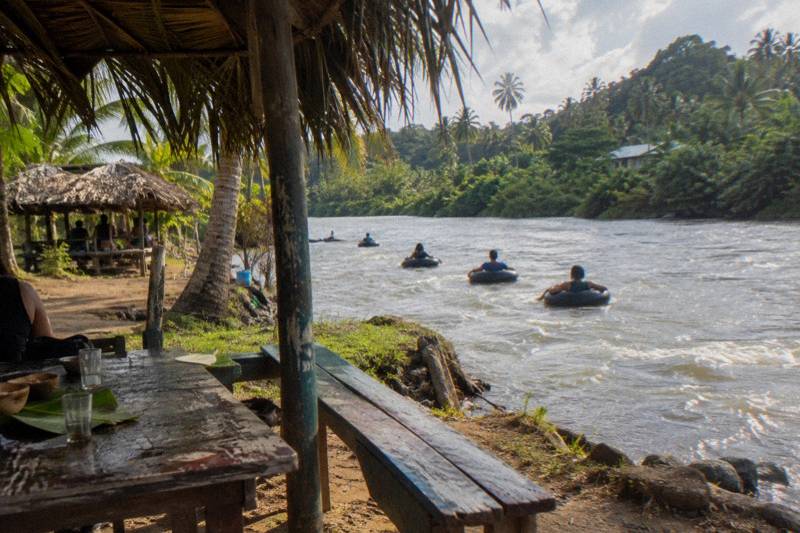
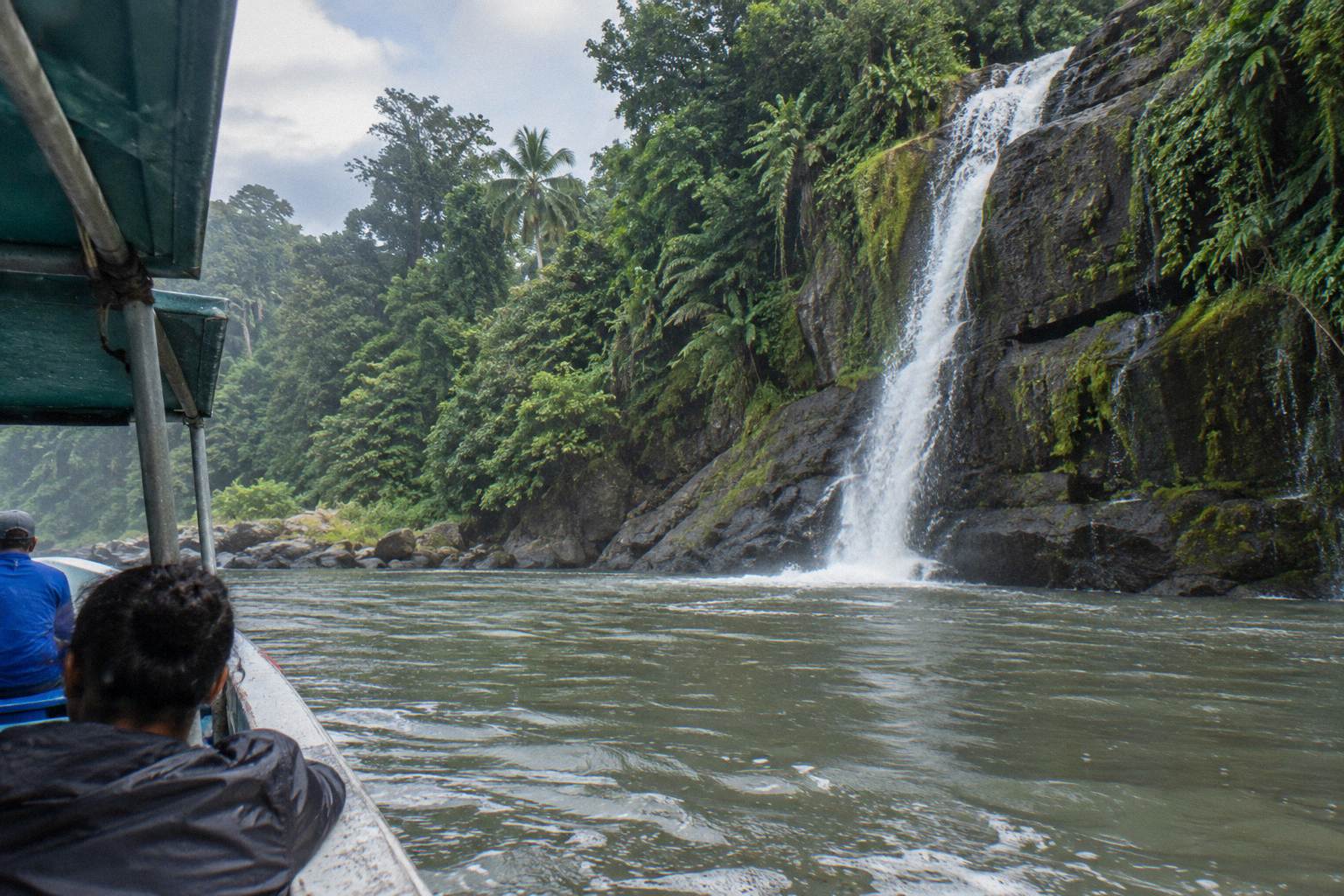
The tubing day on the Navua is built around scenery: a longboat climb past cascades, a swim under an unnamed waterfall about 12 km upriver, and a float back down through rain forest the operator calls gentle rapids.
Short answer
The tubing trip reaches an unnamed waterfall roughly 12 km up the Navua, with the village a further 5 km on, and floats back down through rain forest. Tourism Fiji describes the ride as passing cascading waterfalls, tropical rain forest and deep gorge. The tubing route stays on the lower river; the famous 75 m Upper Navua gorge belongs to rafting trips from USD 212.
What Gorge Scenery Do You Actually See On The Navua?
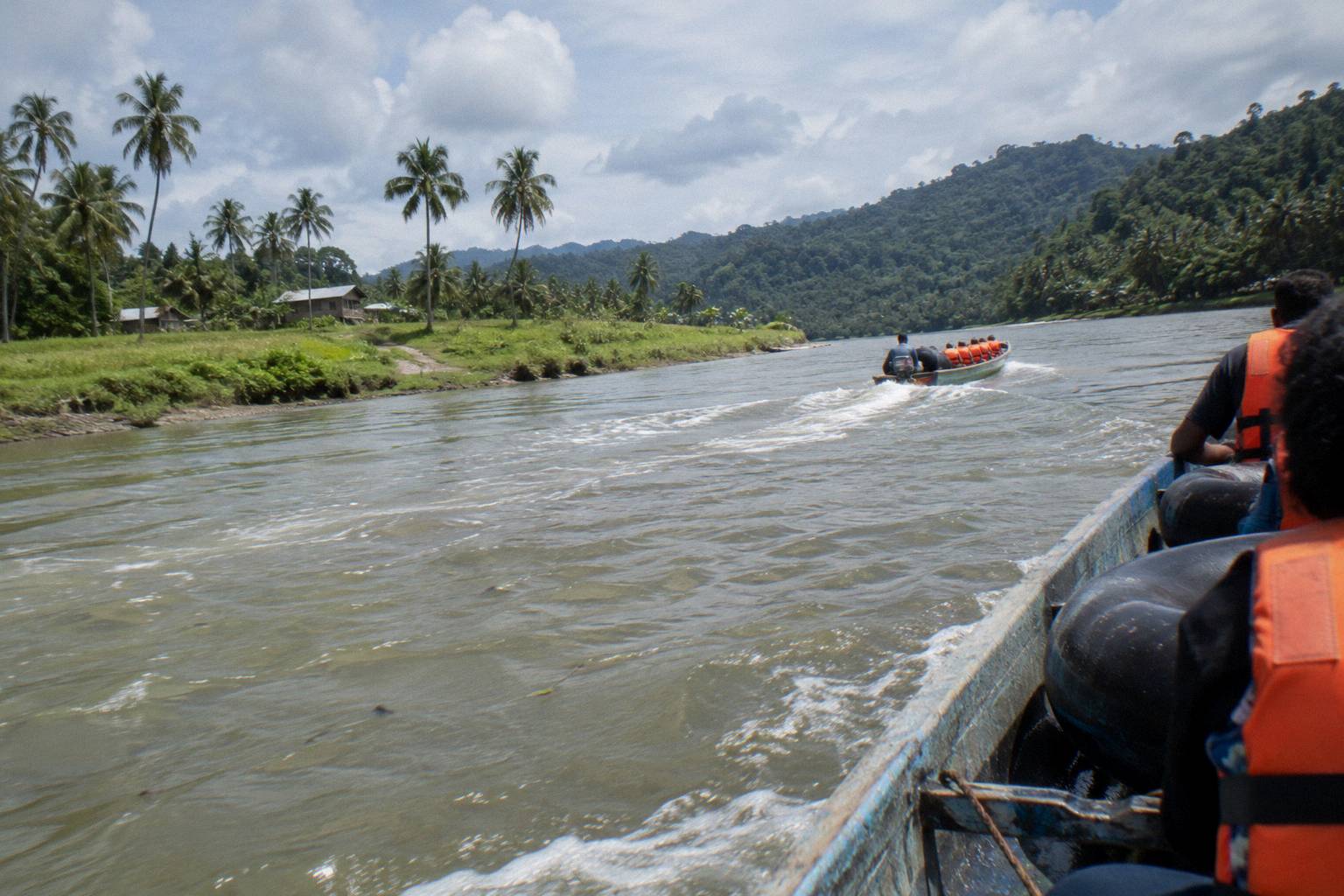
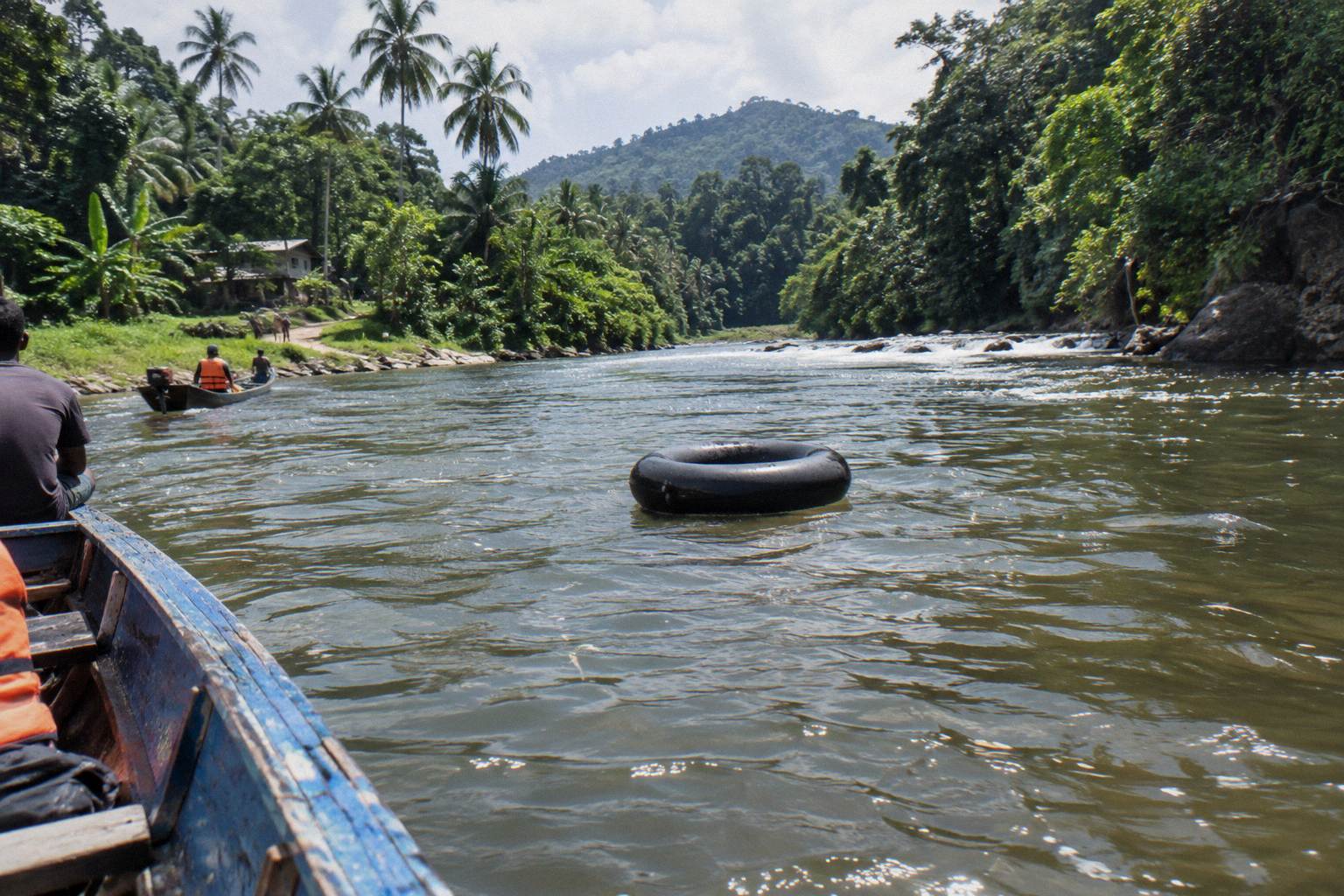
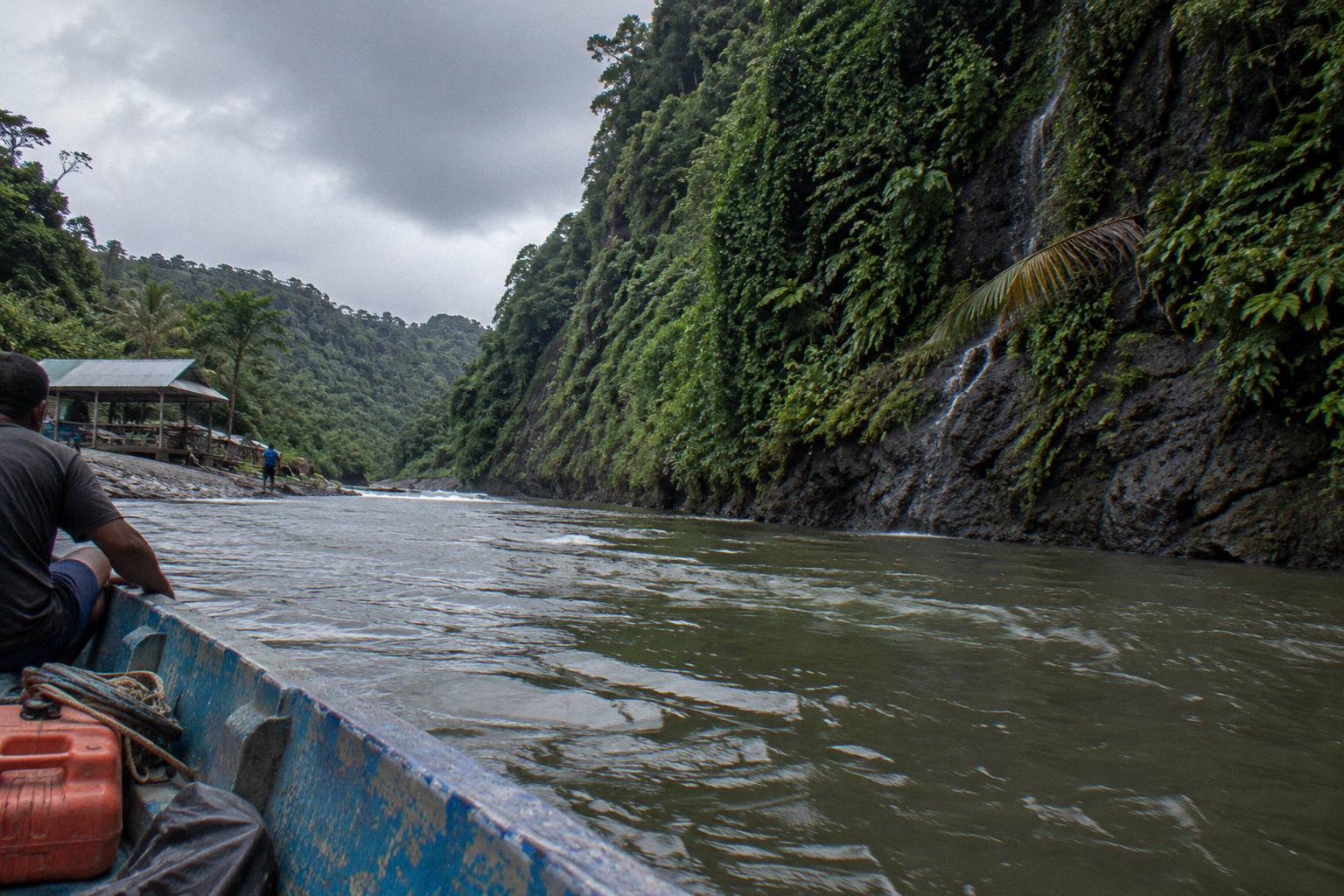
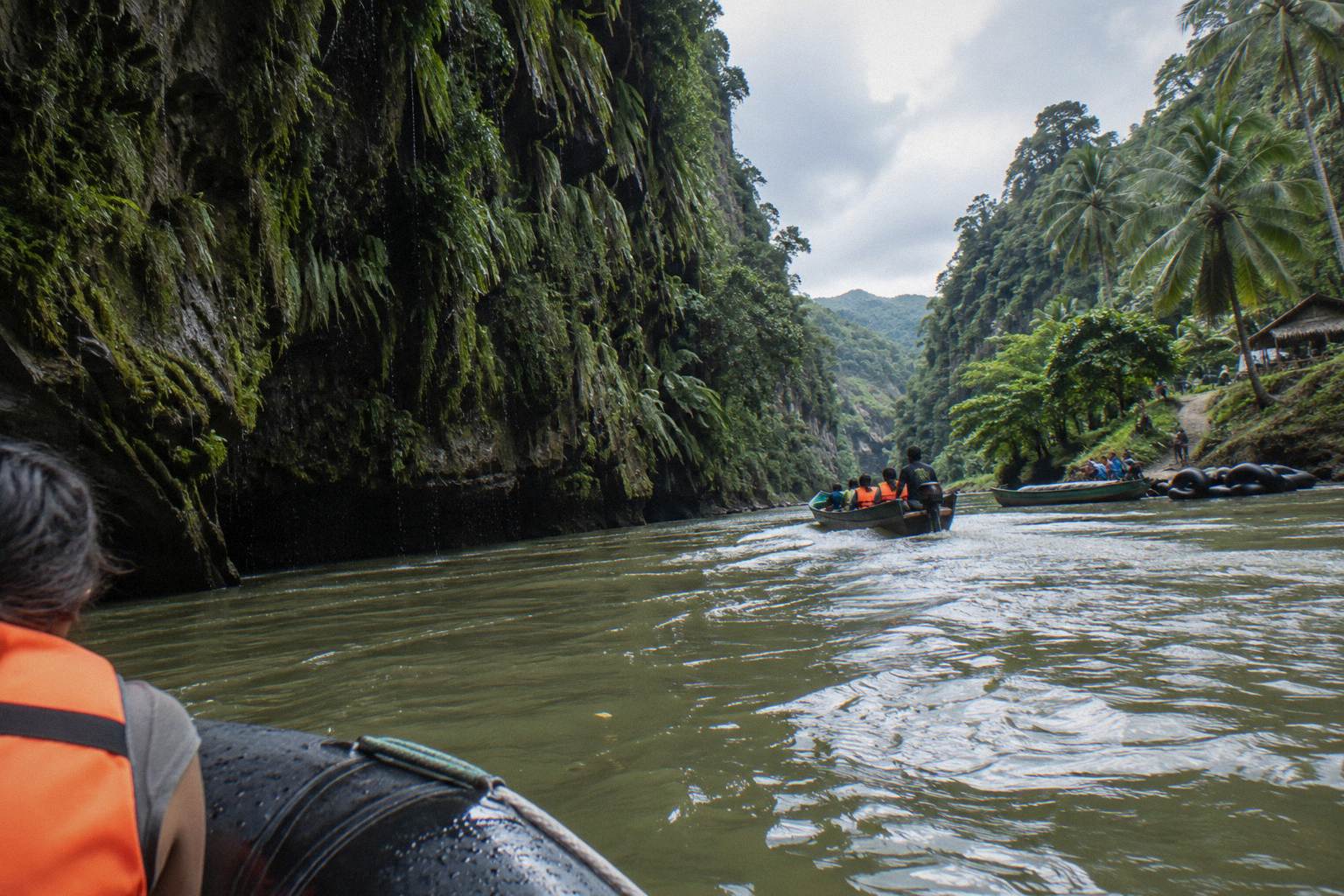
The tubing day climbs the lower Navua by longboat past cascading side waterfalls and rain forest, stops for a swim at an unnamed waterfall about 12 km upriver, then floats back down through what the operator calls gentle rapids. Tourism Fiji words the same ride as passing cascading waterfalls, tropical rain forest and deep gorge. It is scenery from the water, not from a lookout, and the gorge walls close in around you for most of the upriver run.
The Navua is one of the few rivers on Viti Levu where a day trip can move between three completely different kinds of scenery in a single afternoon. The lower river near Navua town runs wide and slow between settlements and farmland. Push upriver and the banks turn to unbroken rain forest, with waterfalls spilling off the valley walls after rain. Further still, the valley narrows into the gorge country that made this stretch of river famous, and the tubing trip turns around and drifts back down through all of it.
Tourism Fiji, the national tourism body, uses the same language on its Pacific Harbour pages that the operator uses on its own: this corner of the country is Fiji's adventure hotspot, less than an hour's drive from Suva, with river tubing listed alongside whitewater rafting and jet boating as the headline river activities. What separates tubing from those louder options is the pace. You are in the water, at river level, with time to watch the walls go by.
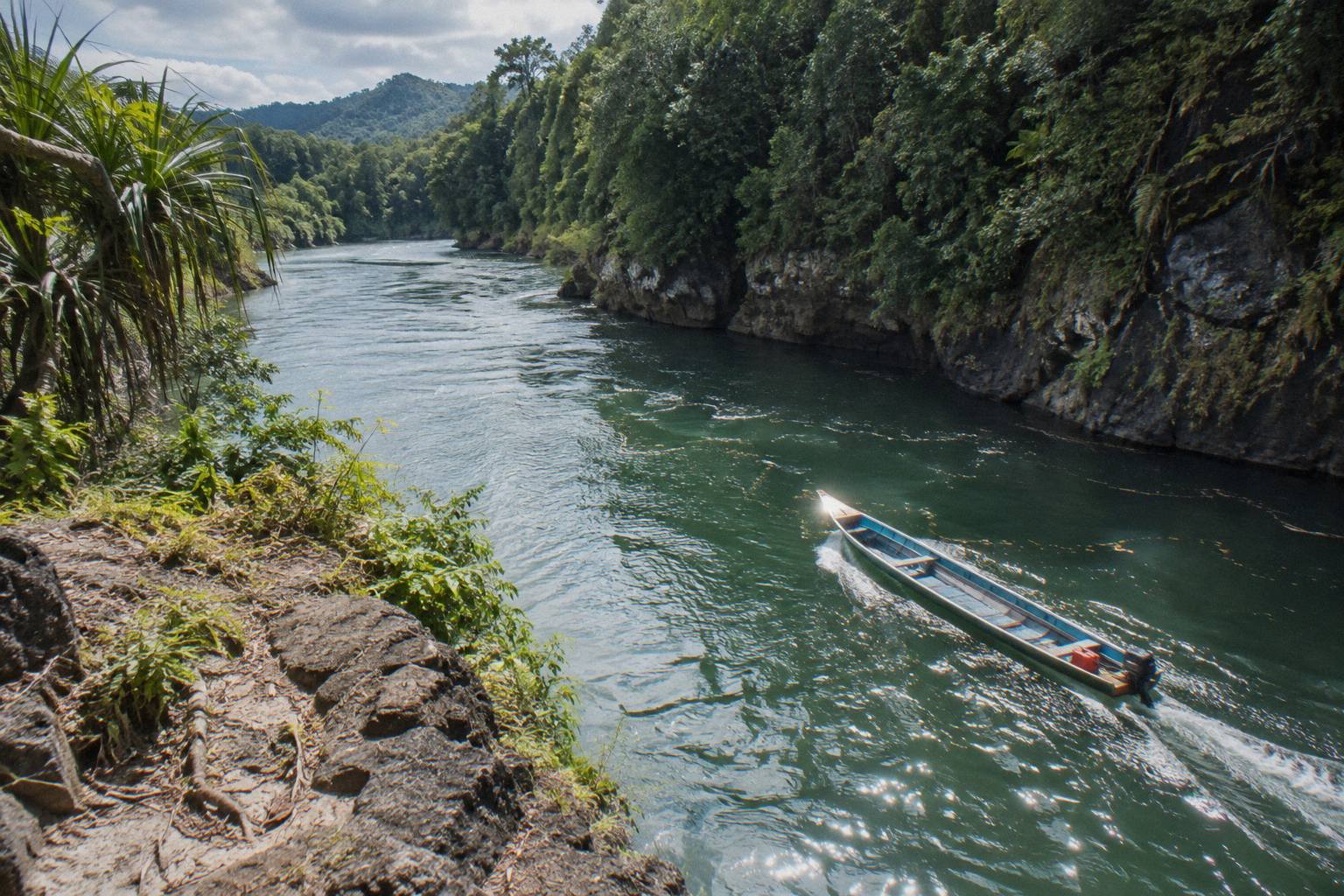
A word on expectations, because the marketing around Fiji river trips blurs two different stretches of the same river. The tubing trip runs on the lower and middle Navua. The Upper Navua Conservation Area, the sheer black-walled gorge you may have seen in rafting photographs, sits further upstream and is reached on full-day rafting trips, not on tubes. Both are spectacular in different ways, and the scenery on each is distinct, but they are separate products on separate stretches of water.
It also helps to understand the shape of the valley before you go. The Navua drains a large catchment in the Namosi highlands before cutting through the coastal range and emptying into Navua Bay. The tubing day samples the last, most accessible slice of that journey, the part where the river has already left the deepest gorges behind but still runs between steep, forested walls. Everything you see on the trip is part of one continuous corridor of green, and the operator's longboat is simply the vehicle that carries you up it before the river carries you back down.
Where Is The Navua Waterfall On The Tubing Route?
The waterfall the tubing trip visits sits approximately 12 km upriver from Navua town, and the village stop is a further 5 km beyond it, roughly 17 km up the Navua in total. Those distances come from an operator notice carried on the main booking page. The waterfall has no published name on any official page, and it is described simply as a swimmable stop, with no height, flow or depth figures stated anywhere.
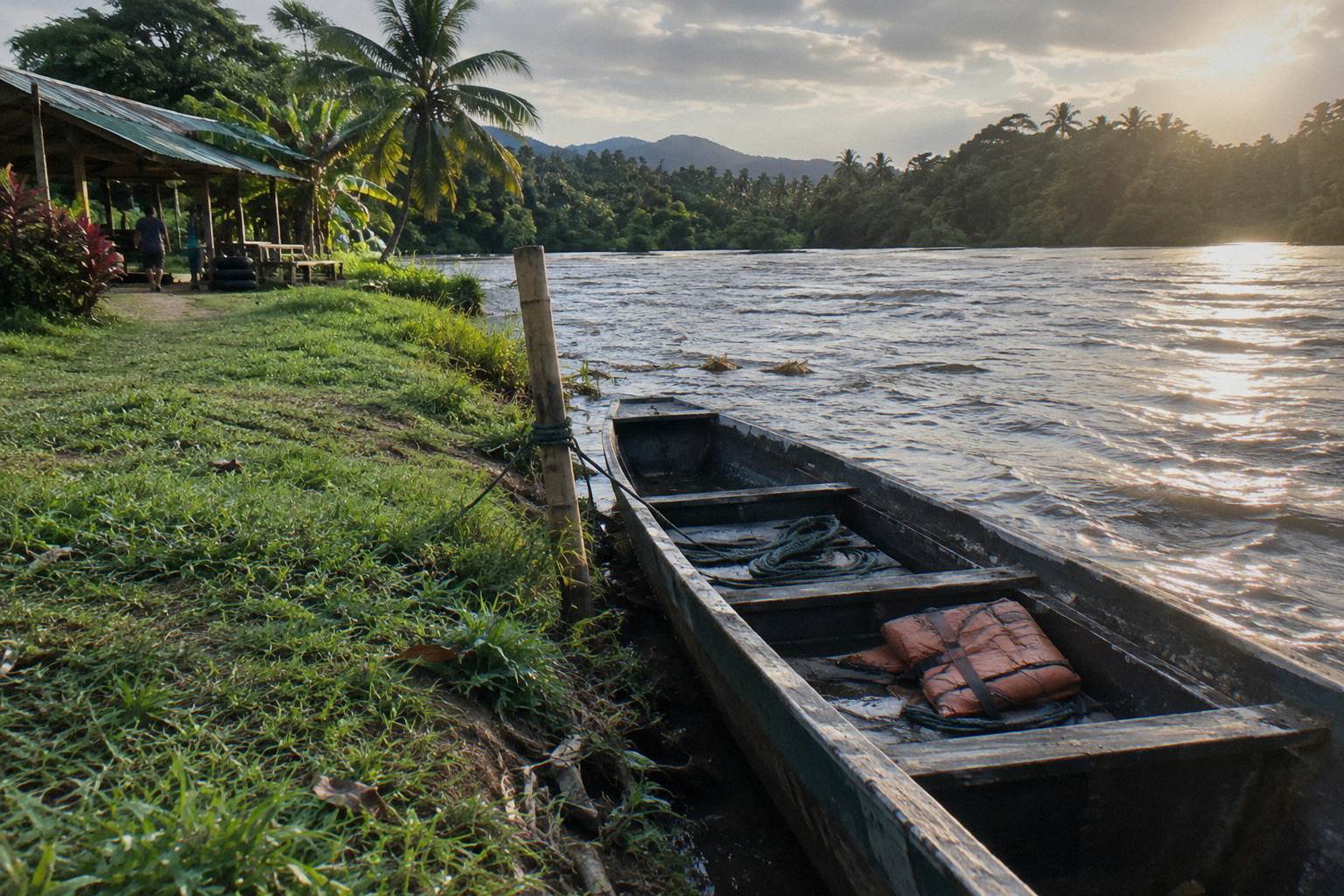
The upriver journey is done by longboat, not by tube. The operator's itinerary runs: hotel pickup and welcome briefing, life jackets and gear, a longboat ride upriver past greenery and waterfalls, the guided village visit when river levels allow, the waterfall swim, a riverside Fijian-style lunch with vegetarian options on request, and finally the tubing float back downriver. So the waterfall is roughly the halfway scenic mark of the day, reached by boat, enjoyed on foot, and then left behind as the river itself becomes the ride.
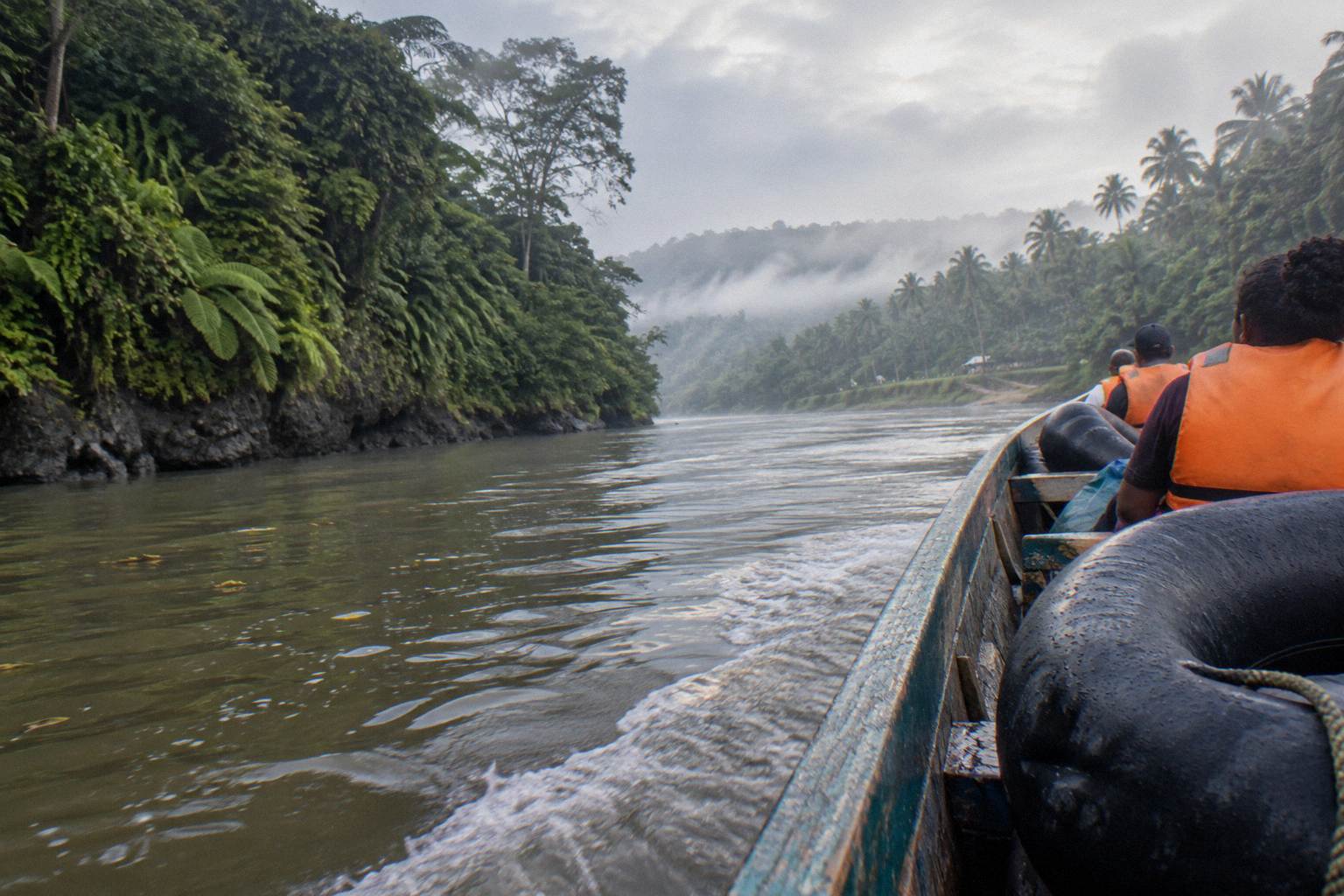
Because the waterfall is never named in operator material or on the booking pages, it helps to think of it as a feature of the route rather than a destination in itself. There is no signposted car park, no viewing platform and no entrance gate. The boat simply pulls in, and the visit is a swim in the freshwater pool at its base. The Bula Online tubing listing, a separate operator running its own Navua tubing day, describes the same kind of stop as a waterfall swim in a freshwater pool, which suggests the waterfall country on this stretch is a shared feature of the river rather than one operator's private asset.
One planning note worth knowing before you build a day around the waterfall: the operator's home page carries a dry-spell notice explaining that low water levels can make the additional upriver journey unsafe, and the route is reassessed on the day. The waterfall and village stops are the parts of the itinerary most affected by river level. More on that in the section on river conditions further down.
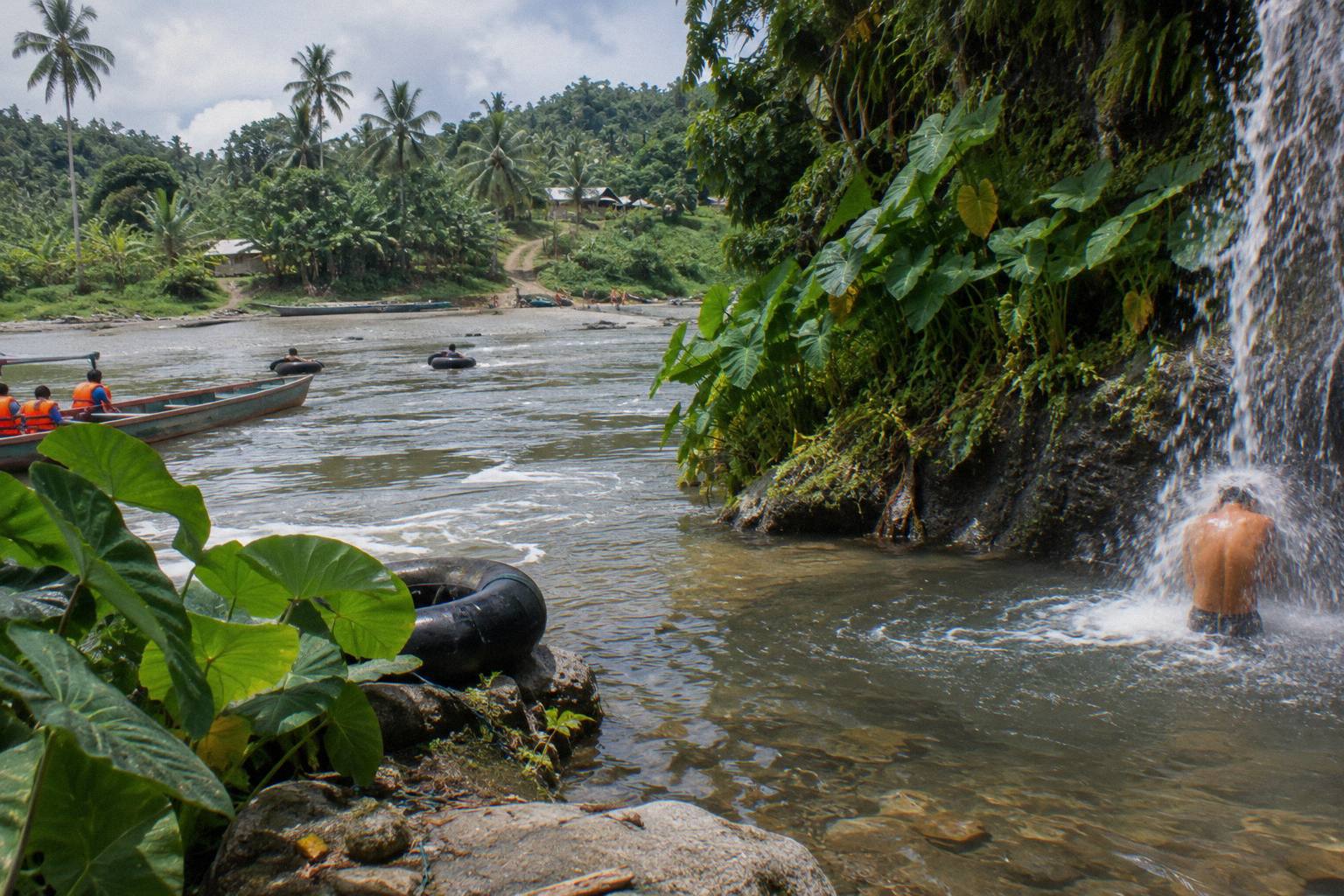
The featured trip on this site, River Tubing Fiji's Navua adventure, is the one rated 4.8 across 181 reviews on its main booking page, from USD 120 per person with a guided tour of about five hours plus transfers. It includes hotel pickup, the longboat ride, tubes and life jackets, and lunch. You can also check availability if the waterfall-and-gorge day is the reason you are reading this.
What Is The Waterfall Swim And Village Stop Like?
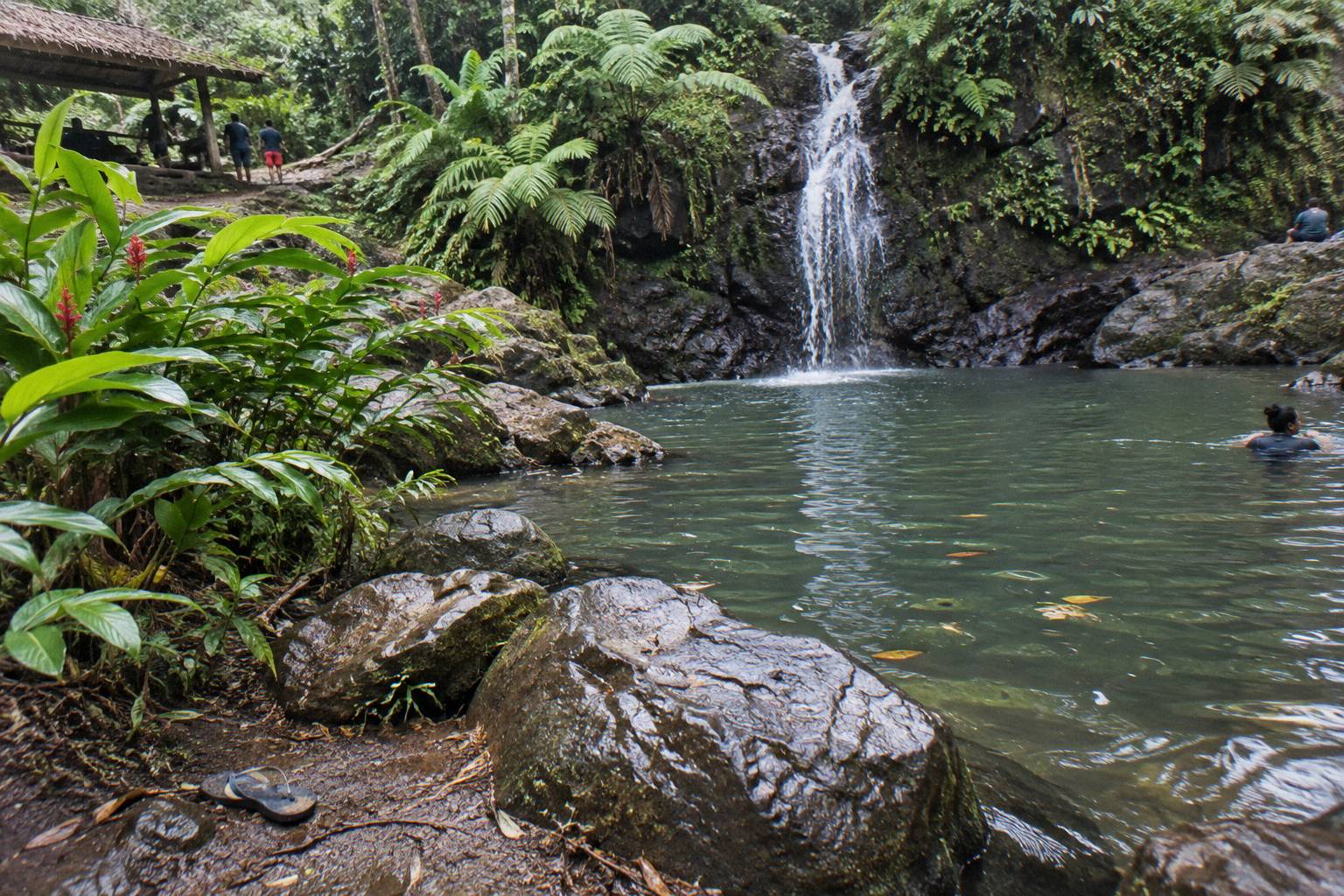
The waterfall stop is a swim in a freshwater pool, and the village stop is a guided walk through a living Fijian village about 5 km further upriver. Both appear on the operator's official itinerary, and both are conditional: the operator's dry-spell notice says the village visit is temporarily excluded when low water makes the extra journey unsafe. Dress rules apply in the village, and each operator states its own.
The swim is the quiet centrepiece of the day. Official material describes it simply and without embellishment: a waterfall swim, in a freshwater pool, roughly 12 km upriver. No published source gives the waterfall's height, the pool's depth or the water temperature, and any figure you see elsewhere should be treated with caution. What the sources do confirm is the format. You arrive by longboat, you swim, and you continue upriver to the village before lunch.
The village visit is a genuine cultural stop, not a photo op staged for tourists, at least in how the operator frames it. River Tubing Fiji is a locally owned family business based at Raiwaqa Settlement just outside Navua town, and its about-us page explains that the company pays a user fee to the native landowners for the village-life component of the trip and works with locally owned shuttle, boat and food businesses. The money from your ticket has a path back into the valley you are floating through.
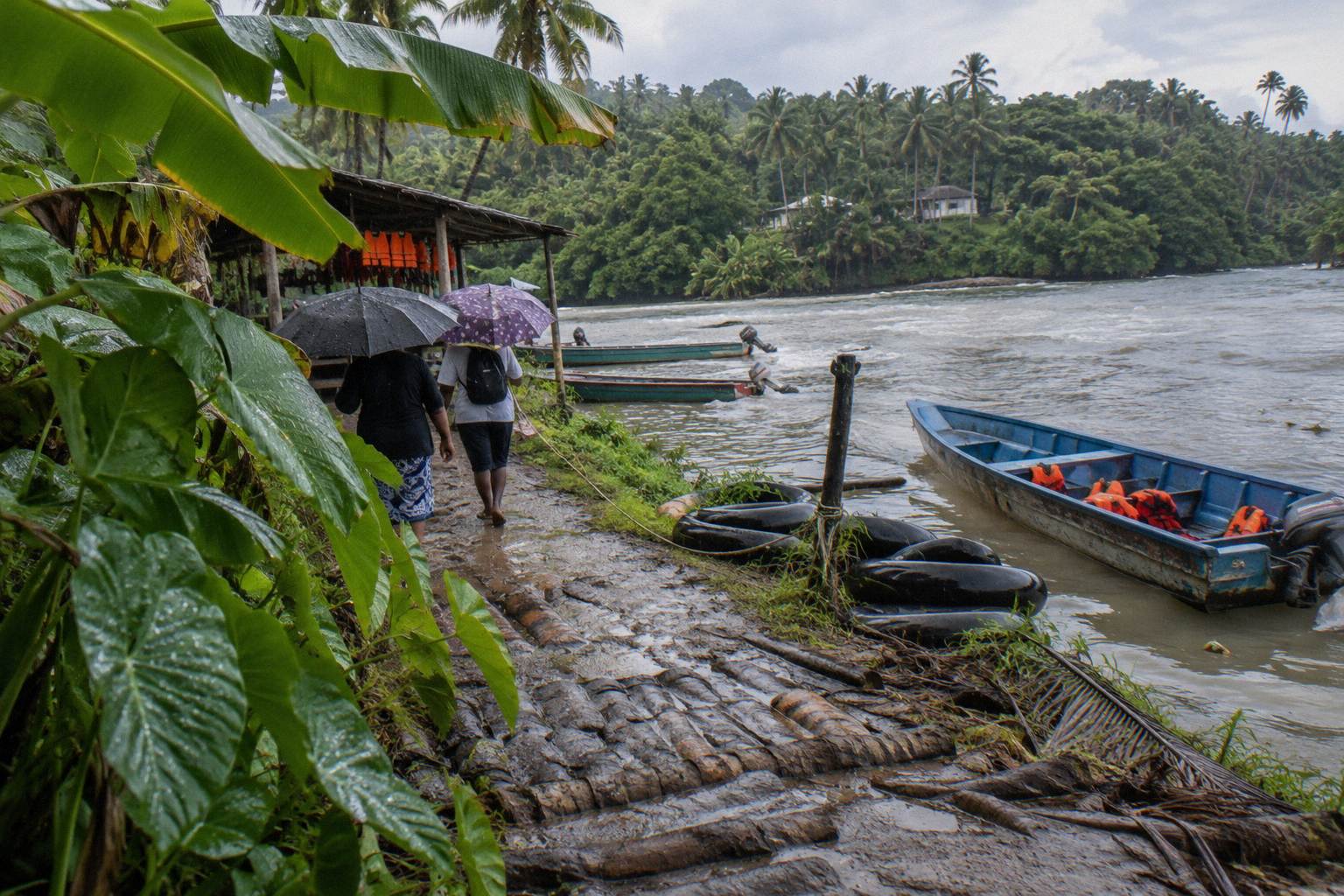
Dress matters here, and the rules differ slightly by operator, so apply each to its own trip. River Tubing Fiji's terms state that ladies need to bring a skirt or sarong for the village visit. The Navua River Tubing Day Tour run by Bula Online lists hats, bare shoulders and bare knees as not permitted in the village. Neither list is onerous, but forgetting a sarong is the single most common packing miss on this kind of day, so fold one in regardless of which trip you book.
Beyond the sarong, the operator's terms list the rest of the kit for the day: sunscreen, hats, towels, a change of clothes, drinking water, rain gear and, in the operator's own cheerful phrasing, a great attitude. The home page adds bottled water, and the main booking page suggests comfortable shoes or water shoes for the rocky moments around the waterfall stop. A dry bag or the operator's photo package solves the camera question, since the package of pictures means your own devices need never get wet.
| Item on the packing list | Stated by | Why it matters on this trip |
|---|---|---|
| Skirt or sarong for women | River Tubing Fiji terms | Required dress for the village visit |
| No hats, bare shoulders, bare knees | Bula Online listing | Village dress rule on that trip |
| Sunscreen and hat | Operator terms | Long open boat ride upriver |
| Towel and change of clothes | Operator terms | Waterfall swim and the tube float |
| Water shoes or comfortable shoes | Main booking page | Rocky access at the swim stop |
| Rain gear | Operator terms | Standard for any Fiji valley day |
A useful companion is our guide to what the full Navua tubing day looks like from pickup, which walks the same itinerary in order with the timing and transfer detail.
What Do You Float Past On The Way Down?
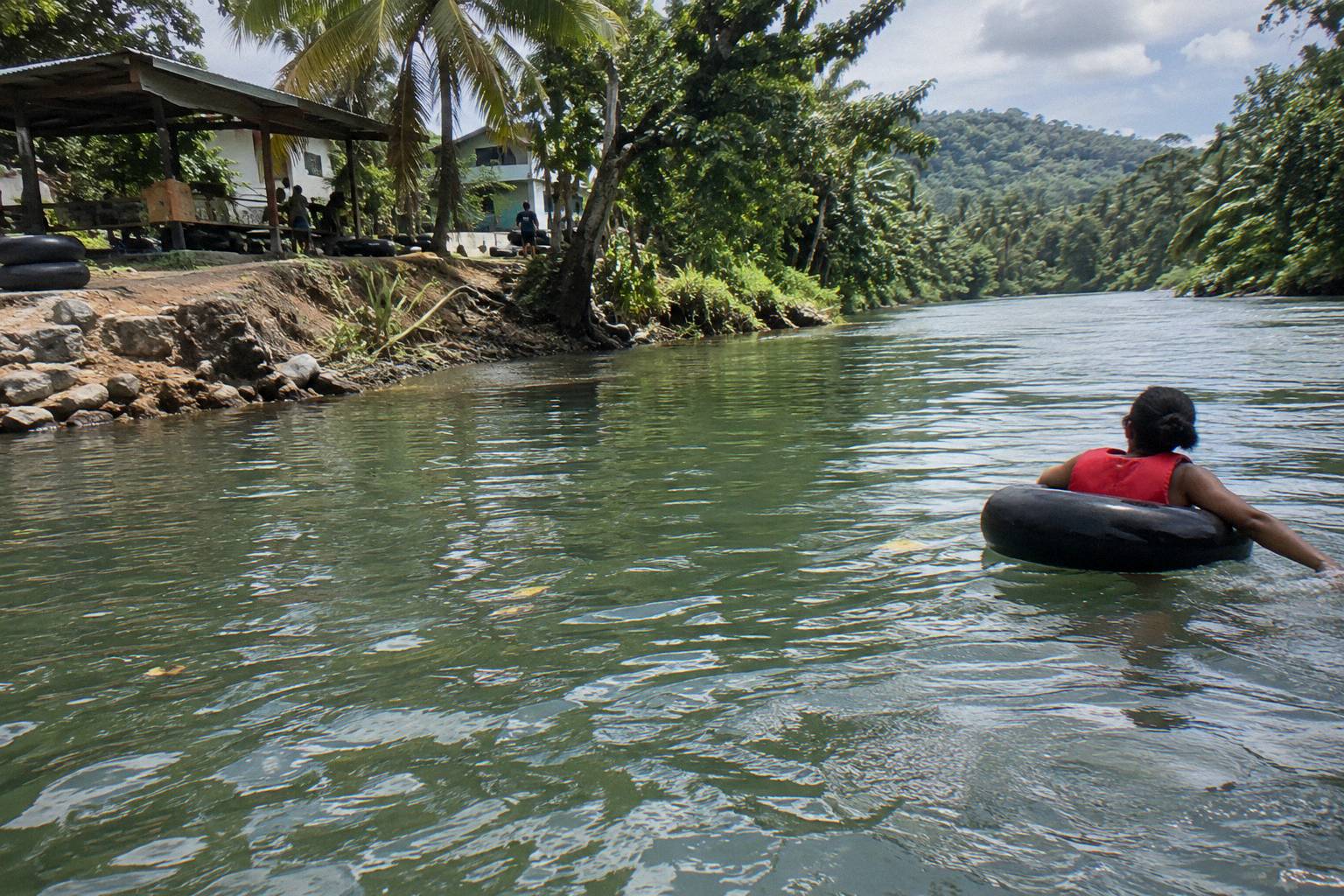
The downriver float carries you through rain forest and the gorge's lower walls on the same water you climbed by boat, through what the operator consistently calls gentle rapids. Traveller reviews add that guides sing cultural songs during the float. No official source grades the tubing rapids, names a put-in or take-out, or describes wildlife, water colour or crowds, so none of that is claimed here.
Tourism Fiji's own framing is the most useful comparison point for what tubing feels like on this river. Its adventures page for the area lists upper Navua and Wainikoro-i-luva whitewater rafting with grade 2 and 3+ rapids through deep gorges, a jet boat run to the Magic Waterfalls, kayaking or punting on the middle Navua, and river tubing as the gentler option. Those grades belong to the rafting trips upstream, not to tubing, and it is worth being strict about that distinction: no official page assigns the tubing run a grade at all. The wider set of guides lives on Pacific Harbour River Tubing.
| Navua river activity per Tourism Fiji | Where it runs | Character |
|---|---|---|
| Whitewater rafting, grade 2 | Upper Navua and Wainikoro-i-luva | Rapids through deep gorges |
| Whitewater rafting, grade 3+ | Upper Navua and Wainikoro-i-luva | Bigger water, full-day trips |
| Jet boat run | Middle river to the Magic Waterfalls | Fast, dry, scenic |
| Kayak or punt | Middle Navua | Slow, self-powered |
| River tubing | Lower and middle Navua | The gentler option, per Tourism Fiji |
What the operator does say, repeatedly and in its own words, is gentle rapids. The tubing leg is the last chapter of the itinerary, after lunch, when the river carries you back down the valley you spent the morning climbing. Travellers report that the guides sing during this stretch, which tells you something about the pace: this is a float with enough current to move you along and enough calm to look up at the walls.
The float also gives you a second look at scenery you only saw going up. By longboat, the valley passes as banks and walls sliding past; by tube, you are low in the water, drifting at the river's own speed, and the same stretch of rain forest looks completely different. Reviewers coming from as far as Nadi and Wailoaloa report roughly three hours each way in the van, which makes the float itself the reward at the end of a long transfer, and a good reason to consider the full drive time from Nadi to Pacific Harbour before committing to a day trip.
For readers weighing the experience against other days out, our comparison of how tubing differs from whitewater rafting on the same river system goes deeper on the adrenaline question, and our rundown of the rapids you actually hit when tubing covers the comfort factor for nervous first-timers.
How Does Tubing Scenery Compare With The Upper Navua Gorge?
The Upper Navua Conservation Area is a separate, upper gorge reached only on full-day whitewater rafting trips, from USD 212 per person with Rivers Fiji, and no official page says the tubing trip enters it. The Ramsar record for the site lists a gorge roughly 75 m deep and 5 to 25 m wide across 615 hectares, designated on 11 April 2006. Tubing scenery is wider, greener and gentler; the upper gorge is narrower, darker and louder.
The tubing route runs on the lower Navua and does not enter the Upper Navua gorge, which is about 75 m deep and is whitewater rafting territory.
The Upper Navua Conservation Area, Ramsar site number 1612, is one of Fiji's most protected landscapes. The official Ramsar record describes a gorge about 75 metres deep and 5 to 25 metres wide, protecting the endemic sago palm Metroxylon vitiense, two endemic freshwater fish species and 17 endemic bird species in the surrounding forest. Rivers Fiji, the rafting operator that runs trips there, describes it as Fiji's first officially designated Ramsar site, protected through a lease held with nine mataqali, the local landowning clans.
The tubing trip's route starts at Navua town on the lower river and reaches about 17 km upriver at its furthest point. The route does not reach the conservation area, so keep that distinction in mind when choosing between the two experiences. If the postcard of the black basalt slot canyon is what you want, rafting is the only product that delivers it. If you want waterfall swims, a village welcome, lunch on a riverbank and a singalong float home, tubing is the better fit.
| Feature | River tubing day | Upper Navua rafting day |
|---|---|---|
| Stretch of river | Lower and middle Navua, from Navua town | Upper Navua gorge, Ramsar site 1612 |
| Furthest point upriver | About 17 km, waterfall at ~12 km | Deep inside the 615 ha conservation area |
| Water character | Gentle rapids, operator's phrase | Grade 2 and 3+ rapids per Tourism Fiji |
| Scenery highlights | Waterfall swim, village visit, rain forest float | Gorge roughly 75 m deep, 5 to 25 m wide |
| From price | USD 120 (River Tubing Fiji), USD 101 (Bula Online) | USD 212 |
| Duration | About 5 h guided, most of a day with transfers | A full day |
| Age and fitness rules | Not stated as a single minimum; ask each operator | Not in the published research; ask the rafting operator |
The rafting trip, sold as the Grand Canyon whitewater run on the Upper Navua, lists no minimum age, weight, fitness or swimming rules, so ask the rafting operator directly before booking. What the listing does state is the price and the shape of the day: from USD 212 per person, a full day on the water.
When Do The Waterfall And Village Stops Change?
The operator's home page carries a live dry-spell notice: the village visit is temporarily excluded when low water levels make the additional upriver journey unsafe, and the route is reassessed on the day if rain restores safe conditions. The main booking page says the same. The waterfall swim and the tubing float are the core of the day either way, but the village stop is the piece that can drop off, so never book purely for it.
River level is the single variable that reshapes this itinerary, and the operator is unusually transparent about it. The notice sits on its home page rather than buried in terms, and it frames the change as a safety call about the extra 5 km of upriver travel to the village rather than a cancellation of the day. Lunch, the waterfall stop and the tubing run continue. If rain returns the river to safe levels, the crew reassesses on the day and the visit can come back into the route.
Fiji's broad climate pattern frames this. The warm, wet season runs November to April and the cooler, drier season May to October, per Fiji Meteorological Service summaries, though this is general climate information rather than any operator promise about your specific date. A trip in the dry months is more likely to meet the low-water version of the itinerary; a trip after heavy rain is more likely to get the full route, with the caveat that very high water can change things in the other direction.
It is worth being equally clear about what the notice does not say. It does not cancel the tubing float, it does not cancel the waterfall swim, and it does not cancel lunch, which the operator serves riverside with vegetarian meals available on request. The day remains a full gorge-and-waterfall experience even in its shortened form. What changes is the cultural stop at the top of the route, which is the most remote leg of the itinerary and therefore the most exposed to a shallow channel.
If rain is in the forecast for your travel window, our piece on what actually happens to a tubing trip when it rains covers the operator's cancellation and refund position in full, including the operator's right to amend for river or weather conditions and its 100 percent refund or reschedule offer when it cancels for river reasons.
Which Navua Trip Should A Scenery Lover Book?
For most readers the River Tubing Fiji day, from USD 120 with a 4.8 rating across 181 reviews, is the strongest scenery-per-dollar choice because it combines the waterfall swim, the village visit and the gorge float in one itinerary. The Bula Online day at from USD 101 runs 7 hours and is new and unrated. Readers chasing the sheer upper gorge should book the USD 212 rafting day instead.
The two tubing products look similar on paper but differ in the details that matter on the day. River Tubing Fiji is the established operator with the review history, the family land connection at Raiwaqa and the longboat-plus-village-plus-waterfall format. The Navua River Tubing Day Tour from Bula Online Fiji Tours and Watersports is a newer listing with no rating yet, a 7 hour duration, a buffet lunch, a covered long boat and return resort pickup, and its own village dress code. The two are separate operators, so treat them as separate products and compare them as such.
A third option belongs in the conversation only for readers whose real interest is the gorge itself. The Upper Navua rafting day is the one product that enters the conservation area, and its from price of USD 212 per person reflects the logistics of getting there. Some travellers split the difference across a week in Pacific Harbour: a tubing day for the waterfall and village culture, a rafting day for the gorge, and a morning on the water at Pacific Harbour River Tubing's home stretch of coast for everything else. The area also hosts the Beqa Lagoon shark diving scene, which pairs naturally with river days on a longer stay, though that product currently shows no price or duration figures on its listing.
On timing and booking practicalities, both tubing listings show free cancellation up to 24 hours in advance, while the operator's own direct-booking terms use a tiered structure: no fee with more than 48 hours notice, 50 percent between 24 and 48 hours, and the full fare inside 24 hours. Booked through the live listing, the more generous platform window applies. For the rest of the booking mechanics, including pickup points from Nadi, Denarau, the Coral Coast, Sigatoka, Pacific Harbour and Suva, our guide to booking a Navua tubing trip has the detail.
Common Questions About Navua Waterfalls And Gorge Scenery
Is The Waterfall On The Navua Tubing Trip Named?
No. The waterfall is never named on the operator's site, the booking pages or Tourism Fiji's material. It is simply described as a swimmable waterfall about 12 km upriver from Navua town, with the village a further 5 km on.
Does The Tubing Trip Go Into The Upper Navua Gorge?
No official page says so. The tubing route starts at Navua town on the lower river and reaches roughly 17 km upriver. The Upper Navua Conservation Area gorge is reached on full-day whitewater rafting trips from USD 212 per person.
How Deep Is The Upper Navua Gorge?
The Ramsar record for site 1612 describes the gorge as about 75 metres deep and 5 to 25 metres wide across 615 hectares. Those figures describe the rafting territory upstream, not the tubing route.
Can You Swim At The Navua Waterfall?
Yes, the waterfall swim is a fixed item on the operator's official itinerary, in a freshwater pool at the base. No published source gives the pool's depth or the water temperature.
Is The Village Visit Guaranteed?
No. The operator carries a dry-spell notice stating the village visit is temporarily excluded when low water levels make the additional journey unsafe, and the route is reassessed on the day if rain restores safe conditions.
How Rough Are The Rapids On The Tubing Float?
The operator's own phrase is gentle rapids, and Tourism Fiji calls tubing the gentler option among Navua river activities. No official source assigns the tubing run a rapids grade; the grade 2 and 3+ ratings belong to upper-river rafting.