River Tubing Vs Rafting: Which Navua River Trip Fits You?
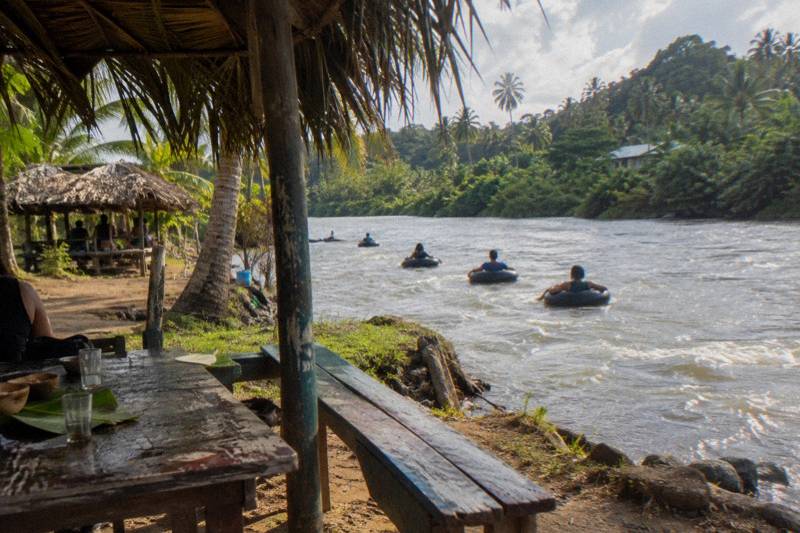
Both trips use the same river system, but they are different days out: tubing is the gentler float on the lower Navua with a village visit when river levels allow and a waterfall swim, while rafting is a full-day paddle through the protected upper gorge.
Short answer
River Tubing Fiji costs from USD 120 per person for about 5 guided hours, plus transfers, and floats gentle rapids on the lower Navua. Upper Navua Whitewater Rafting costs from USD 212 per person for a full day of grade 2 and 3+ rapids in a protected gorge. Tubing suits families and relaxed groups; rafting suits active travellers who want the canyon.
The Navua River offers two very different days out, and travellers staying in Pacific Harbour, Suva or the Coral Coast often have to pick between them. River tubing floats the lower river through rainforest, a village visit when river levels allow and a waterfall swim on what the operator calls gentle rapids. Whitewater rafting spends a full day paddling grade 2 and 3+ rapids through the deep upper gorge inside a Ramsar-listed conservation area. The prices are roughly USD 120 versus USD 212 per person, the time commitments differ, and the fitness demands are not the same at all.
Each trip covers different inclusions, the river changes character at each stage, and each suits a different traveller. The rafting listing states no minimum age, weight limit or fitness rule, so ask the operator before you pay.
What Is The Difference Between Tubing And Rafting On The Navua?
Tubing puts you in an inflatable tube drifting gentle rapids on the lower Navua with a village visit when river levels allow, a waterfall swim and a riverside lunch, all from USD 120 per person. Rafting puts you in a guided inflatable raft paddling grade 2 and 3+ whitewater through the protected upper gorge, a full day from USD 212. Same river system, different sections, different days entirely.
Tourism Fiji itself separates the Navua's activities this way: upper Navua and Wainikoro-i-luva whitewater rafting through deep gorges, a jet boat to the Magic Waterfalls, a middle-river kayak or punt option, and river tubing described plainly as "the gentler option" on the national tourism body's adventures in Pacific Harbour page. That single phrase is the fairest summary of the choice you are making.
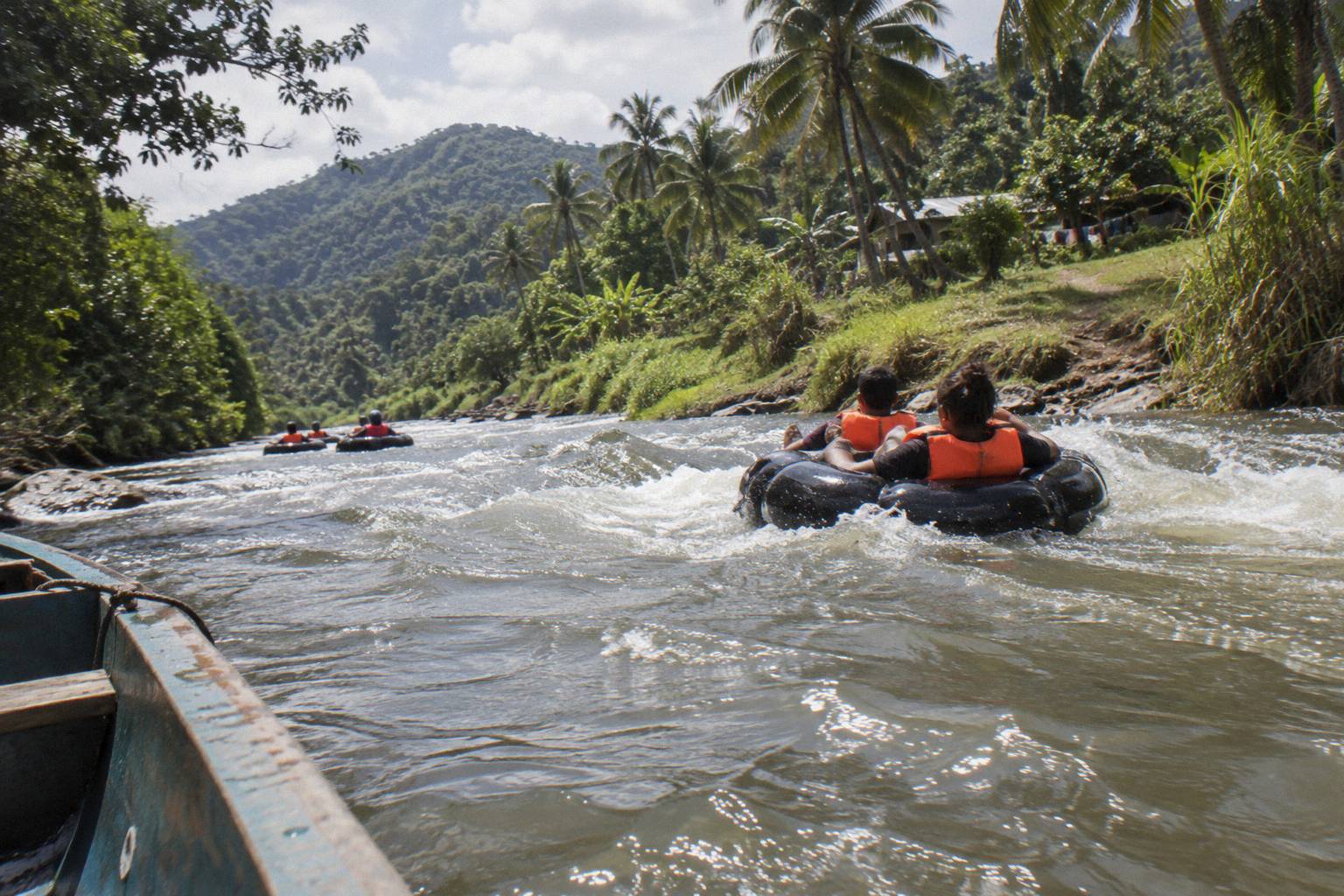
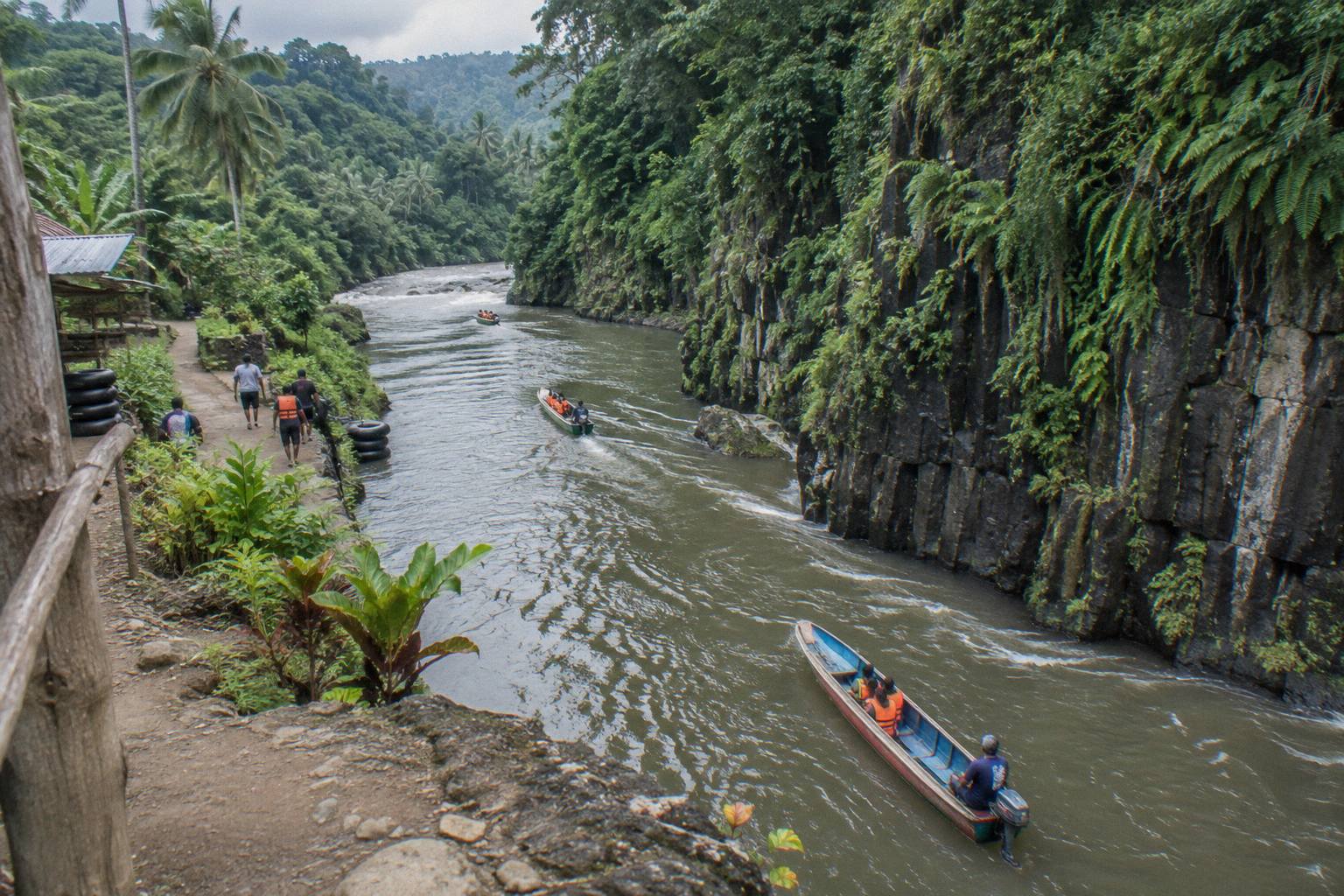
The tubing day, run by River Tubing Fiji, follows a fixed sequence: hotel pickup, a welcome briefing with life jackets and gear, a longboat ride upriver past greenery and waterfalls, a guided village visit when river levels allow, a waterfall swim, a riverside Fijian-style lunch with vegetarian options on request, and then the tube float back downriver. The full route story is on our Navua River tour itinerary page.
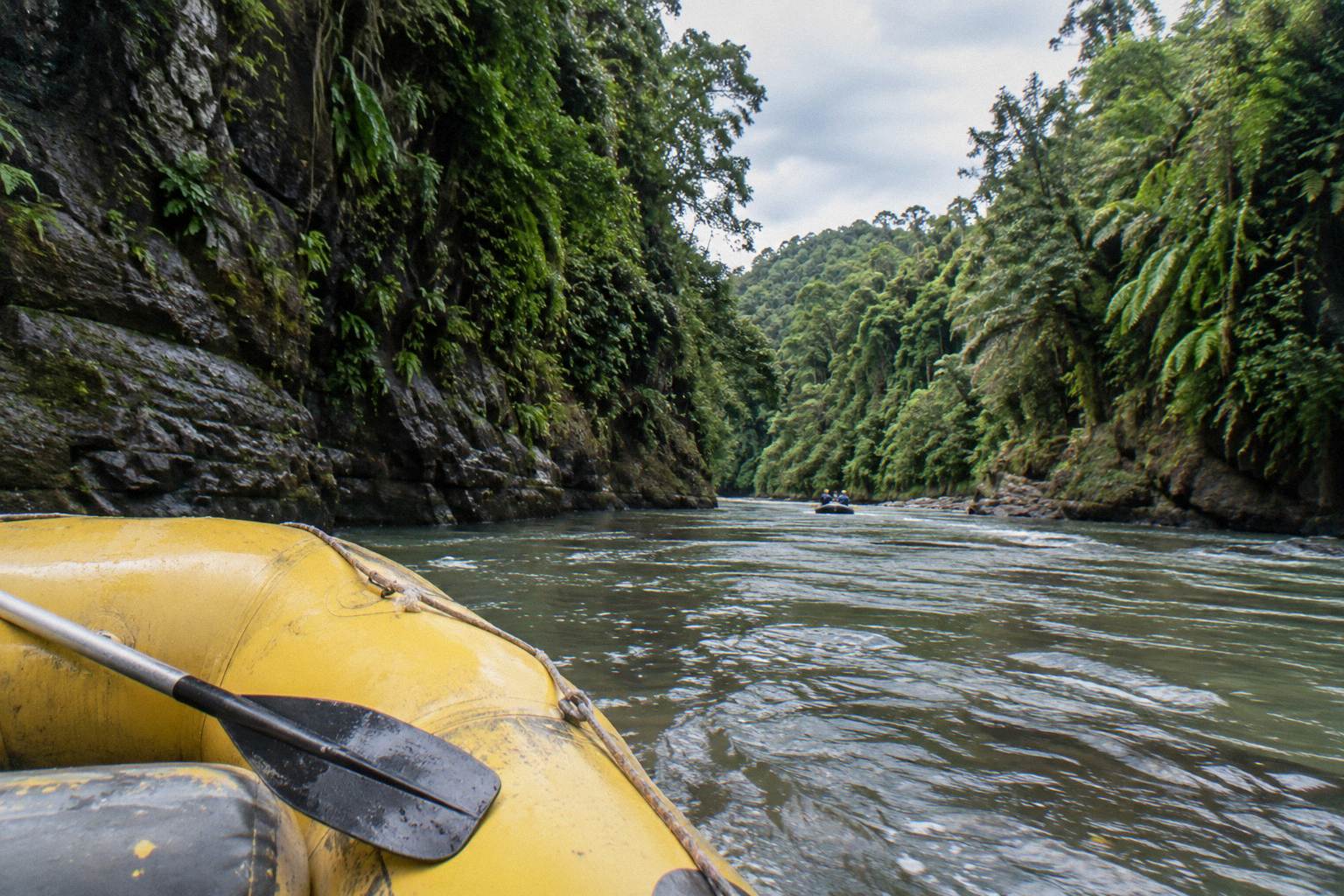
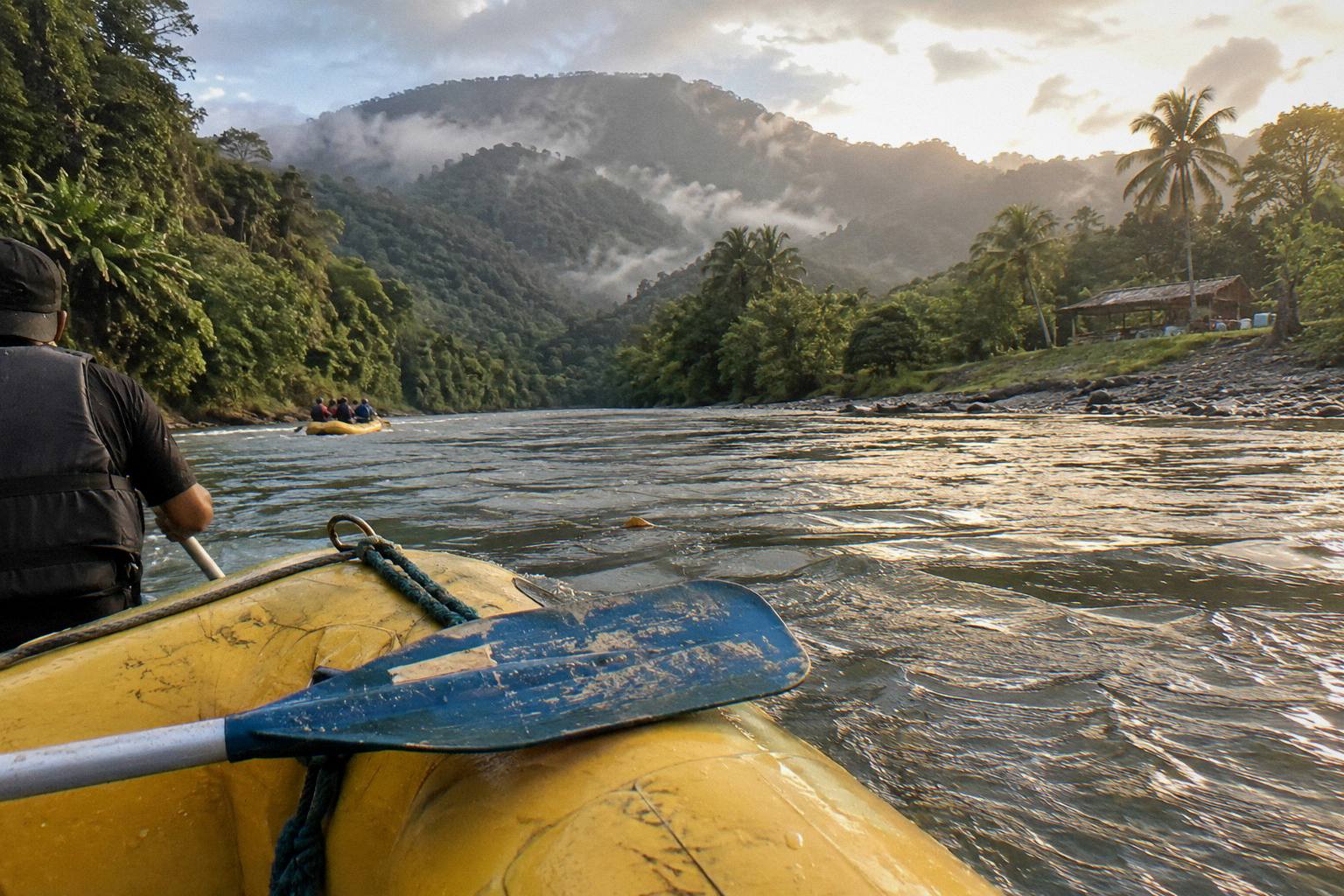
The rafting day, sold as Upper Navua Whitewater Rafting with Rivers Fiji named as the provider on the booking page, is about the canyon. You paddle or ride a raft through a gorge roughly 75 metres deep in places, and the day is built around whitewater rather than cultural stops. It is listed as a full day at from USD 212 per person, with no rating printed on the listing.
Side by side, the shape of the two days looks like this:
| Element of the day | Tubing on the lower Navua | Rafting in the upper gorge |
|---|---|---|
| Craft | Solo inflatable tube, guide leading the group | Guided inflatable raft, crew paddling |
| Water | Gentle rapids, no grade published | Grade 2 and 3+ whitewater |
| River section | Lower Navua from Navua town, about 17 km upriver | Upper Navua Conservation Area gorge |
| Cultural stops | Village visit when river levels allow and waterfall swim | None; canyon focus |
| Food | Riverside Fijian-style lunch, vegetarian on request | On the live listing |
| Time on the day | About 5 guided hours plus transfers | Full day |
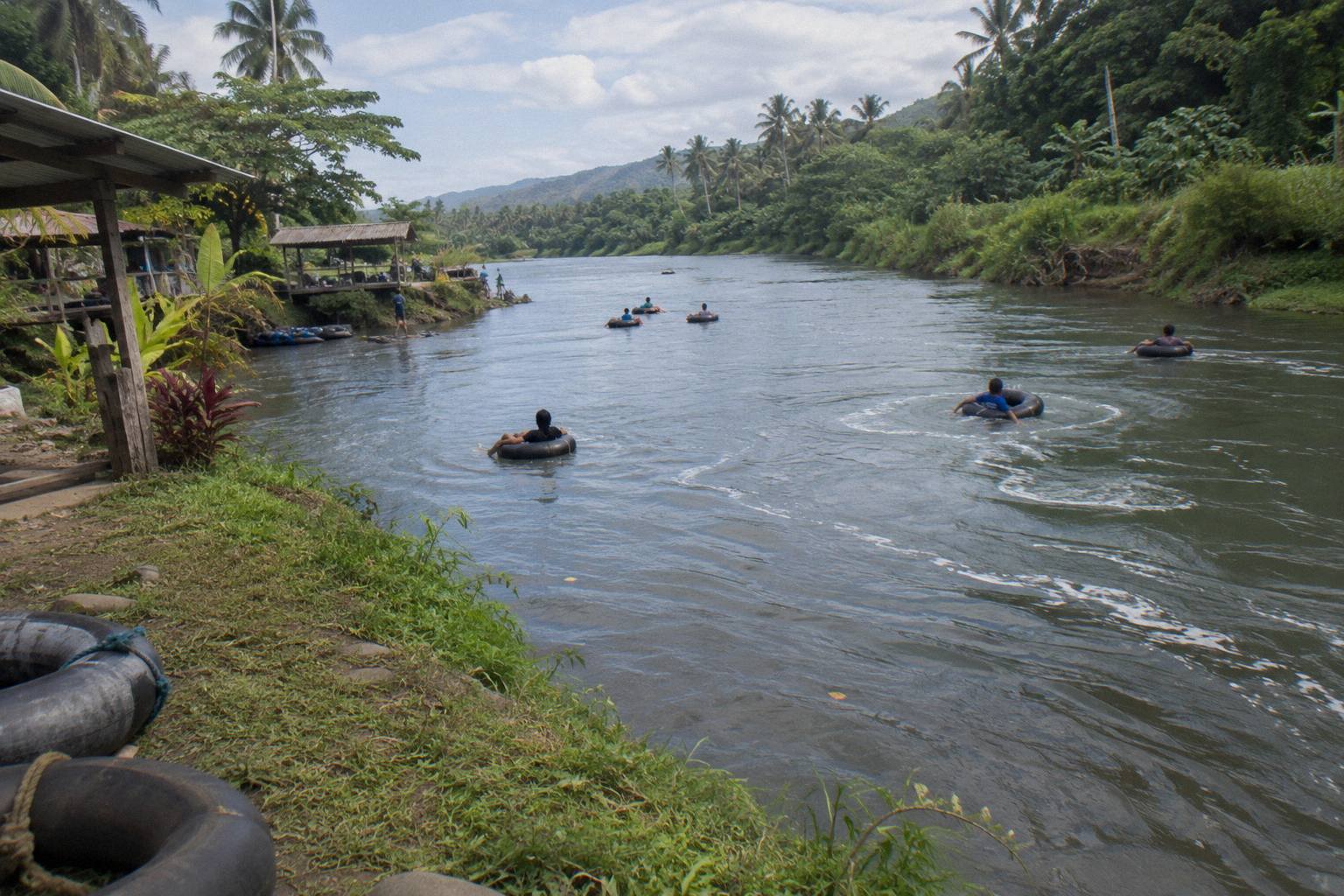
One distinction often gets mixed up online: the tubing trip does not enter the Upper Navua gorge. The route starts at Navua town on the lower river, reaching a waterfall roughly 12 km upriver and a village about 5 km further on. The tubing trip stays outside the Upper Navua Conservation Area altogether.
How Rough Are The Rapids On Each Trip?
The tubing trip runs what the operator calls gentle rapids; no grade is published, and no official source assigns one. The grade 2 and 3+ ratings you will see quoted belong only to the upper-river rafting trips through the deep gorges. In a raft you paddle with a crew and a guide through real whitewater; on a tube you drift through the gentle rapids at a pace an accompanied child can manage.
That difference in water is really the whole decision. A grade number is a whitewater classification, and Tourism Fiji applies grades 2 and 3+ only to the upper Navua and Wainikoro-i-luva rafting runs. Neither the operator's site nor its booking pages grades the tubing route, so any page that tells you tubing is "grade 2" is borrowing the rafting number.
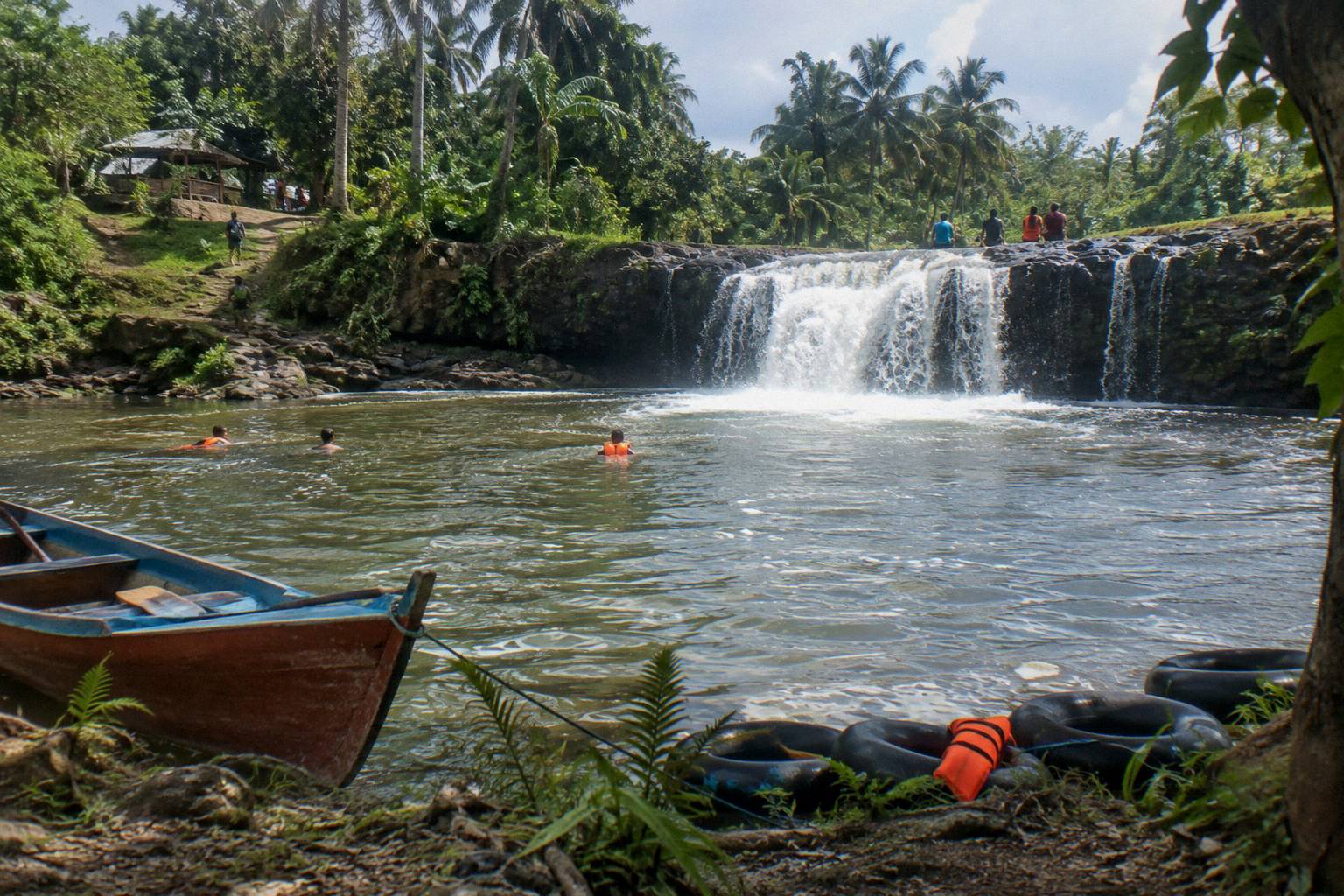
The operator describes the rapids on the tubing run as gentle, and guests wear life vests throughout, with all children accompanied by an adult under the operator's Safety First policy. Guest reviews mention guides singing during the float. For more on water conditions, how rough the rapids on river tubing actually are breaks it down further.
Rafting is a different physical proposition. Grade 2 water is straightforward moving water with clear channels; grade 3+ adds irregular waves, drops and manoeuvring that needs a responsive crew. Rivers Fiji, the rafting provider, runs trips through a gorge about 75 metres deep that narrows to between 5 and 25 metres wide in places, a setting very different from the tubing float downstream.
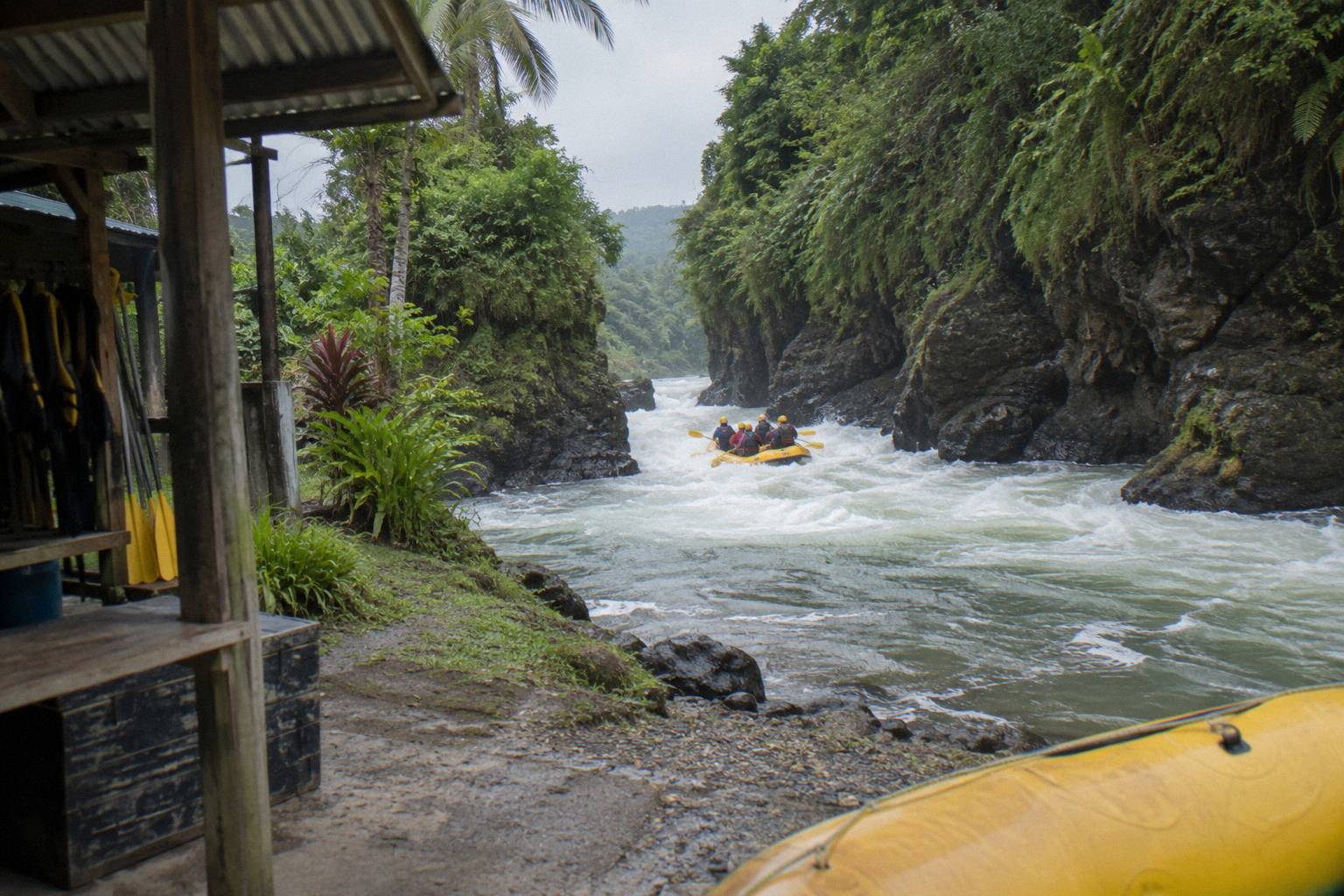
Neither trip lists a minimum swimming standard, weight limit or pregnancy rule, and the rafting listing states no minimum age, weight or fitness requirement either. Ask the operator before booking. The tubing listing does say it is not suitable for people with back problems or mobility impairments, and the Navua River Tubing Day Tour page asks you to flag weak swimmers at booking.
What Do The Two Trips Cost And How Long Do They Take?
River Tubing Fiji starts from USD 120 per person for a guided tour of about 5 hours on its main booking page, rated 4.8 across 181 reviews there, and road transfers come on top. Upper Navua Whitewater Rafting starts from USD 212 per person and is listed as a full day. A second tubing operator, the Navua River Tubing Day Tour, starts from USD 101 per person over 7 hours, with no rating yet as a new activity.
Prices are per-person booking-page figures in USD and change by date and pickup point, so treat every number here as a from-price, not a quote. The rafting day costs roughly eighty percent more than the main tubing trip, and the gap widens further if you compare it with the newer, cheaper tubing option.
| Trip | Provider on listing | From price (USD, pp) | Duration on listing | Rating |
|---|---|---|---|---|
| River Tubing Fiji | River Tubing Fiji | 120 | Guided tour about 5 hours, listing header 1 day | 4.8 across 181 reviews; a second booking page shows 4.9 |
| Navua River Tubing Day Tour | Bula Online Fiji Tours and Watersports | 101 | 7 hours | New activity, no rating yet |
| Upper Navua Whitewater Rafting | Rivers Fiji | 212 | Full day (listed as 1 day) | No rating printed |
Listed durations vary. The main tubing listing shows a 5-hour guided tour, a second booking page for the same trip shows about 5.5 hours, and the Navua River Tubing Day Tour page shows 7 hours; transfers sit on top of all of these. Guests reviewing the trip from Nadi and Wailoaloa report roughly 3 hours each way by van, while Pacific Harbour and Suva are, per Tourism Fiji, within about an hour of the area. From anywhere, plan for most of a day door to door. There is a longer breakdown in how long a river tubing day runs from pickup.
The two tubing listings name different providers. The main trip carries an established review history, while the newer tour from USD 101 includes a covered longboat, village visit when river levels allow, waterfall swim, buffet lunch and tubing, with return resort pickup and free cancellation up to 24 hours.
The rafting price buys a different scale of day: a full listed day on the water, canyon access, and the equipment and guiding that grade 3+ water requires. If your budget only stretches to one river experience and you are travelling with mixed ages or swim confidence, the tubing day's lower from-price and shorter water time make it the safer allocation of money.
Which Trip Fits Which Traveller?
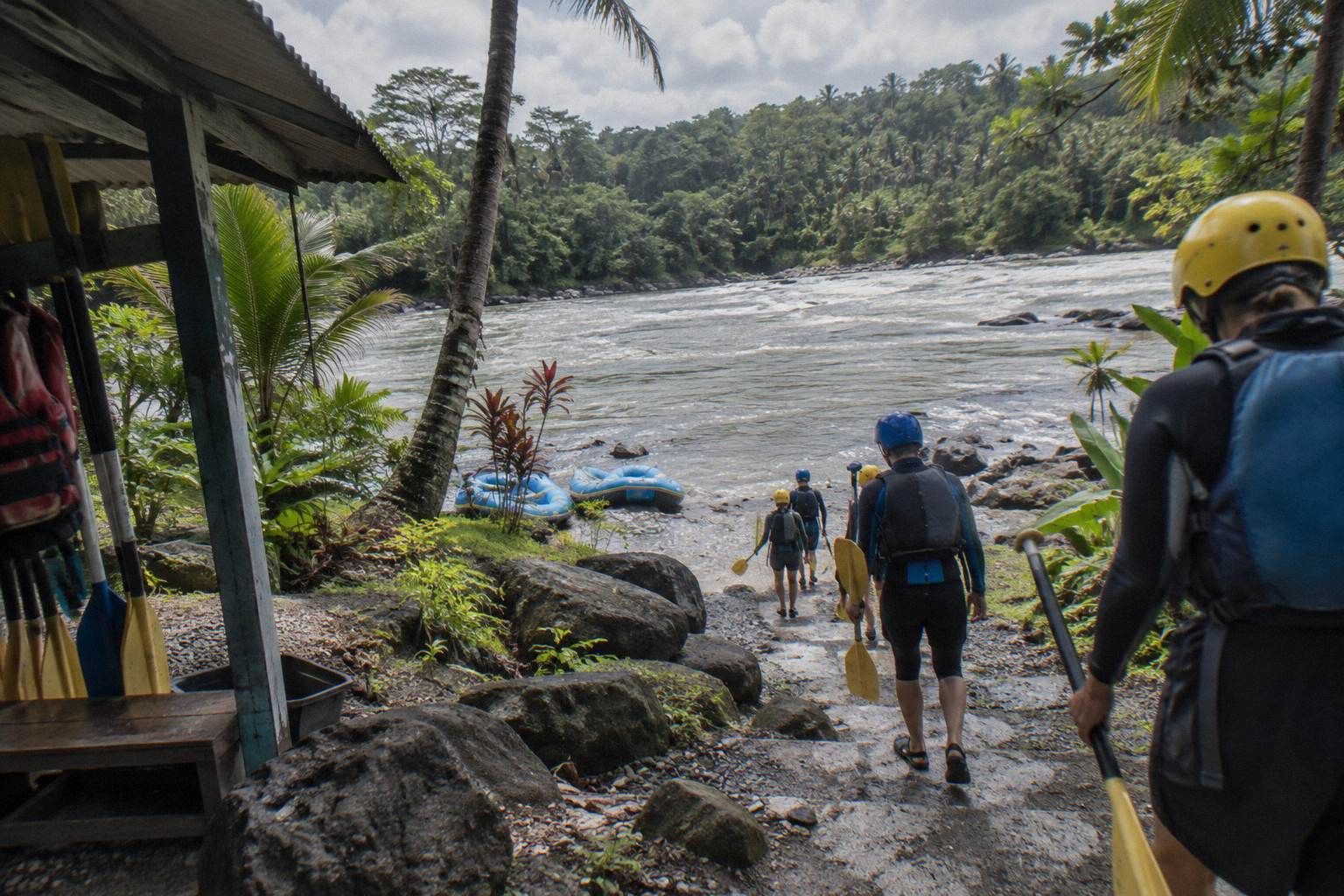
Families with children, non-swimmers who will say so at booking, and anyone wanting culture with their water should choose tubing. Confident swimmers after adrenaline, photographers after the canyon, and groups with a full free day should choose rafting. Travellers with back problems or mobility impairments should skip the tubing trip per its listing, and check with the rafting operator directly about age, weight and fitness rules, which its listing does not state.
This is the practical heart of the choice, so it deserves a proper decision table rather than a slogan. Find your situation in the left column and follow that row across.
| If you are... | Choose tubing if | Choose rafting if | Watch out for |
|---|---|---|---|
| A family with kids aged 5 to 15 | Kids pay half price and must be with an adult | Rules not stated; ask Rivers Fiji | Bula tour page says under 6 not suitable |
| A nervous or non-swimmer | Life vests compulsory; flag it at booking | Grade 3+ water; ask the operator first | No official swim standard on either |
| Short on time from Nadi | About 3 hours transfer each way either way | Same transfer maths, longer day | Both are most of a day door to door |
| After culture and lunch | Village visit, Fijian lunch included | No village stop; canyon focus | Village visit drops off in low water |
| After scenery photographs | Waterfall swim, rainforest banks | 75 m gorge, 5 to 25 m wide | Photo package sold separately on tubing |
| On a tighter budget | From USD 101 or USD 120 options | From USD 212 | Prices vary by date and pickup |
The tubing day is the only one of these trips that includes a village visit. The visit is conditional: low river levels can make the extra 5 km upriver unsafe, in which case it is dropped, and the route is reassessed on the day. Never book tubing purely for the village stop without accepting that possibility.
The rafting day, conversely, runs inside the Upper Navua Conservation Area, Ramsar site no. 1612, 615 hectares designated on 11 April 2006 and protected through a lease with nine mataqali landholding groups. Rivers Fiji describes it as Fiji's first officially designated Ramsar site. The gorge runs about 75 m deep and 5 to 25 m wide. If your trip is a once-only South Pacific visit and whitewater is your thing, that protected setting argues for the rafting day despite the higher from-price.
Solo decision moments aside, mixed groups sometimes split: part of the party tubes while the rest raft, then compare stories at dinner. Both trips run from the same corner of Viti Levu, with pickups listed across Nadi, Denarau, the Coral Coast, Sigatoka, Pacific Harbour and Suva for the main tubing trip, so logistics do not force a single choice on a group. Our river tubing pickup points guide covers the collection options in detail.
What Is The Upper Navua Conservation Area?
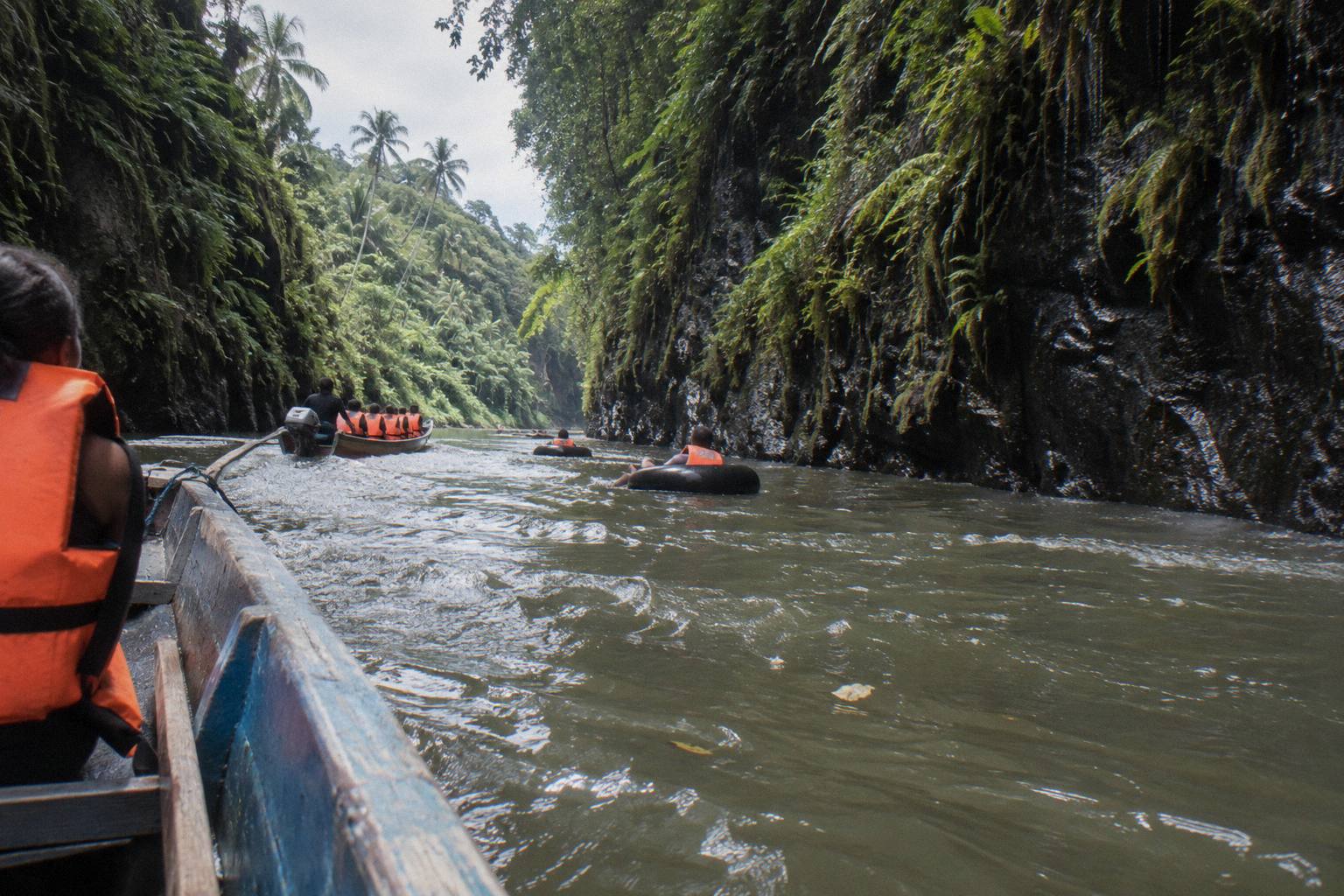
The Ramsar record for site 1612, published by the Ramsar Sites Information Service, covers 615 hectares designated on 11 April 2006 and describes a gorge about 75 m deep and 5 to 25 m wide. Rivers Fiji, the rafting provider, describes it as Fiji's first officially designated Ramsar site, protected through a lease arrangement with nine mataqali, the customary landowning groups, on its Upper Navua Conservation Area page.
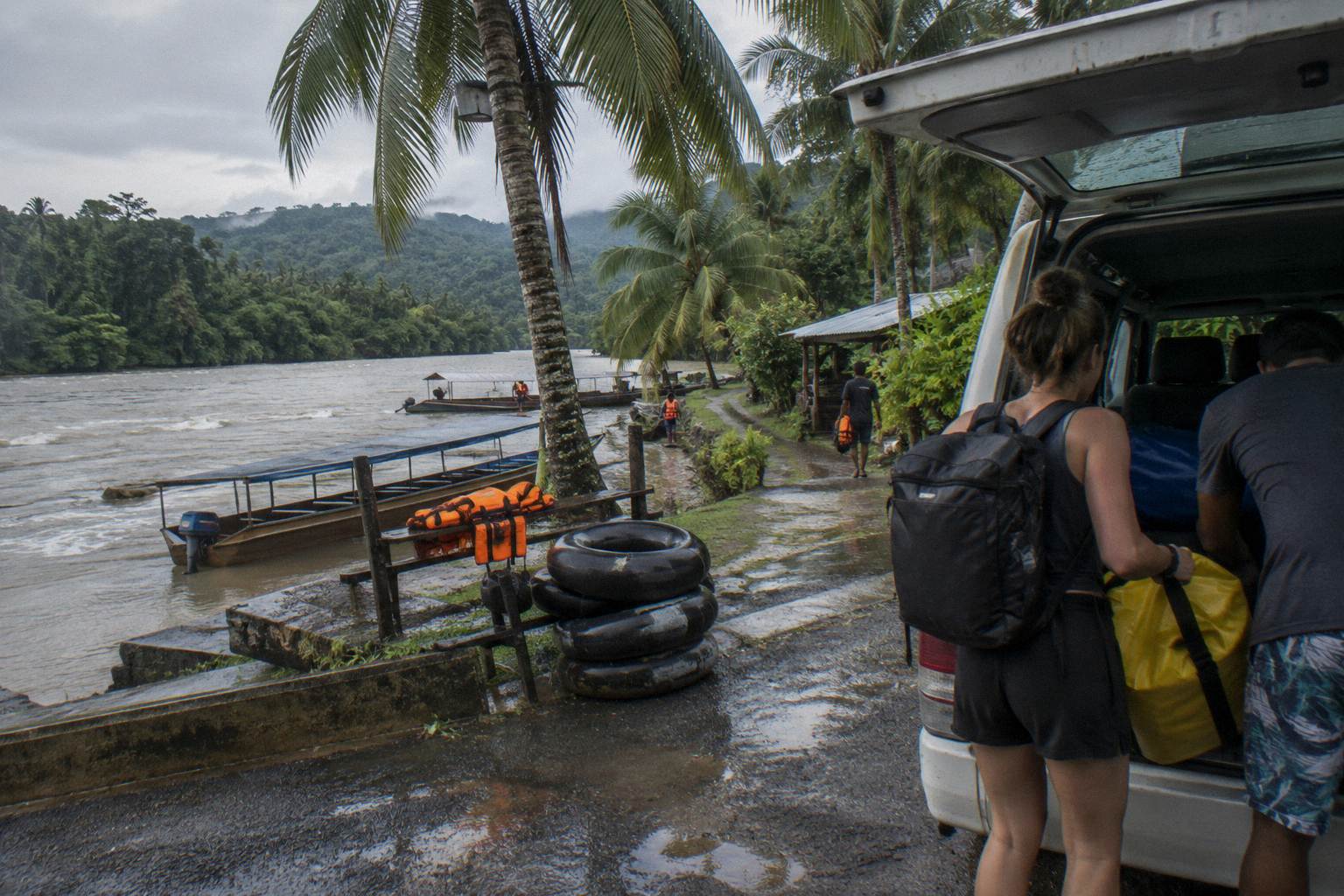
Protection of the gorge runs through a lease with nine mataqali landholding groups, per Rivers Fiji. Tubing's equivalent community arrangement is the user fee River Tubing Fiji pays to native land owners for its village-life benefit, per the operator's about page.
Geographically, the two products sit on the same river but different worlds. The tubing trip starts at Navua town on the lower river and reaches about 17 km upriver in total, waterfall and village included. The conservation area is the upper gorge far above that, and no official page says the tubing trip enters it. Anyone promising you "tubing through the Grand Canyon of Fiji" is conflating the two products.
Safety, Ages And Fitness: What Is Actually Stated?
The rafting listing does not state a minimum age, weight or fitness requirement. Check with the operator before you book.
The tubing operator's terms also carry the standard adventure-tour wording that the operator is not responsible for injuries or loss of belongings, which is normal for river activities worldwide and one more reason travel insurance matters. There are no safety statistics, incident figures or certifications to report, and we would not print them as marketing even if there were.
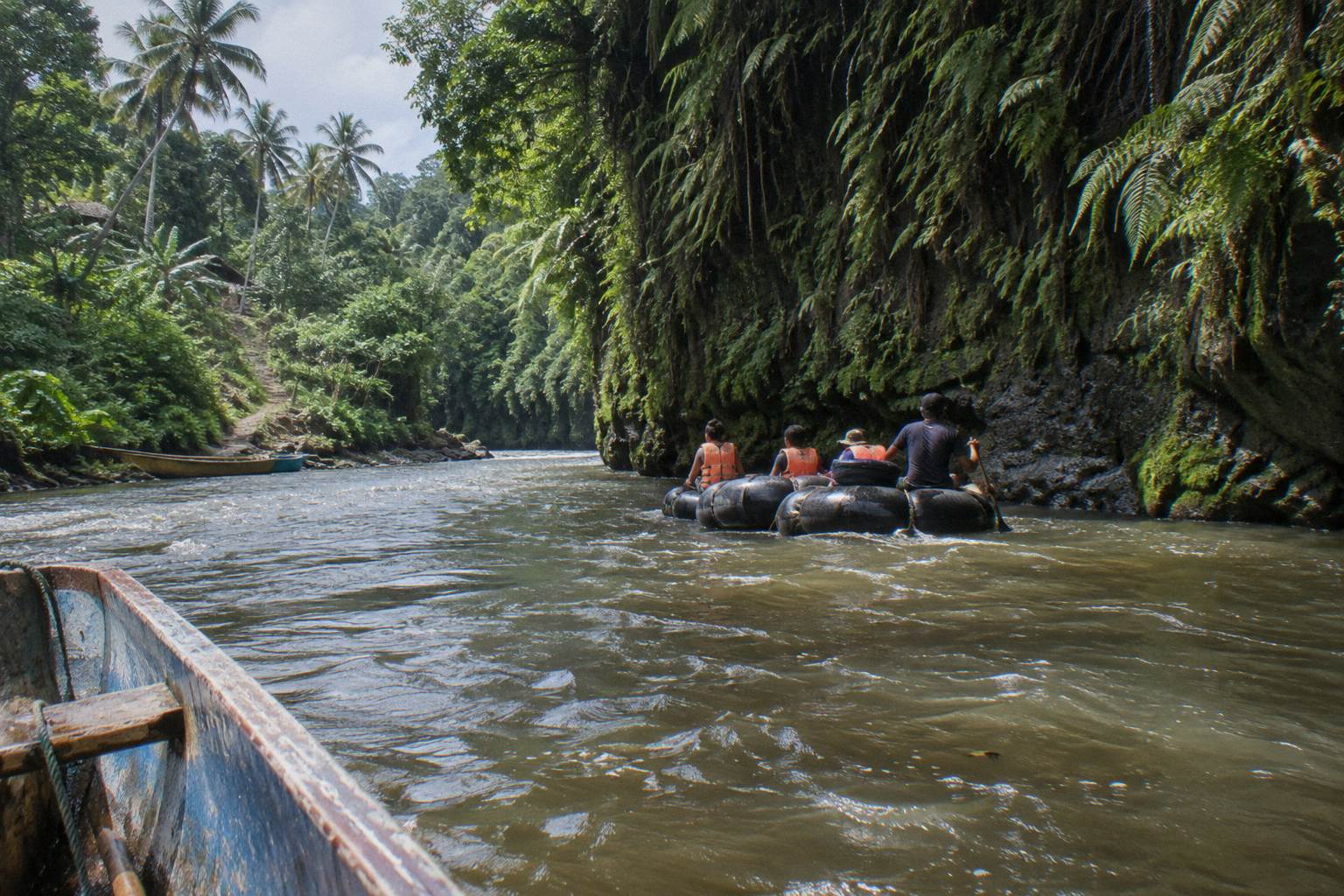
Age framing needs care too. The "5 to 15 half price" line is a pricing rule on the tubing operator's terms page, not a safety minimum, and no single minimum age applies across both tubing listings, since the Bula page sets its own under-6 exclusion. For the rafting day, print nothing except the instruction to ask. If your group includes anyone with a medical consideration, our river tubing safety guide collects every operator-stated rule in one place.
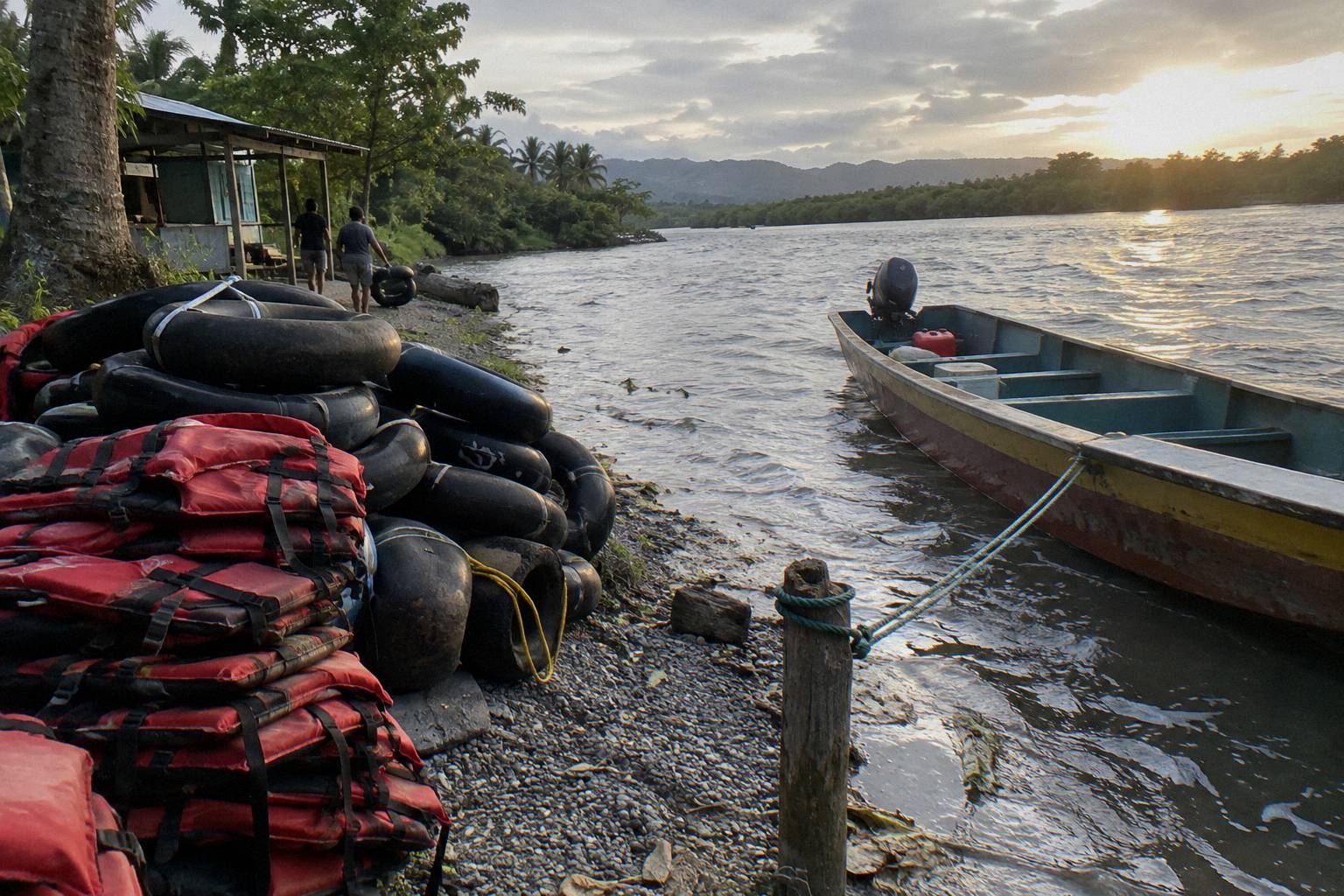
For weak swimmers, tubing moves at drifting speed with compulsory vests and guides present, while grade 3+ rafting expects you to be comfortable in moving water. The Bula tubing listing asks you to tell the team at booking about weak swimmers, a good habit on any river trip.
Booking, Cancellation And What The River Decides
Both major tubing listings show free cancellation up to 24 hours in advance on their booking pages, while booking direct with the tubing operator carries its own tiers: no fee above 48 hours, 50 percent between 24 and 48 hours, and full fee inside 24 hours. The Rivers Fiji rafting listing also shows free cancellation up to 24 hours in advance for a full refund. If the operator cancels a tubing trip for river conditions you get a full refund or a reschedule.
Channel matters here, and the two channels genuinely differ. The booking-page terms are the booking pages' own; the operator's direct tiers are the operator's. Presenting one as the other is how travellers get surprised, so decide which channel you are buying through before you care about the fine print. Our how to book Navua river tubing walkthrough covers the mechanics step by step.
| Booking channel | Cancel inside 24 h | Cancel 24 to 48 h out | Cancel more than 48 h out | River-level cancellation by operator |
|---|---|---|---|---|
| Main tubing booking page | Free cancellation ends 24 hours before start | Free | Free | Not stated; check the page |
| Second tubing booking page | Free cancellation ends 24 hours before start | Free | Free | Not stated; check the page |
| Tubing operator direct | 100% fee | 50% fee | No fee | Full refund or reschedule |
| Rafting listing | Free cancellation ends 24 hours before start | Free | Free | Not stated; ask the operator |
The river also gets a vote. The tubing operator may cancel or amend a trip for river or weather conditions. The dry-spell notice on its home page currently excludes the village visit when low water makes the extra journey unsafe, and the route is reassessed on the day if rain restores conditions. Rain can add the village back or reshuffle the rafting day. Build one flexible day into a short itinerary if either trip is your priority. The warm, wet season runs November to April and the cooler, drier months May to October, a broad pattern rather than an operator promise.
What you carry differs too. The tubing terms list sunscreen, hat, towel, change of clothes, water, rain gear and a skirt or sarong for women for the village visit, with water shoes recommended on the listing; the rafting day's kit list is the operator's to give you. Neither page bans phones, but the tubing operator sells a photo package precisely so your devices need not get wet, which is a hint worth taking on either river.
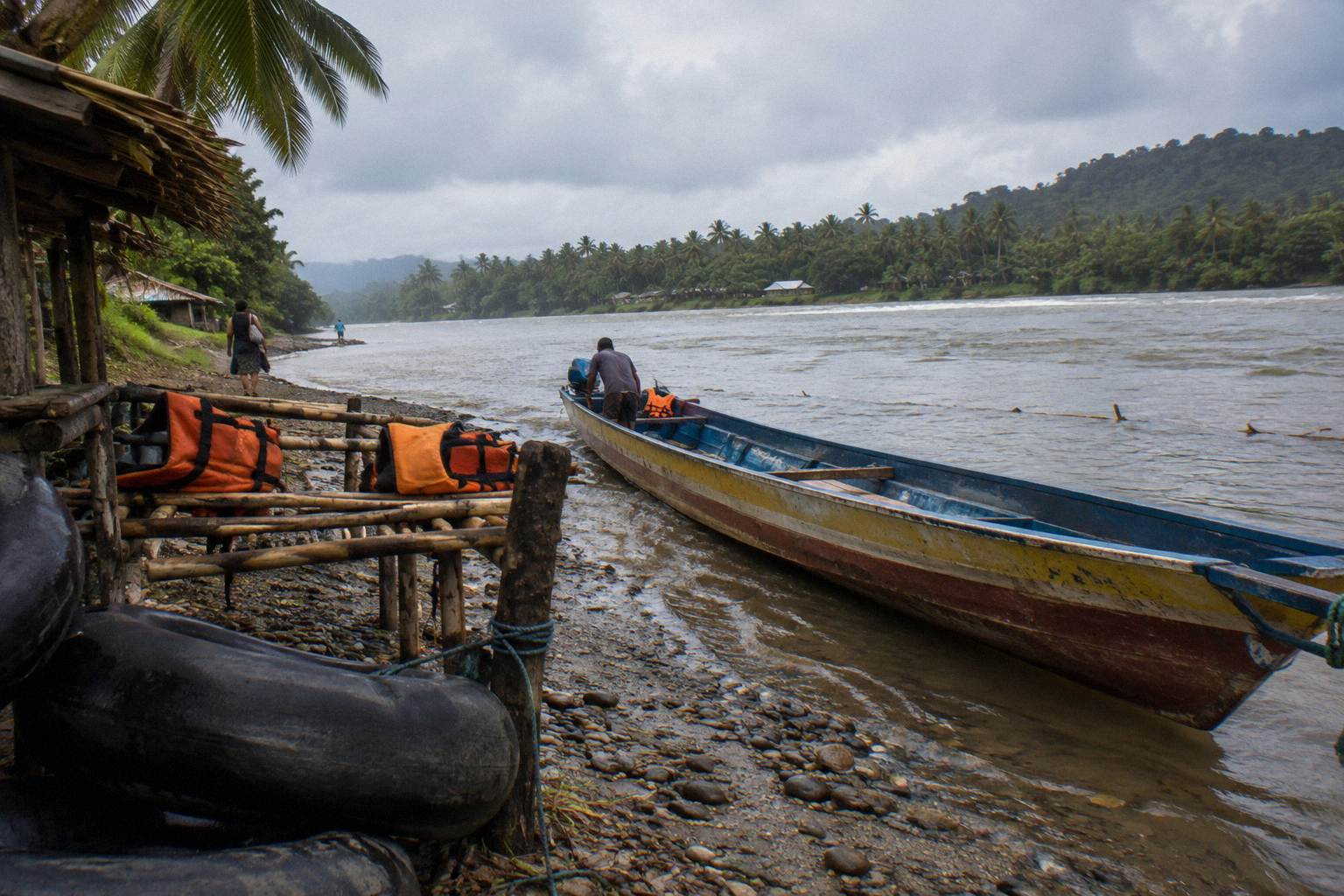
For travellers weighing the cheaper tubing alternative, the Navua River Tubing Day Tour at from USD 101 runs 7 hours with resort pickup, buffet lunch and free cancellation up to 24 hours, and being new it has no rating history yet, which is a fact rather than a flaw. For those leaning the other way, the Upper Navua rafting day at a glance shows the full listing detail for the gorge trip, and you can also check the tubing operator's own River Tubing Fiji site for its current trip notes.
So Which One Should You Actually Book?
Book tubing if you want a varied day, culture, a swim under a waterfall and gentle water, at from USD 120 or from USD 101 depending on the listing, with most of a day door to door. Book rafting if whitewater is the point, your group swims confidently and you have a full day and from USD 212 per person to spend. Doing both across a week in Fiji is not extravagant, and plenty of visitors do exactly that.
A useful tiebreaker is to ask which memory you want to keep. Tubing's moments are human: a village welcome, a guide singing as the current carries you, lunch on a riverbank. Rafting's moment is the canyon itself, walls rising about 75 metres over a river 5 to 25 metres wide, inside a Ramsar site. Neither is the better trip; they barely compete.
Budget-conscious travellers should also note that from-prices move with date and pickup point, and the tubing operator's own direct prices are quoted in Australian dollars, so compare the final checkout figure rather than any article's number, including ours. Whatever you choose, book early enough in your trip that a river-level reschedule does not collide with your flight home.
The tubing day, Pacific Harbour River Tubing, is the region's most accessible river experience, while the rafting canyon is the more dramatic one. Match the trip to your group, not to a slogan, and the Navua will deliver either way.
Whether you drift it or paddle it, the river deserves the better part of a day, and both operators make that easy with wide pickup coverage. Pick your water, pack the sarong or the paddle, and go.
Common Questions About River Tubing Vs Rafting
Is River Tubing Or Rafting Better For Beginners?
Tubing. The operator describes its rapids as gentle, life vests are compulsory, and no swimming standard is stated, while the rafting trip runs grade 2 and 3+ whitewater in a confined gorge. Beginners who swim confidently can enjoy rafting, but tubing is the lower-commitment first river trip.
Does The Tubing Trip Go Through The Upper Navua Gorge?
No. The tubing route starts at Navua town on the lower river and reaches roughly 17 km upriver to the waterfall and village. The Upper Navua Conservation Area is the upper gorge, rafting territory, and no official page says tubing enters it.
What Is The Price Difference Between Tubing And Rafting?
River Tubing Fiji starts from USD 120 per person and the Navua River Tubing Day Tour from USD 101, while Upper Navua Whitewater Rafting starts from USD 212 per person. All are booking-page from-prices that vary by date and pickup point.
Can Children Do Both Trips?
On tubing, children 5 to 15 pay half price and must be accompanied by an adult, with under 5s free; the Bula listing says under 6s are not suitable. The rafting listing states no minimum age, weight or fitness rule, so ask the rafting operator before booking.
Which Trip Is Better If I Cannot Swim Well?
Tubing, with the vest on and the team told at booking, as the Bula listing requests. No official minimum swimming standard exists for tubing, and none is published for rafting either, but grade 3+ water is the wrong place to test your confidence.
Do Both Trips Include Lunch And A Village Visit?
The tubing day includes a riverside Fijian-style lunch, vegetarian on request, and a village visit that is conditional on river levels. The rafting day is built around the canyon paddle, and its inclusions are on its live listing.