Are Water Shoes Or Aqua Shoes Necessary For Navua River Tubing?
What River Tubing Fiji's own terms and booking pages say about footwear for the Navua River tubing day, what to wear in the village, and what to pack instead.
No footwear rule will stop you from tubing the Navua River, but water shoes are a sensible choice and the main booking page for the River Tubing Fiji trip lists comfortable shoes or water shoes among its recommendations. The operator's own terms page never mentions footwear at all, so this is guidance rather than a condition of travel, and the decision comes down to where you will be walking before and after the float.
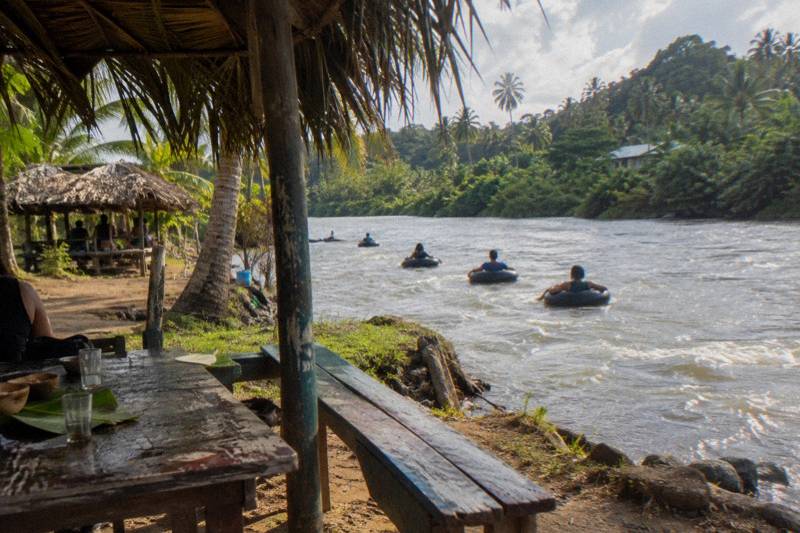
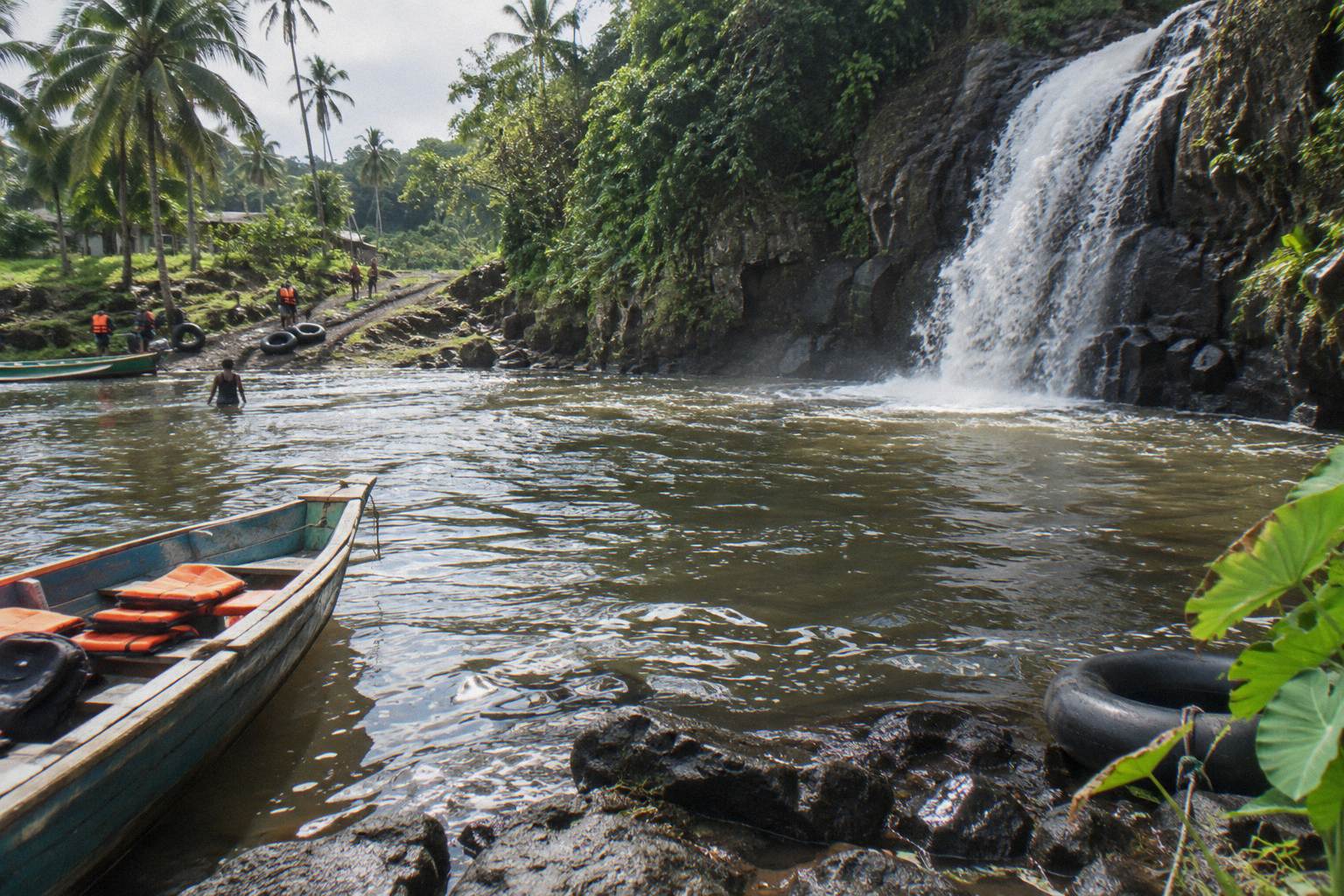
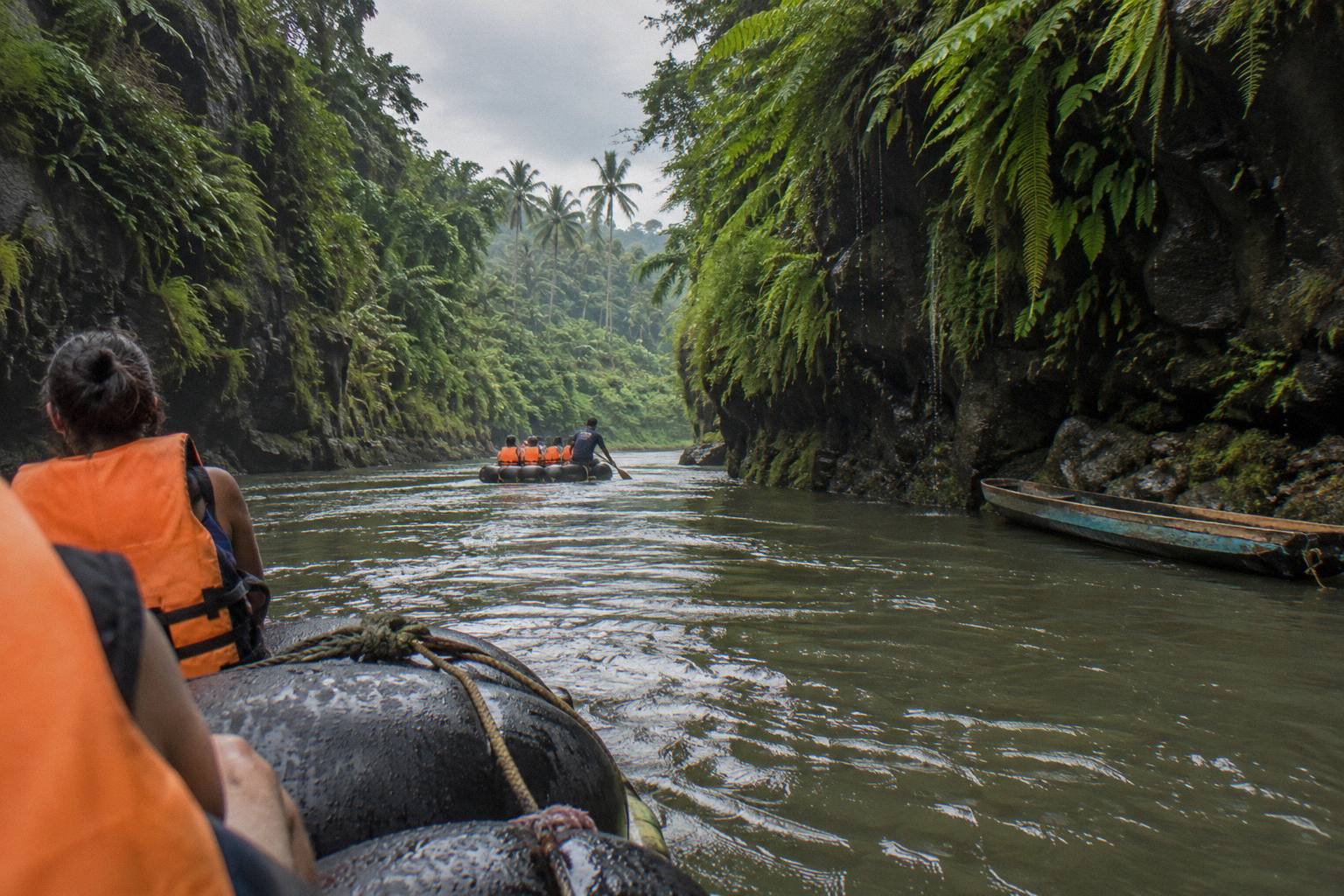
That distinction matters more than it sounds. A tubing day on the Navua is not just a float down a river. It is a full itinerary: hotel pickup, a welcome briefing, a longboat ride upriver, possibly a guided village visit when river levels allow, a waterfall swim, a riverside lunch, and only then the tubing run down what the operator calls gentle rapids. Your feet touch ground at almost every one of those stops, and the ground is not always a lawn.
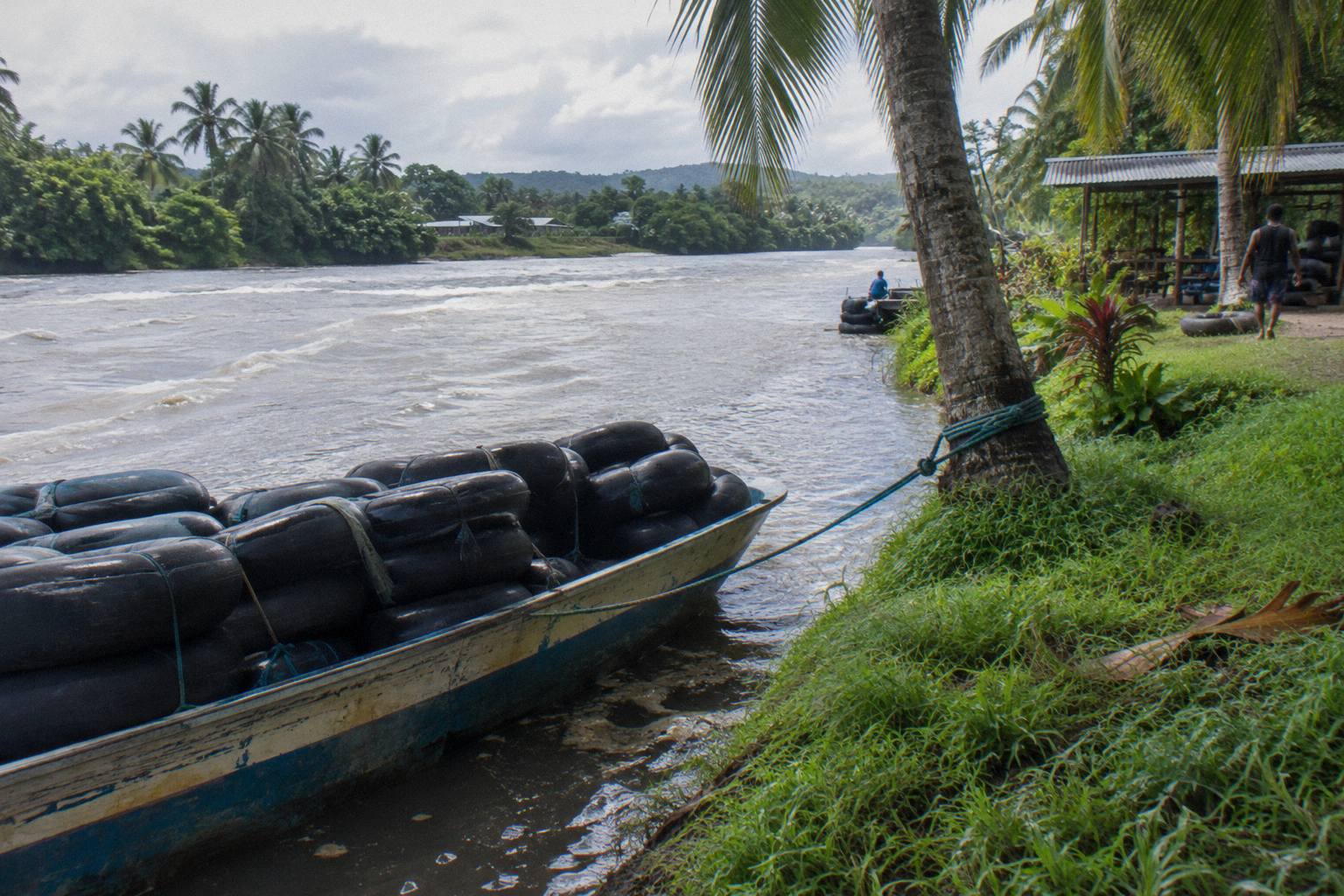
So the question is not whether shoes are required, but whether the places your feet will land justify a pair that can get wet. If you are staying in Pacific Harbour or Suva, the operator's base at Raiwaqa, five minutes up from Navua town, is less than an hour's drive away according to Tourism Fiji's Pacific Harbour page, which means your feet face the same riverbank whether you come from near or far.
What The Operator And Its Booking Pages Actually Say About Footwear
The operator's terms and conditions page lists sunscreen, hats, towels, a change of clothes, water, rain gear, a skirt or sarong for women visiting the village, and a great attitude, but it says nothing about shoes. The recommendation for comfortable shoes or water shoes appears on the main booking page for the River Tubing Fiji trip, which is a platform listing rather than the operator's own website.
That split is worth understanding. River Tubing Fiji's own website, rivertubingfiji.com, prints no prices, no durations and no packing list beyond the terms page. The from USD 120 per person price, the 4.8 rating across 181 reviews, and the footwear suggestion all come from the main booking page. A second booking page for the same trip shows a 4.9 rating, and its price is on the listing. When two channels describe the same day differently, the practical move is to treat the booking page you actually book through as the source of truth for what to bring.
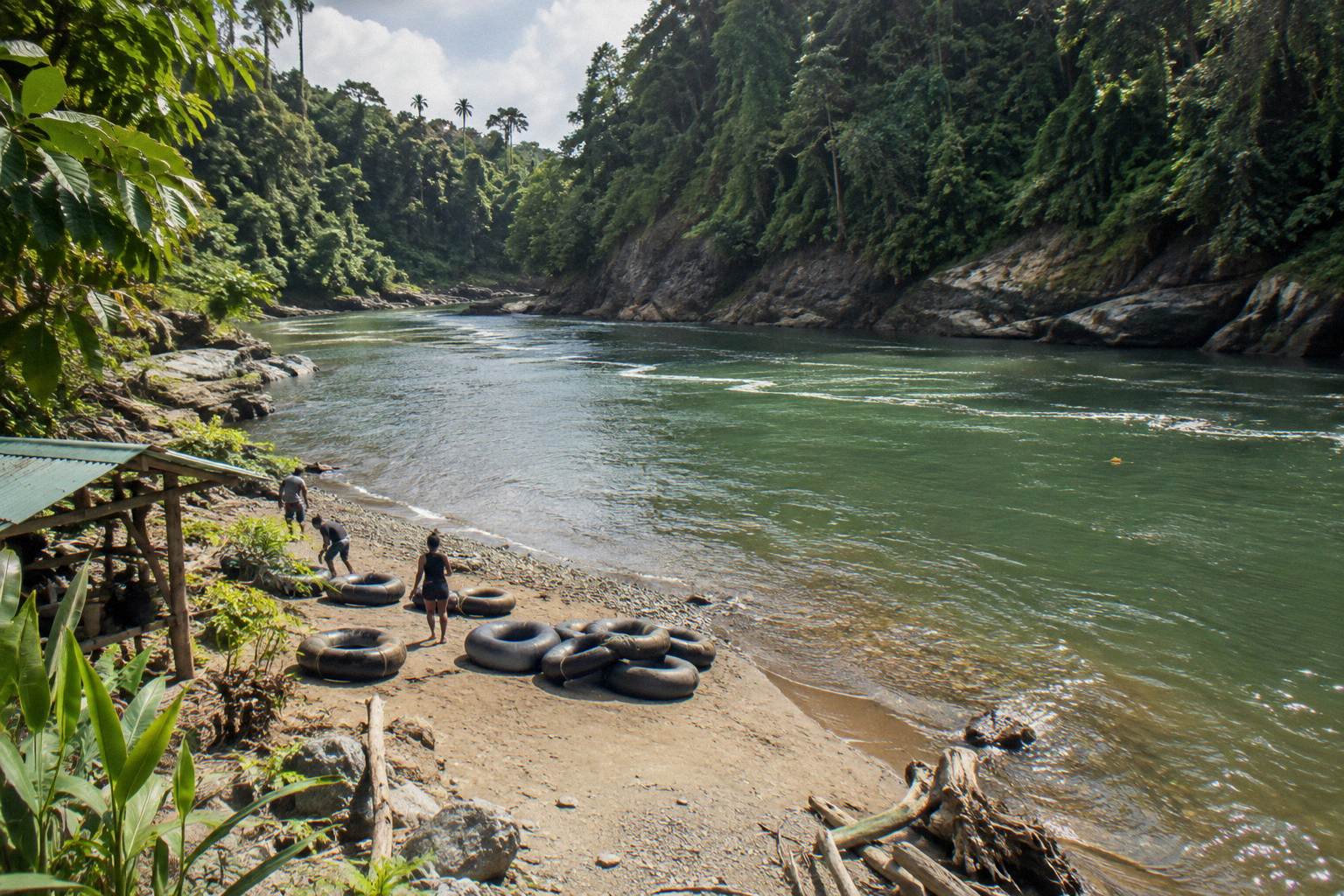
Neither source describes the river bed itself. There is no official statement about rocks, mud, gravel or slipperiness underfoot, and this site will not invent one. What the sources do establish is the sequence of the day: a longboat ride upriver, a waterfall roughly 12 km up the Navua, a village a further 5 km on, lunch, then the float back down. Wet surfaces at a waterfall pool and a riverbank landing are ordinary expectations of that itinerary, not marketing copy.
“Amazing experience! River tubing is a must-do tour in Fiji! The boys were great, very friendly and helpful, and we really enjoyed every moment. Such a fun and memorable adventure. Highly recommended!”
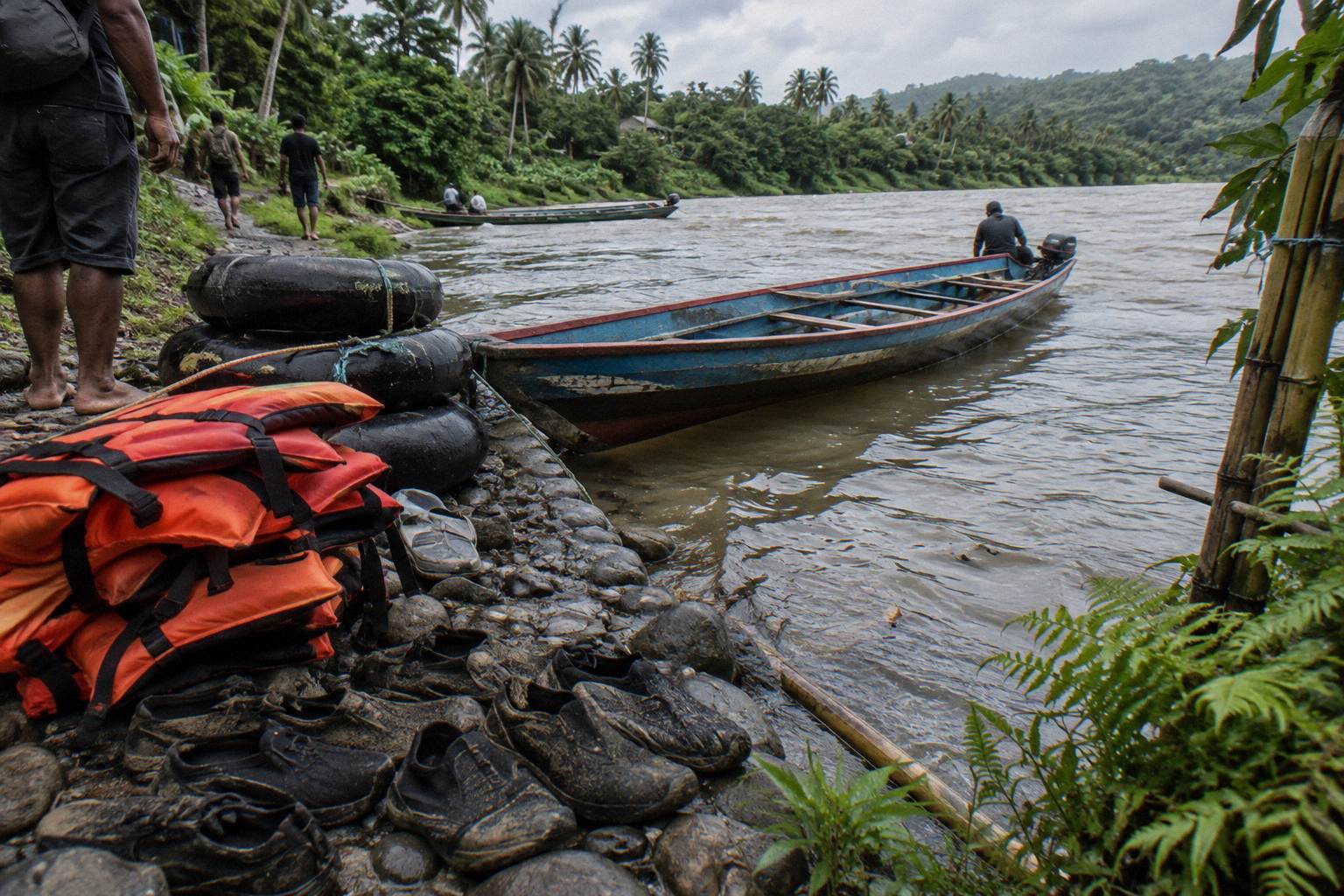
The booking page recommendation of comfortable shoes or water shoes fits that itinerary precisely. It covers the walk to the longboat, the scramble in and out of the water at the waterfall, and the moment you step out of your tube at the end of the run. If you are the sort of traveller who wants the exact packing list straight from the source, the operator's terms and conditions page lists it in full, and our broader packing guide covers the rest of the kit.
Village Dress Rules: Why Footwear Is Only Part Of The Story
Footwear is not the dress question that actually has rules attached. The operator's terms state that ladies need to bring a skirt or sarong for the village visit, and the Navua River Tubing Day Tour booking page, a different trip, says hats, bare shoulders and bare knees are not permitted in the village. Each rule belongs to its own trip, so check the page you booked through rather than assuming one applies to both.
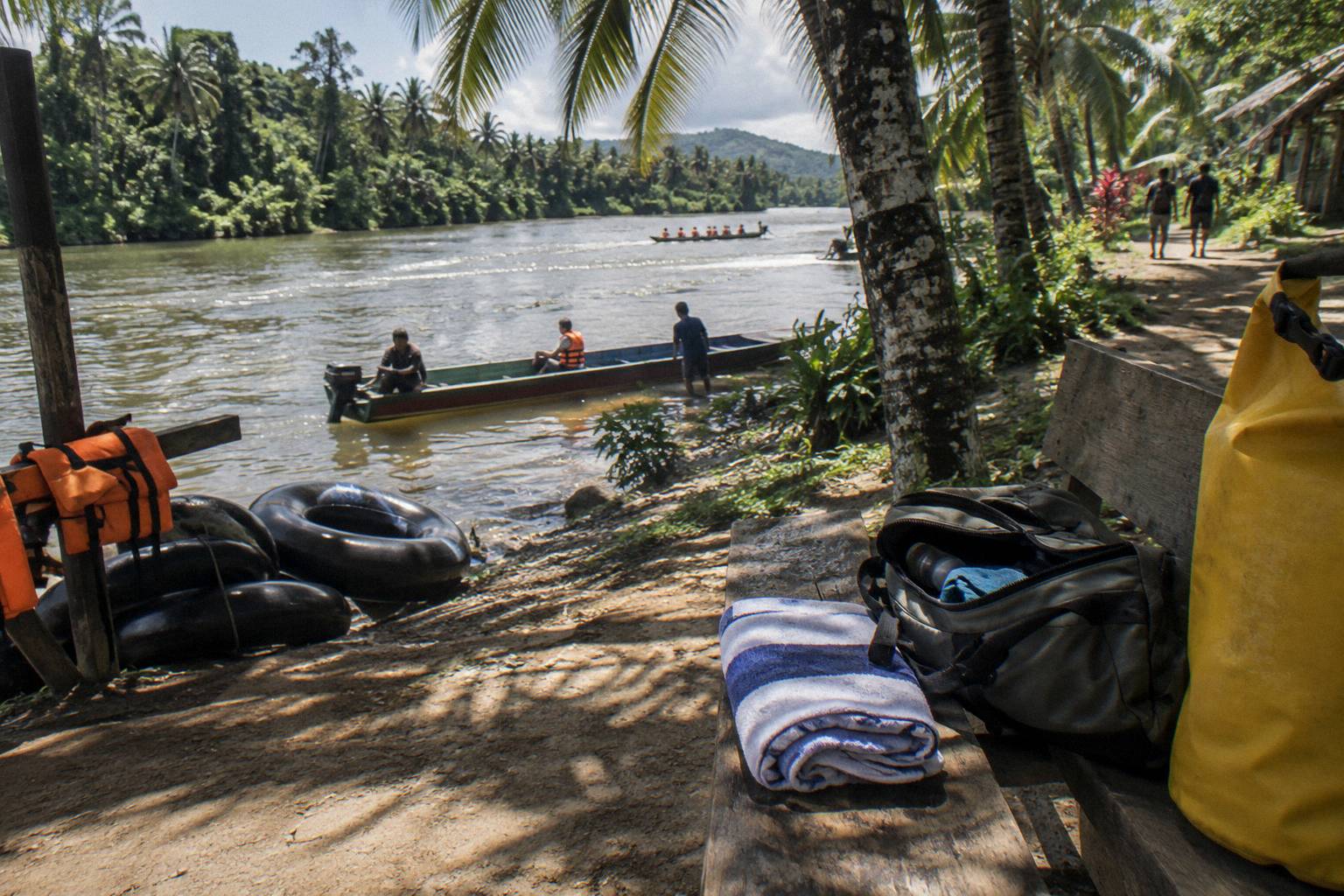
This is the part of the day where footwear fades into the background and clothing takes over. The village visit on the River Tubing Fiji itinerary is a guided stop between the longboat ride and the waterfall swim, and it is a cultural visit to a living Fijian community, not a photo opportunity with a costume change. Women should pack the sarong the terms ask for. Men are covered by the general modesty norms that the Bula Online listing spells out for its own trip, though that listing's specific rules should not be pasted onto this one.
One caution that matters more than shoes: the village visit is conditional on river level. The operator's home page carries a dry-spell notice stating that the village visit is temporarily excluded when low water levels make the additional journey unsafe, and the route is reassessed on the day if rain restores safe conditions. The main booking page says the same. So the sarong might stay in your bag, and no booking channel will promise the visit in advance. Bring the sarong anyway; it weighs nothing and doubles as a towel wrap after the waterfall swim.
If footwear and clothing planning starts to feel like a lot, our piece on what to wear on the water for a tubing day walks through the clothing side.
“Traveled with older teenagers and we all had a great time. The waterfalls were beautiful and the food was delicious with plenty of helpings for my teenage son. It was a bit cold that day but still a really fun time. We were in Nadi so the drive was far (3 hrs each way) but our driver was great and stopped for a break half way through. The guides were very friendly and engaging as well.”
Water Shoes, Sandals Or Old Sneakers: Which Holds Up Best
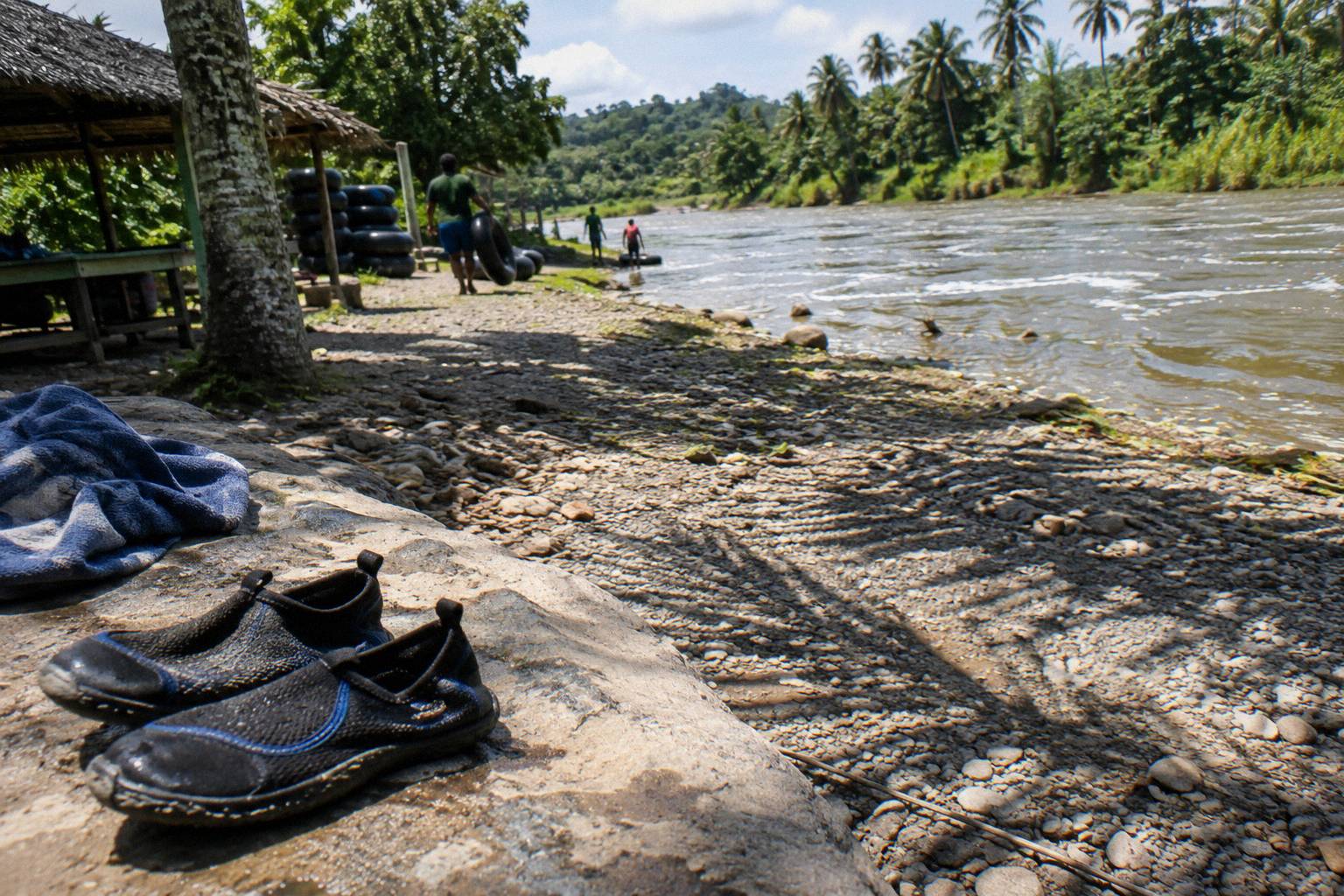
There is no officially endorsed type of shoe for Navua River tubing, because no source names one. The booking page's phrase is comfortable shoes or water shoes, which leaves room for anything that stays on your foot, grips when wet, and can be worn into the water without being ruined. Anything that fails one of those three tests is the wrong choice.
Since no official guidance goes further than that phrase, what follows is general reasoning about the itinerary, clearly labelled as such, not operator advice. The three tests do most of the work. Staying on the foot rules out loose flip-flops, which are the classic tubing mistake: they float away at the first rapid and spend the rest of the day in the ocean. Gripping when wet matters at the waterfall pool edge and on any wet boat ramp. Surviving the water rules out leather and anything you would be upset to lose.
| Option | Stays on in current | Grips wet rock | Dries fast | Verdict for a tubing day |
|---|---|---|---|---|
| Water shoes / aqua shoes | Yes | Yes | Yes | The safe default; matches the booking page wording |
| Strapped sport sandals | Yes, if properly tightened | Reasonably | Yes | Good alternative; check the straps before the trip |
| Old sneakers | Yes | Moderately | No | Works, but you carry wet shoes all day |
| Flip-flops | No | Poor | Yes | Leave them on the bus; they float away |
Children's feet deserve the same logic. The operator's terms say children aged 5 to 15 pay half price and must be accompanied by an adult, and under-5s travel free, with ID or birth certificate possibly requested. That is a pricing rule, not a safety minimum, and it is not a footwear rule either, so apply the same three tests to whatever the kids will wear. A child who loses a shoe at the waterfall has a long afternoon ahead.
What Else To Pack, Straight From The Operator's List
The operator's official bring list is short and specific: sunscreen, a hat, a towel, a change of clothes, drinking water, rain gear, a skirt or sarong for women for the village, and a great attitude. The home page adds bottled water, and the booking page adds comfortable shoes or water shoes. Nothing else is officially required, and nothing on any source says jewellery, phones or cameras are banned.
There is no stated policy on phones, cameras, jewellery, alcohol or tipping anywhere in the operator's published terms or on the booking pages: not stated; ask the operator. What the operator does offer is a workaround for the electronics question. The gallery page sells a photo package, described as a package of pictures, which means your own devices never need to get wet at all if you buy it. For travellers who want the waterfall and the rapids on camera without a waterproof case, that is the intended solution.
| Item | Source that lists it | Why it earns its place |
|---|---|---|
| Sunscreen | Operator terms | Sun exposure on an open tube is the day's quietest hazard |
| Hat | Operator terms and booking page | Shade on the boat ride; note village hat etiquette varies by trip |
| Towel and change of clothes | Operator terms | You will be soaked after the waterfall and the float |
| Drinking water | Operator terms and home page | Hydration across what is most of a day |
| Rain gear | Operator terms | Fiji's weather turns quickly, especially November to April |
| Skirt or sarong (women) | Operator terms | Required for the village visit when it runs |
| Comfortable shoes or water shoes | Main booking page | The river tubing tour |
| Great attitude | Operator terms | Listed verbatim; take it as seriously as the sunscreen |
Note the wording on the hat row. The Bula Online listing for the other tubing trip says hats are not permitted in the village, while the operator's own terms tell you to bring one. Those rules sit on different trips, so do not panic: bring the hat for the river, and follow the guide's lead at the village gate. The full packing breakdown, including food questions, lives in our guide to what to pack for river tubing.
Rain, River Levels And Why The Dry Season Changes The Day
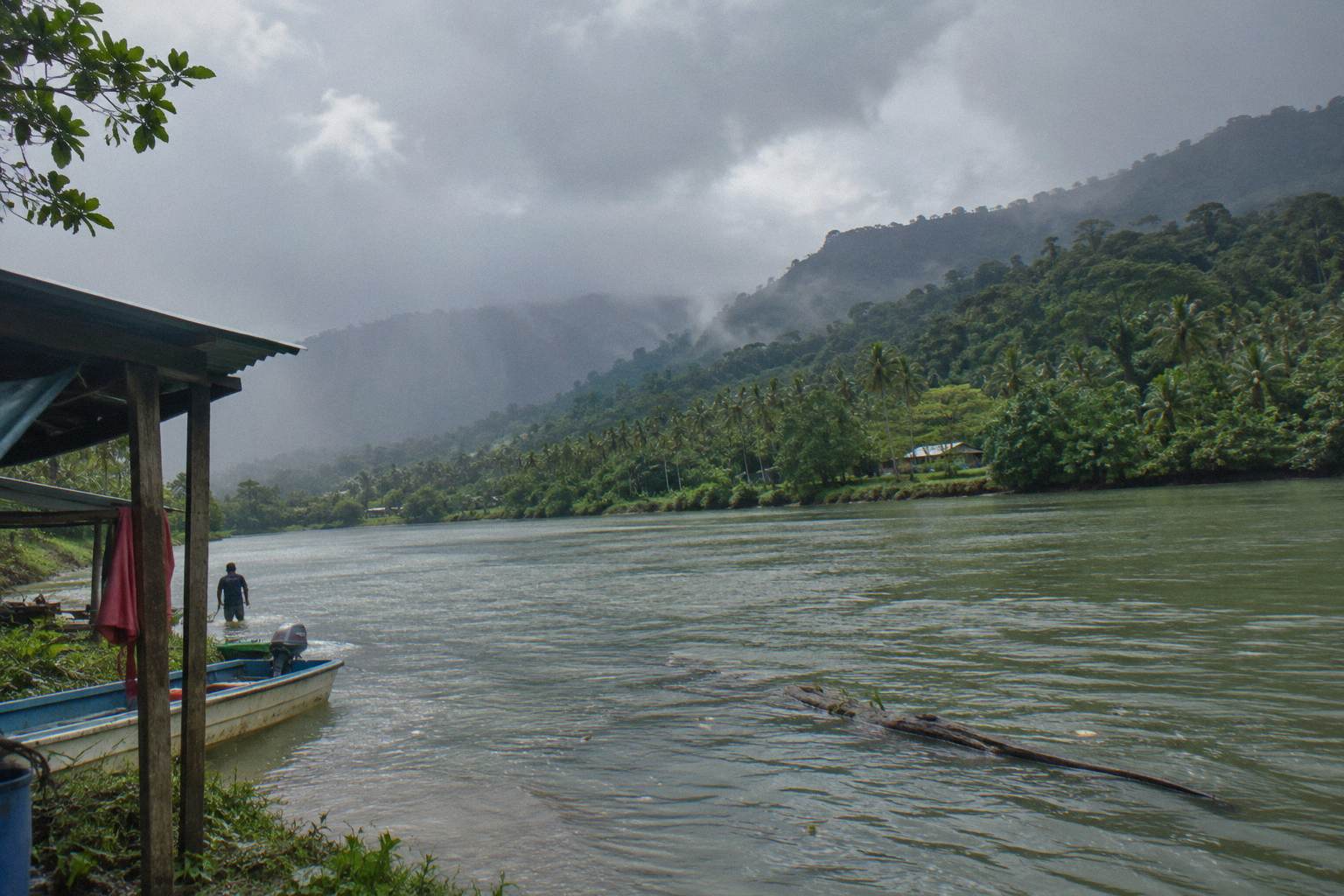
Fiji's wet, warm season runs November to April and the cooler, drier season May to October, as general climate, and river tubing runs through both. The consequence for feet is indirect but real: low water levels can drop the village visit from the itinerary entirely, and the operator reassesses the route on the day if rain restores safe conditions, so the amount of walking you do varies with the weather you did not choose.
The dry-spell notice is the single most overlooked line on the operator's home page. It says the village visit is temporarily excluded when low water levels make the additional journey unsafe, because the village sits about 5 km beyond the waterfall, roughly 17 km up the Navua altogether, and the longboat has to get there. In dry conditions the day shortens: boat ride, waterfall, lunch, tubing. In wet conditions the full itinerary runs. Your shoes meet a different amount of riverbank in each case.
Guest reviews from the 2026 season mention one detail that no packing list captures: guides sing cultural songs during the tube float. That is traveller reporting rather than operator copy, and it has nothing to do with footwear, but it explains why people remember this day fondly even when the village stop is dropped. The float itself is the constant; the extras flex with the river.
If rain is in the forecast, there is no need to worry about what happens to river tubing when it rains, because the answer is usually that the trip runs. And if the whole question of cancellation windows is on your mind: the operator's direct terms charge 100 percent inside 24 hours, 50 percent between 24 and 48 hours, and nothing beyond 48 hours, while the booking pages show free cancellation up to 24 hours in advance. Two channels, two policies, both printed plainly.
How Tubing Footwear Compares With The Rafting Day Upstream
The Upper Navua Whitewater Rafting day, from USD 212 per person with Rivers Fiji named as the provider on its booking page, is a different kind of trip on a different stretch of river, and its booking page prints no footwear, age or fitness rules at all. Tubing's gentle rapids and rafting's grade 2 and 3+ upper gorge, as Tourism Fiji describes them, place different demands on the same pair of feet.
“Excellent day trip. All the guides, drivers and tour leaders were very kind. The day was very well organized. Excellent commentary during the tour of the village and the garden. The setting is simply magnificent. Thank you!”
The geography explains the difference. The upper Navua gorge is a Ramsar-listed conservation area, site number 1612, designated in April 2006, with walls roughly 75 metres deep in places, and it is rafting territory. Rivers Fiji describes it as Fiji's first officially designated Ramsar site, protected through a lease with nine mataqali, the local landholding groups. No official page says the tubing trip enters that gorge; the tubing route starts down at Navua on the lower river, with the waterfall about 12 km upriver. Tubing is, in Tourism Fiji's own framing, the gentler option.
What that means practically is that nobody should buy water shoes for the tubing day expecting to need them for gorge scrambling. The tubing day asks your feet to handle a boat landing, a waterfall pool and a riverbank, all on the lower river. If you are tempted by the rafting day instead, do your footwear research on that trip's own terms, because its listing states no rules. Our fuller comparison of the two trips covers the choice in depth.
Booking, Pricing And What The Footwear Question Is Really About
Expect to pay from USD 120 per person for River Tubing Fiji's Navua trip, rated 4.8 across 181 reviews on its main booking page and 4.9 on a second page with no count, or from USD 101 for the other provider's 7-hour Navua River Tubing Day Tour, which is new and unrated. Neither price includes shoes, so the footwear question is really about a small extra purchase after booking, not part of the tour price.
Bear that in mind when you are deciding whether to buy aqua shoes for a family of five. A pair of basic water shoes costs a fraction of even the cheaper trip, and the consequence of getting footwear wrong, a lost sandal or a cut sole at the waterfall, lands on the day you paid for. The guides will handle the river; they cannot handle your shoe choice for you.
Planning the whole day from pickup to drop-off is where the real preparation sits, especially from Nadi, where recent guests report roughly three hours each way by van. Our guide to how long the tubing day really takes from pickup covers the transfer maths, and Pacific Harbour River Tubing keeps the full set of planning pages for every approach route, from the Coral Coast to Suva.
Common Questions About Water Shoes And Navua River Tubing
Are Water Shoes Or Aqua Shoes Necessary?
Not as a rule. The operator's terms never mention footwear, and the main booking page simply lists comfortable shoes or water shoes as a recommendation. Nothing in any official source will stop you from tubing in the wrong shoes, but water shoes handle the boat landings, the waterfall pool and the riverbank better than anything with loose straps.
Can I Wear Flip-Flops Tubing On The Navua River?
Nothing officially bans them, but flip-flops are a poor choice on any river: they come off in current, they float away, and they give almost no grip on wet surfaces. If you wear them to the pickup, pack a pair of strapped sandals or water shoes in your bag for the river sections.
Will Bare Feet Get Me Turned Away?
No source says so. The operator's terms and the booking pages state no barefoot rule and no footwear requirement of any kind. The practical consideration is what your feet will stand on: wet boat ramps, riverbank and a waterfall pool, none of which are described in official material, so the choice is comfort and safety rather than compliance.
Does The Village Visit Have Shoe Rules?
Not stated. The operator's terms ask women to bring a skirt or sarong for the village, and the other tubing trip's booking page says hats, bare shoulders and bare knees are not permitted in the village, with no shoe rule named on either. Follow your guide's lead on arrival. Remember the visit itself depends on river level and cannot be promised.
Where Can I Keep My Shoes And Dry Clothes During The Tubing Run?
Not stated on any official page. Guests typically leave dry items with the transport or the operator's team at the riverside lunch stop, but confirm arrangements with the operator or your guide on the day. The operator sells a photo package so devices need not get wet either.