Upper Navua River Rafting Vs A Lower River Tubing Day
The Navua River serves two very different days out: a full-day whitewater rafting trip through the protected Upper Navua gorge, and a gentler tubing float on the lower river with a village visit when river levels allow and a waterfall swim. Here is how they differ, what each one costs, and who should pick which.
Short answer
Upper Navua Whitewater Rafting, run by Rivers Fiji, is a full-day trip from USD 212 per person through a 75 m deep protected gorge with grade 2 and 3+ rapids. Lower-river tubing is the gentler option: River Tubing Fiji runs from USD 120 and the Navua River Tubing Day Tour from USD 101, with no rating yet on the newer listing.
What Is Upper Navua River Rafting?
Upper Navua river rafting is a full-day whitewater trip through the Upper Navua Conservation Area, a protected gorge on Fiji's main island of Viti Levu, run by the operator Rivers Fiji and listed from USD 212 per person with no rating printed on its booking page. It travels rapids graded 2 and 3+ through a deep gorge that no road reaches, which is what separates it from every other day out on this river.
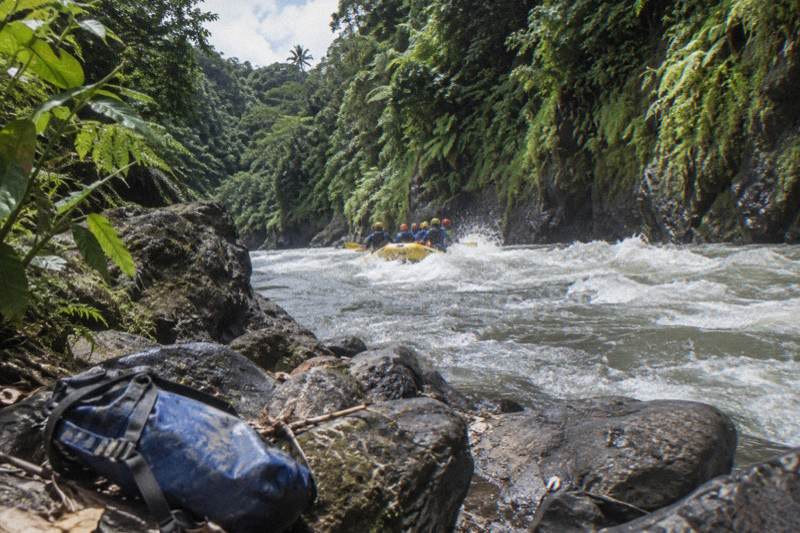
The trips starts, in logistics terms, from the Pacific Harbour side of Fiji's southern coast. Tourism Fiji calls Pacific Harbour "Fiji's centre for adventure", listing surfing, river tubing, whitewater rafting, jet boating and 4WD tours in the same breath, and the town sits less than an hour's drive from the capital Suva. The rafting day is the headline act of that adventure scene: you are carried up into the high gorge of the Navua, where black volcanic walls squeeze the river into a channel that in places is only 5 to 25 m wide.
The gorge is not just scenery. It is the Upper Navua Conservation Area, Ramsar site no. 1612, designated on 11 April 2006 and covering 615 hectares. Rivers Fiji, the operator on the booking page, describes it as Fiji's first officially designated Ramsar site, protected through a lease agreed with 9 mataqali, the traditional landholding groups of the area. That protection is why the gorge looks the way it does, and why the number of operators in it is small.
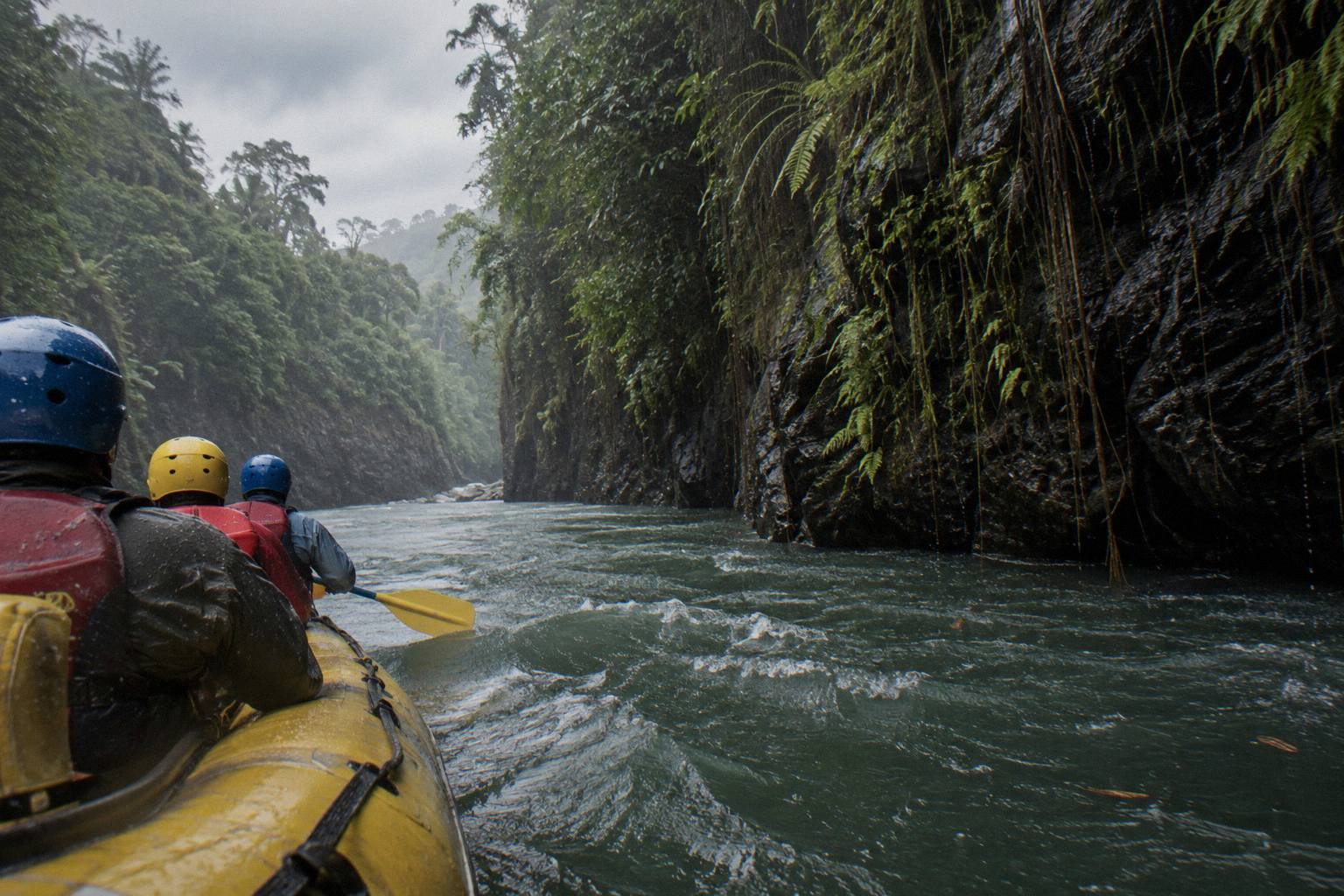
The conservation area holds real biological weight. The Ramsar record for the site lists the endemic sago palm Metroxylon vitiense along the river, two endemic freshwater fish species, and 17 endemic bird species in the surrounding forest. For most visitors the wildlife is a background note; the walls and the water carry the day. But it explains the feeling of the place, which reviews and Tourism Fiji copy both circle around: a canyon you can only see from the water.
One point worth fixing early, because the internet blurs it: the gorge the rafting trip enters is the UPPER Navua. The tubing trips further downstream never enter it. No official page says the tubing route reaches the Upper Navua gorge, and this site's research confirms the tubing day starts at Navua town on the lower river, turning around at a waterfall roughly 12 km upriver. If your heart is set on the deep gorge, rafting is the only one of these days that delivers it.
How Rough Are The Rapids Up There Compared With The Tubing Section?
Tourism Fiji grades the upper Navua and the Wainikoro-i-luva rafting runs at grade 2 and grade 3+ rapids through deep gorges, while it describes river tubing on the same river as "the gentler option". The tubing operator's own words for its water are "gentle rapids", and no grade is attached to the tubing trip anywhere official.
Grade 2 water means straightforward rapids with clear channels, the kind a first-timer paddles through with a guide shouting strokes. Grade 3+ is a step up: irregular waves, tighter lines, and a real chance of taking water over the tube of the raft. Neither number describes extreme expedition rafting, but grade 3+ in a narrow gorge is a genuinely physical day, and you should expect to paddle, get wet, and work.
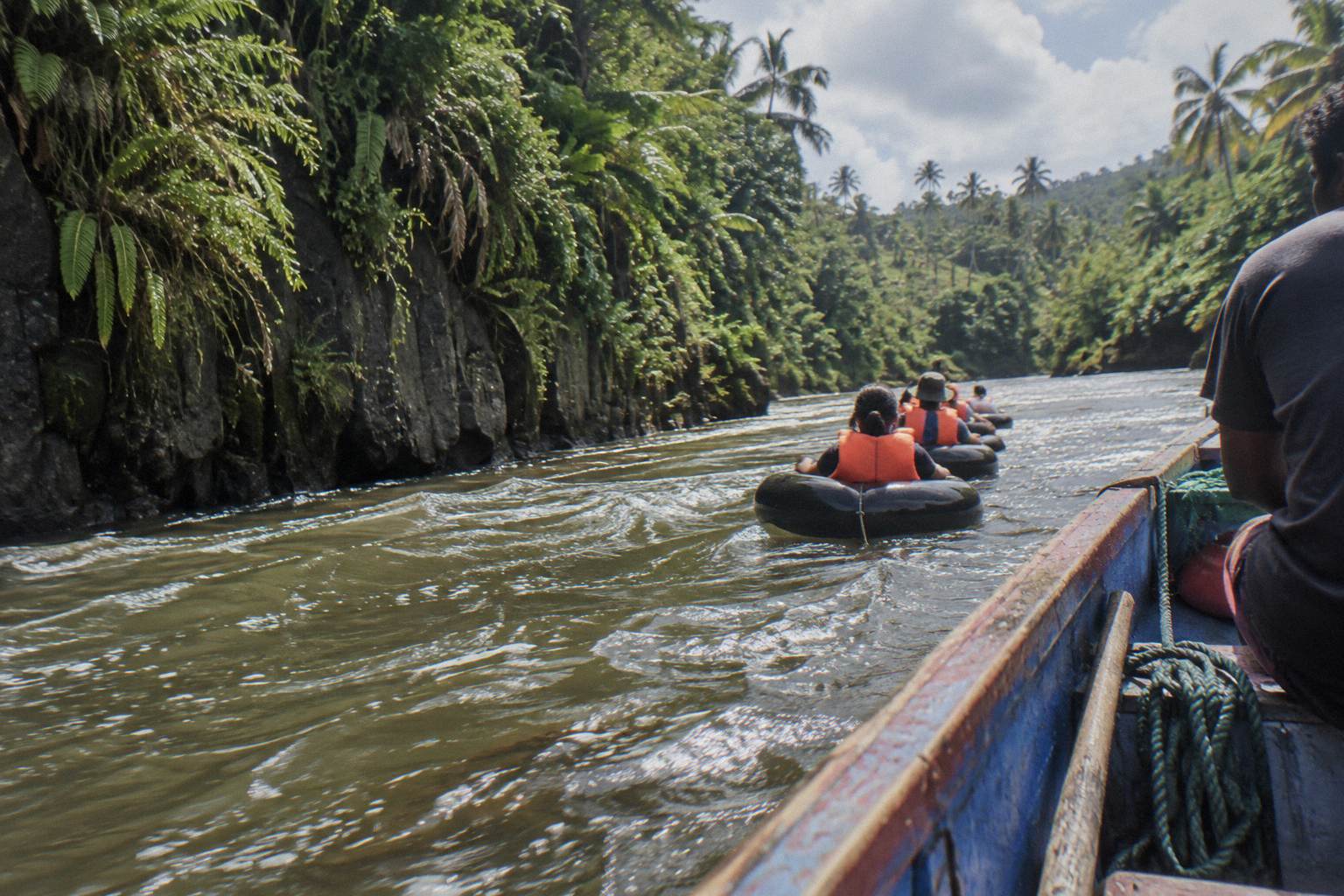
The tubing day is a different animal. The operator's itinerary runs: hotel pickup and briefing, a longboat ride upriver past greenery and waterfalls, a guided Fijian village visit when river levels allow, a waterfall swim, a riverside Fijian-style lunch, and then the tubing float downriver through what the operator calls gentle rapids. Guest reviews from recent months describe guides singing cultural songs during the float. This is a drift with splashes, not a paddle battle. No official grade exists for the water on the tubing side, so judge the roughness by the operator's own "gentle rapids" wording and by the reviews on the live listings.
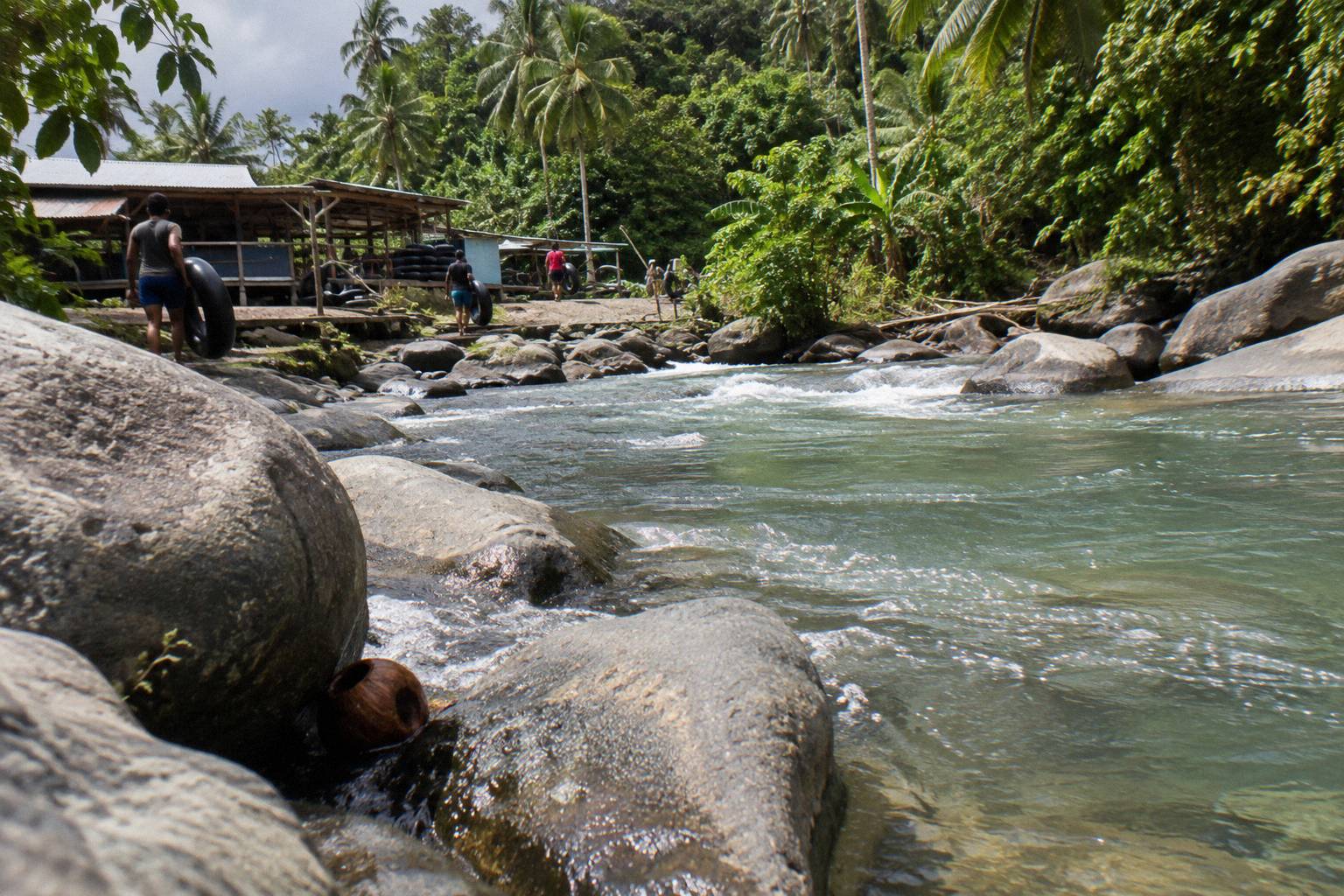
Tourism Fiji actually splits the whole Navua into a menu of intensities, and that framing is the cleanest way to place yourself on the river:
| Navua activity (Tourism Fiji's own framing) | Where on the river | Intensity |
|---|---|---|
| Whitewater rafting, grade 2 | Upper Navua and Wainikoro-i-luva | Full paddle day through deep gorges |
| Whitewater rafting, grade 3+ | Upper Navua and Wainikoro-i-luva | Harder rapids, committed gorge running |
| Jet boat to the "Magic Waterfalls" | Middle river | Fast boat ride, no paddling |
| Kayak or punt | Middle Navua | Self-propowered, calm water |
| River tubing | Lower river | "The gentler option", gentle rapids only |
For more on that specific question, see the site's guide to river tubing versus rafting on the Navua.
If you are still deciding between the two intensities, weigh your own condition as carefully as the water. A grade 3+ day in a gorge you cannot easily walk out of is unforgiving of a bad back, low fitness or a panic response, and the rafting listing states no age, weight or fitness rules, so ask Rivers Fiji directly before booking if any of those apply to you. The tubing listing, by contrast, says it is not suitable for people with back problems or mobility impairments, and the second tubing listing says the same about children under 6 and mobility impairments.
Rafting Or Tubing: Which Navua Day Should You Book?
Pick Upper Navua rafting if the gorge itself is the goal and you want a full, physical day; pick tubing if you want the village visit when river levels allow, the waterfall swim and a relaxed float at roughly half the price. Rafting is from USD 212 for the day; River Tubing Fiji is from USD 120, rated 4.8 across 181 reviews, and the Navua River Tubing Day Tour is from USD 101 with no rating yet.
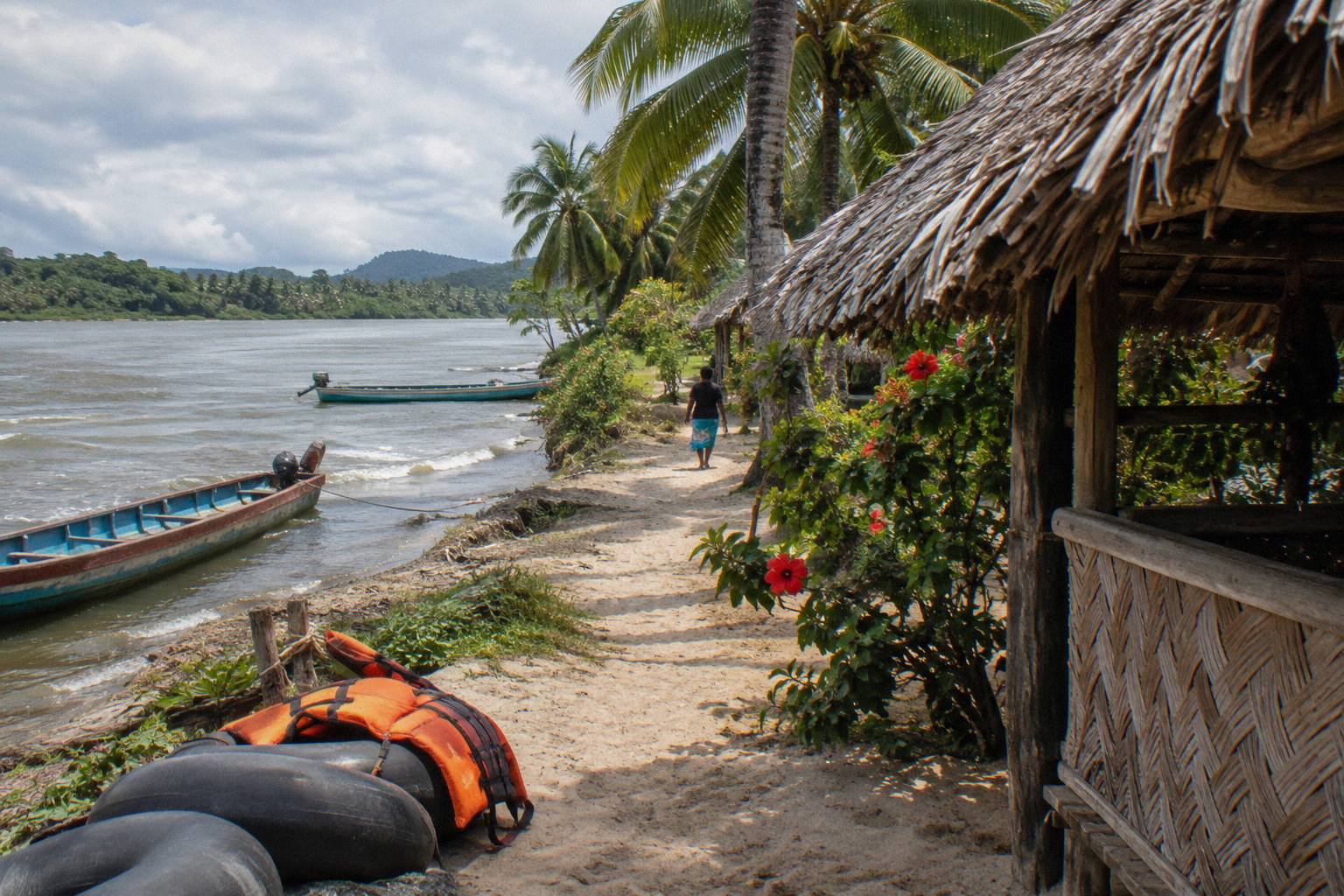
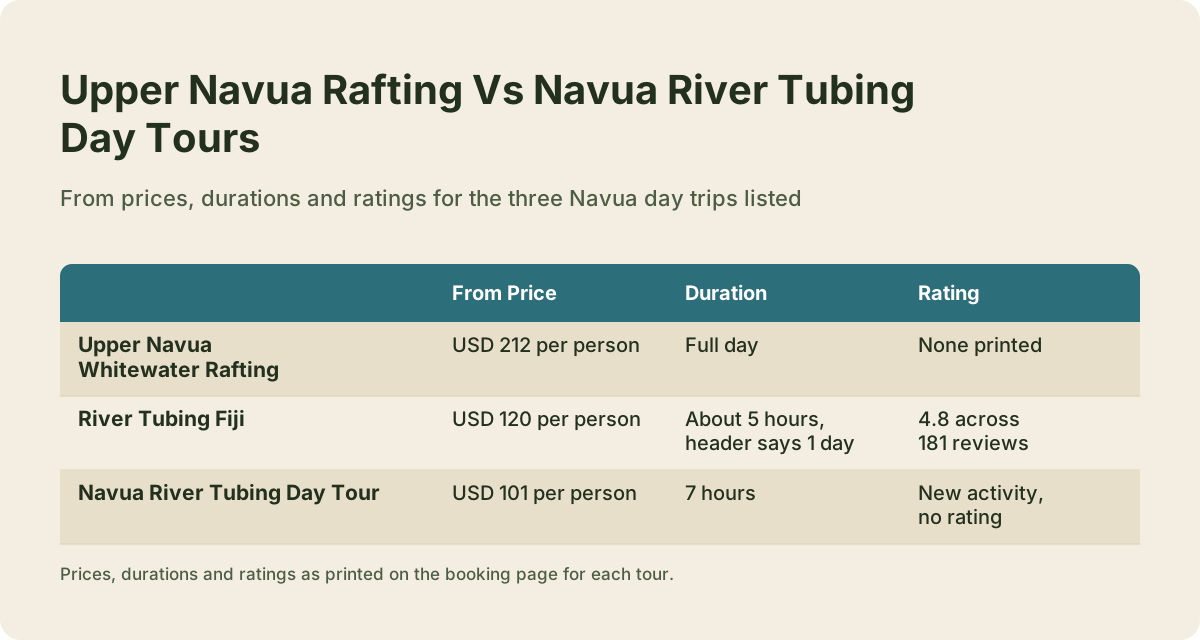
Price is the first difference most people feel. The rafting day costs from USD 212 per person on its booking page. The main tubing listing, River Tubing Fiji, costs from USD 120 per person and carries a 4.8 rating across 181 reviews on that page; a second booking page for the same tubing trip shows a 4.9 rating. The Navua River Tubing Day Tour, a newer activity, is from USD 101 per person and has no rating and no reviews yet.
The days themselves differ in shape, not just price. Here is the side-by-side:
| Upper Navua Whitewater Rafting | River Tubing Fiji | Navua River Tubing Day Tour | |
|---|---|---|---|
| Provider shown on listing | Rivers Fiji | River Tubing Fiji | Bula Online Fiji Tours and Watersports |
| From price | USD 212 per person | USD 120 per person | USD 101 per person |
| Duration on listing | Full day | Guided tour about 5 hours, listing header says 1 day | 7 hours |
| Rating | None printed | 4.8 across 181 reviews; second page shows 4.9 | New activity, no rating |
| Water | Grade 2 and 3+ rapids in the upper gorge | Gentle rapids, lower river | Tubing float, lower river |
| Village visit and waterfall swim | Not part of this trip | Yes, village visit depends on river level; waterfall swim | Yes, village visit and waterfall pool |
| Pickup | On the listing | Nadi, Denarau, Coral Coast, Sigatoka, Pacific Harbour, Suva | Return resort pickup |
| Not suitable for | Rules not stated, ask Rivers Fiji | Back problems, mobility impairments | Under 6s, mobility impairments |
Notice what the table quietly settles: these are not versions of the same product. The rafting day buys you the gorge and nothing else. The tubing days buy you a cultural loop, a swim under a waterfall, lunch on the riverbank, and a float home. Reviewers from the Nadi side report about three hours each way in the van for the tubing day, so from the west coast both trips eat most of a day once transfers are counted; from Suva or Pacific Harbour the run is under an hour.
A reader weighing the rafting trip may well switch to the easier tubing day, and that is a sound decision, not a retreat. The Pacific Harbour River Tubing site exists because the tubing loop suits more travellers than the gorge run does: families, mixed groups, non-swimmers who can wear a life vest, and anyone whose knees have opinions about grade 3 water. The reverse switch happens too. If you rafted once in Queenstown or Zambia and want Fiji's version, the gorge is a serious canyon by any standard, and the tubing float will not scratch that itch.
What Is The Upper Navua Gorge Actually Like Inside?
The Ramsar record for the Upper Navua Conservation Area describes a gorge roughly 75 m deep and 5 to 25 m wide, designated as site no. 1612 on 11 April 2006 across 615 hectares, with an endemic sago palm on its banks, two endemic freshwater fish and 17 endemic bird species in the surrounding forest. In plain terms: a slot canyon of black rock, waterfalls and rainforest that you can only see from a raft.
Those dimensions deserve a pause. A gorge 75 m deep and sometimes only 5 m wide is closer to a flume than a valley. Walls of that proportion block the midday sun for most of the day, keep the water cool, and funnel spray from the side waterfalls that pour after rain. Photography from a raft is difficult, which is partly why the gorge keeps a low profile compared with Fiji's beaches: almost nobody has good pictures from inside it.
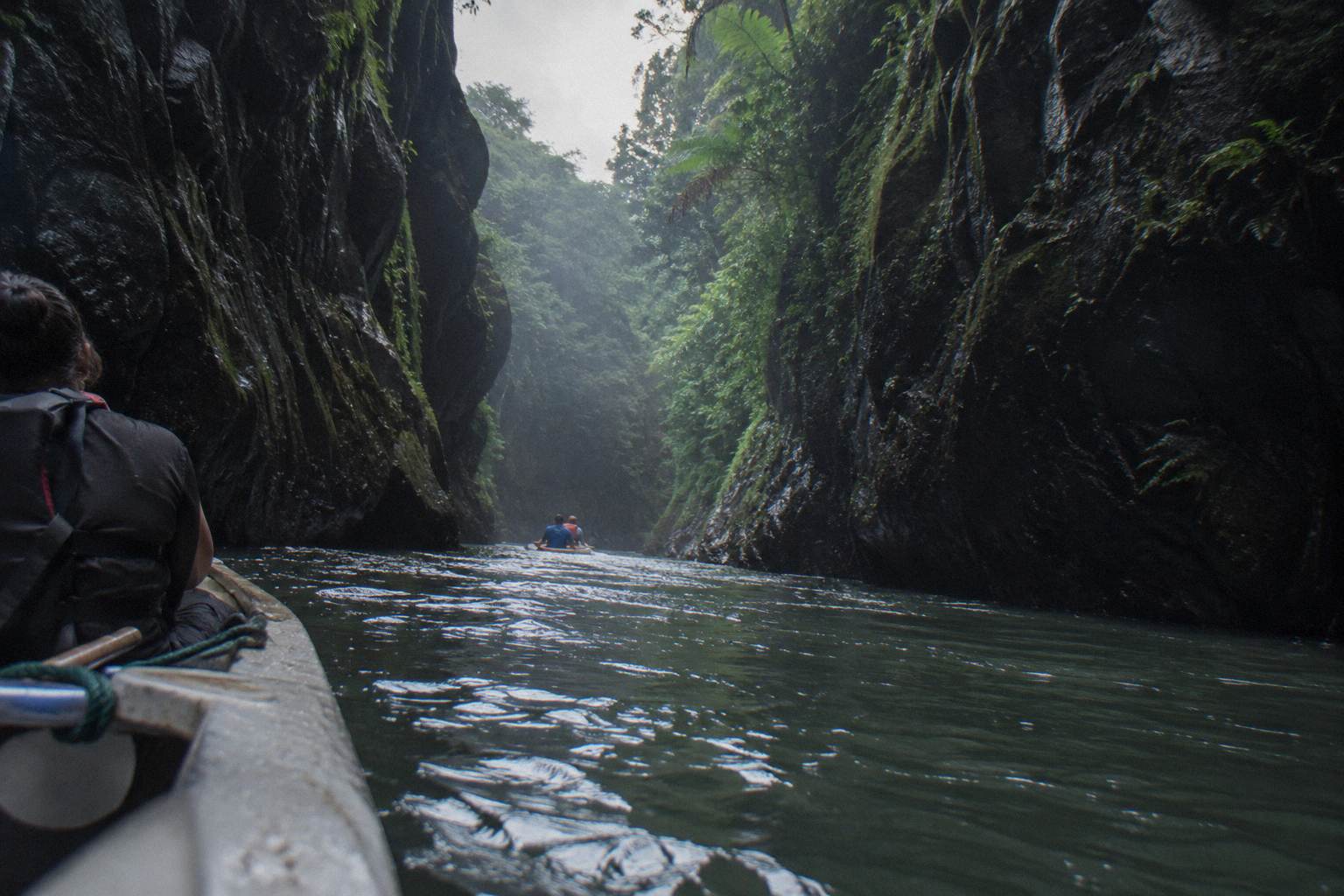
The protection story is unusual and worth knowing before you go. Rivers Fiji, whose booking page carries the rafting trip, describes the conservation area as Fiji's first officially designated Ramsar site, established through a lease with 9 mataqali rather than through a national park. The Ramsar Convention is the international wetland treaty; the official site record is held at the Ramsar Sites Information Service, and the operator's own account of the lease sits on the Rivers Fiji conservation page. In practical terms the lease means the communities that own the land earn from keeping the gorge wild, which is a large part of why it still is.
The conservation record itself is worth reading in full, because it is what separates this gorge from any other scenic run in Fiji:
| Upper Navua Conservation Area fact | Figure on the Ramsar record |
|---|---|
| Ramsar site number | 1612 |
| Designated | 11 April 2006 |
| Area | 615 hectares |
| Gorge depth | About 75 m |
| Gorge width | 5 to 25 m |
| Endemic plants | Sago palm Metroxylon vitiense |
| Endemic freshwater fish | 2 species |
| Endemic birds in surrounding forest | 17 species |
| Protection structure (operator's account) | Lease with 9 mataqali |
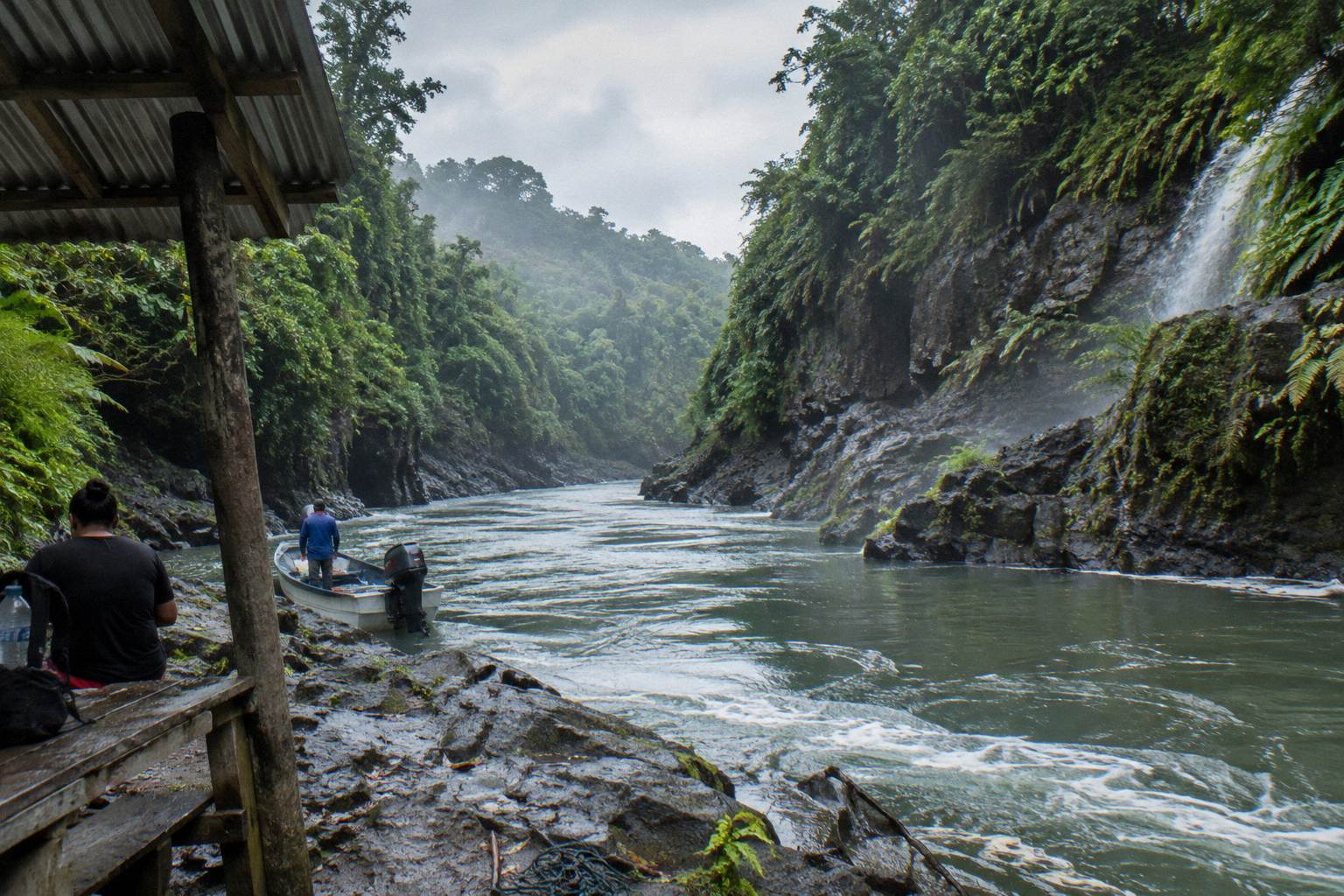
The tubing day gets its own, softer version of river scenery. The lower Navua runs wider and slower: riverbanks with gardens and settlements, the longboat ride up past greenery and cascades, and the waterfall roughly 12 km upriver where the boat stops for the swim. The village sits about another 5 km beyond, so the full upriver run is roughly 17 km. It is a lived-in landscape rather than a sealed canyon, and that is exactly the contrast that should drive your choice. For the full stop-by-stop breakdown, see the Navua river tour itinerary.
How Much Does Each Navua River Day Cost?
Upper Navua Whitewater Rafting is from USD 212 per person for a full day; River Tubing Fiji is from USD 120 per person for a guided tour of about 5 hours plus transfers; the Navua River Tubing Day Tour is from USD 101 per person for 7 hours. All three are booking-page from-prices that move with date and pickup point, so treat them as the floor, not the quote.
A few cost facts sit around those headline numbers. The tubing operator's own website shows no prices, and its direct prices are set in Australian dollars, so the USD figures above belong to the booking pages, not the operator's desk. Children aged 5 to 15 pay half price on the tubing trip and under-5s go free, with ID or a birth certificate possibly requested, per the operator's terms. A photo package is sold on tubing days so devices need not get wet. The extras carry no listed price, so budget a margin and check the listing.
Cancellation is where the channels genuinely differ, and it is worth reading twice:
| Booking channel | Cancellation terms shown |
|---|---|
| Tubing listings (both) | Free cancellation up to 24 hours before departure |
| Rafting listing | Free cancellation up to 24 hours before departure |
| Operator direct, more than 48 h out | No fee |
| Operator direct, 24 to 48 h out | 50 percent fee |
| Operator direct, inside 24 h | 100 percent fee |
| Operator cancels for river conditions | Full refund or reschedule |
Each policy belongs to its own channel; book through the listing and the listing's terms are the ones that apply. The booking pages for both tubing trips show free cancellation up to 24 hours before departure, which is the more forgiving of the two regimes if your plans are still moving.
Duration varies by listing. The main tubing page shows a guided tour of about 5 hours, with the listing header saying 1 day; a second page for the same trip shows about 5.5 hours; the newer tubing day shows 7 hours; and the rafting trip is listed as a full day. Road transfers stack on top, up to about three hours each way from the Nadi side. Plan on most of a day for all of them.
Who Can Go On Each Trip?
The tubing listing excludes people with back problems and mobility impairments, the second tubing listing excludes under-6s and mobility impairments and asks that weak swimmers be flagged at booking, and the rafting listing prints no age, weight, fitness or swimming rules at all, so ask Rivers Fiji before assuming anyone in your group qualifies.
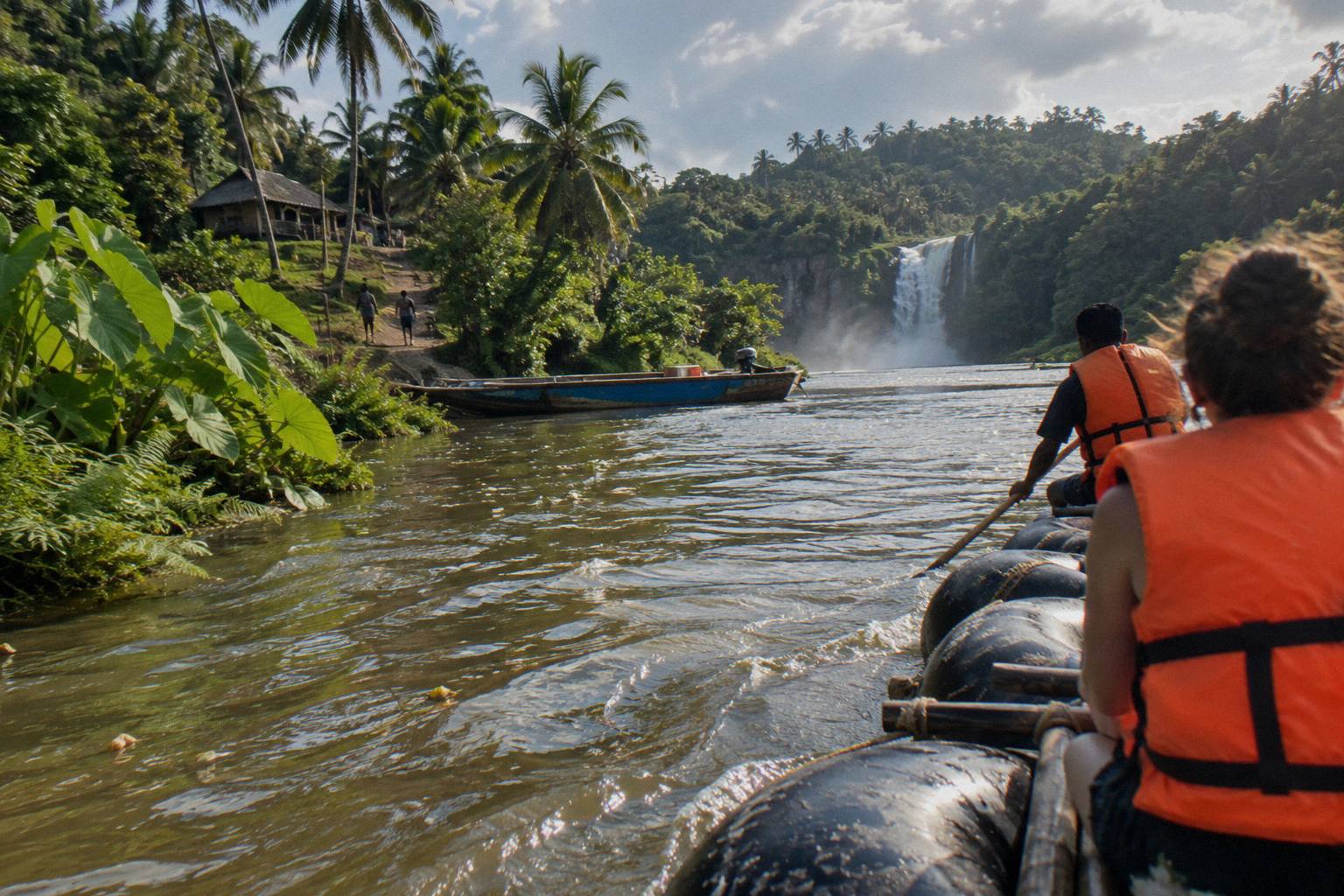
That asymmetry matters. Tour operators in Fiji commonly run age and fitness gates on whitewater trips, but this rafting listing states none, and inventing a number here would be guesswork. If you are travelling with a young child, an older traveller, someone recovering from surgery or a nervous swimmer, the correct move is to put the question to the rafting operator directly and get the answer in writing with your booking. The tubing side is easier to self-assess: life vests are compulsory for everyone, children must be accompanied by an adult, and the water is gentle enough that non-swimmers routinely go, in a vest, with a guide nearby.
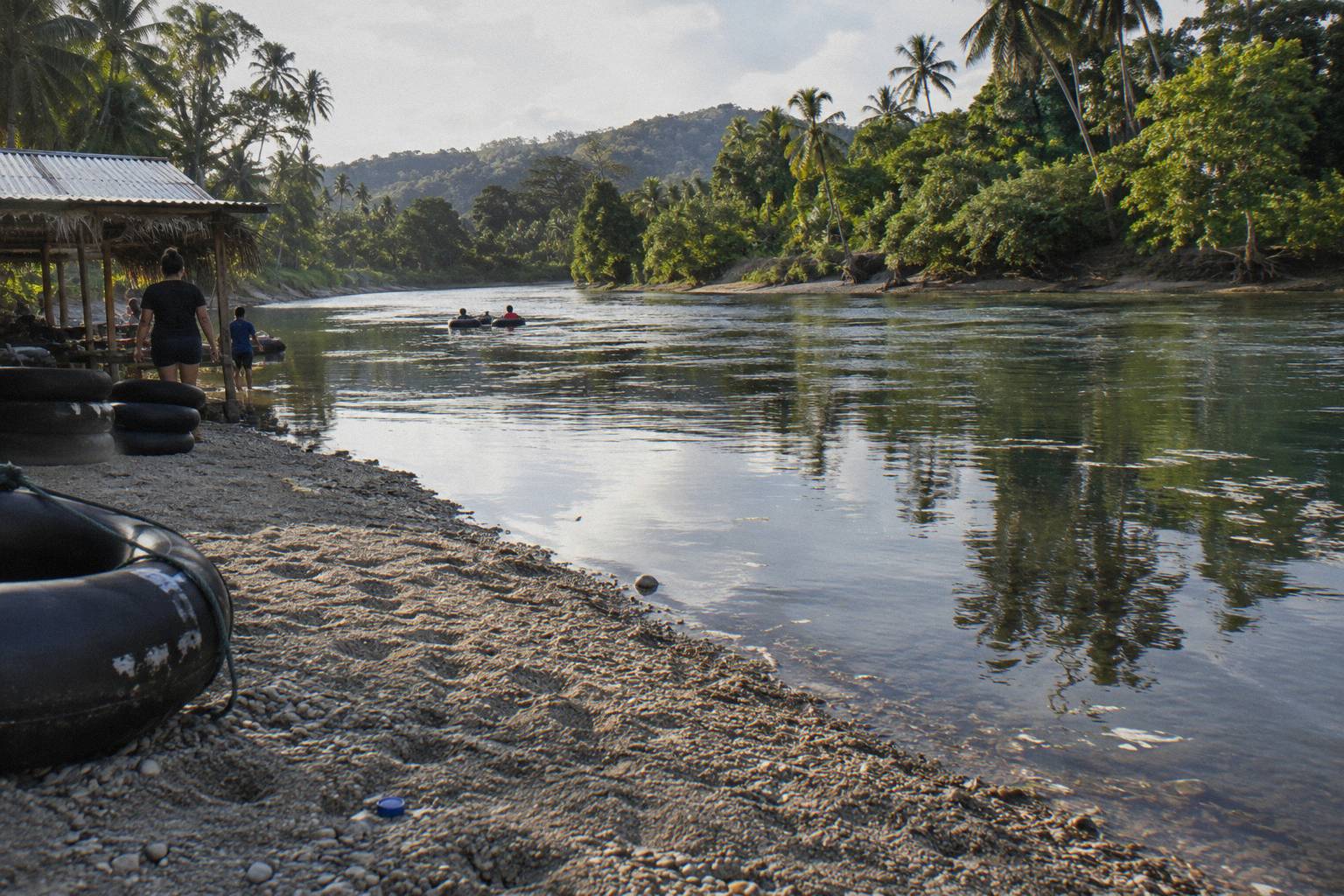
Take the wider point: suitability on this river is mostly about the gorge, not the water temperature. The lower river runs warm and forgiving, and the main hazards are sun and the walk to and from the boats. The upper gorge adds commitment: once inside, exit points are few, and a raft that flips in grade 3 water requires you to swim calmly in current toward a guide. If that sounds like fun, raft. If it sounds like a story you would rather hear at dinner, tube.
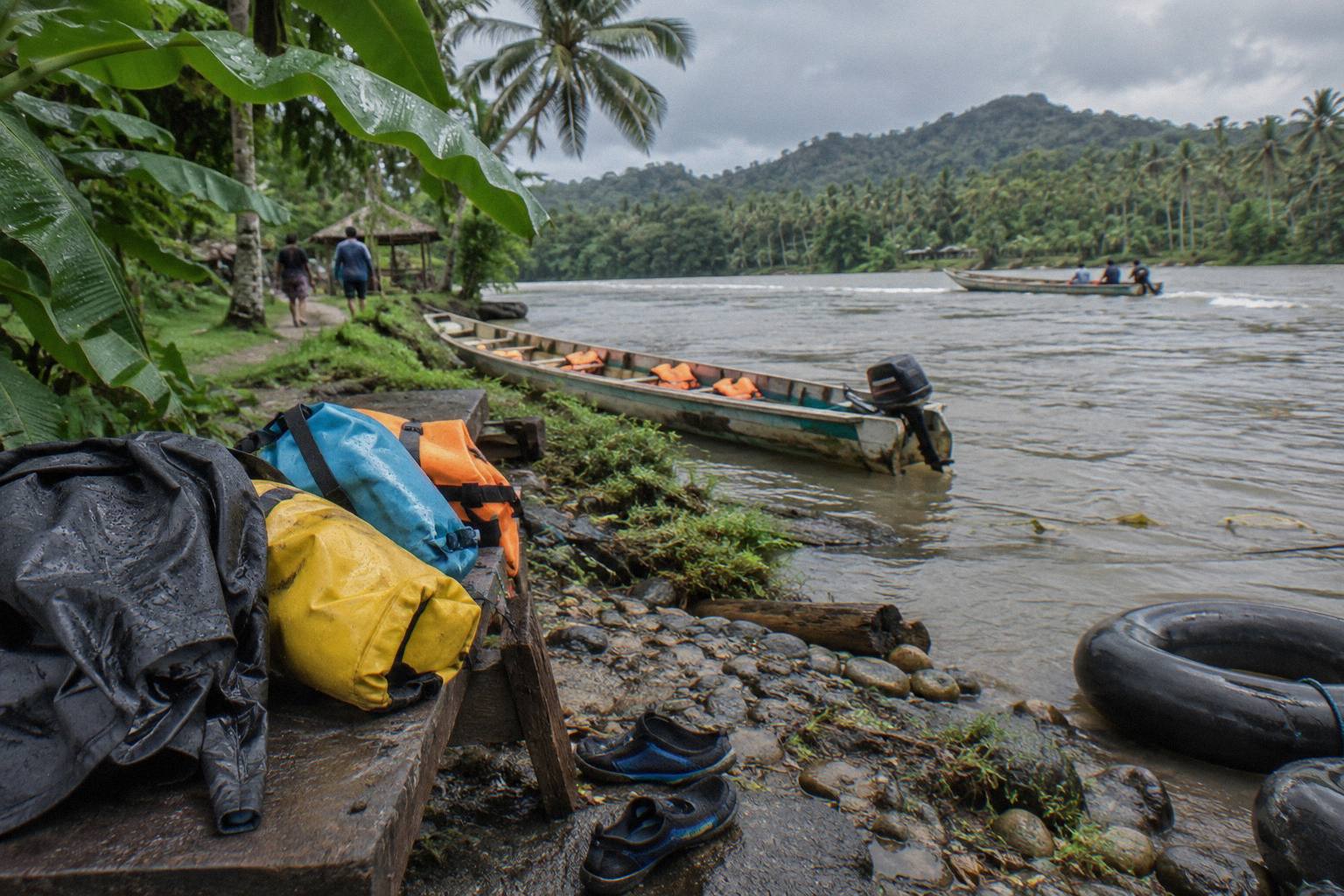
Dress codes also differ between the days. The tubing loop includes a village visit, and the listings are explicit: no hats, bare shoulders or bare knees in the village, and women need a skirt or sarong. The operator's terms add the standard kit list, sunscreen, towel, change of clothes, water and rain gear, and the booking pages suggest comfortable shoes or water shoes. The rafting day has no village stop, so its kit question is simply what you are comfortable paddling and swimming in; check the listing for its packing note.
What If You Want Both, Or Something Else Entirely?
Some travellers split the week: a tubing day early in the trip for the village and waterfall, and the rafting gorge on another day from Pacific Harbour or Suva where transfers are shortest. Others skip both water days for the Beqa Lagoon shark dive, a two-tank day dive from Aqua-Trek Beqa in Pacific Harbour; a card on its booking page shows 4 to 5 hours, and you can check the live listing for the current price and rating.
The split-week approach is more sensible than it sounds. Because both tubing pickups and the rafting base sit on the southern coast, a stay in Pacific Harbour puts you under an hour from everything: the river, the dive boats and Suva. Tourism Fiji markets the town as "Fiji's Adventure Hotspot", two and a half hours' drive from Nadi on the southern coast, and the practical advice for west-coast hotel guests is to either accept the long transfer day or move along the coast for the adventure portion of the trip. The site's guide to getting from Nadi to Pacific Harbour covers that drive in detail.
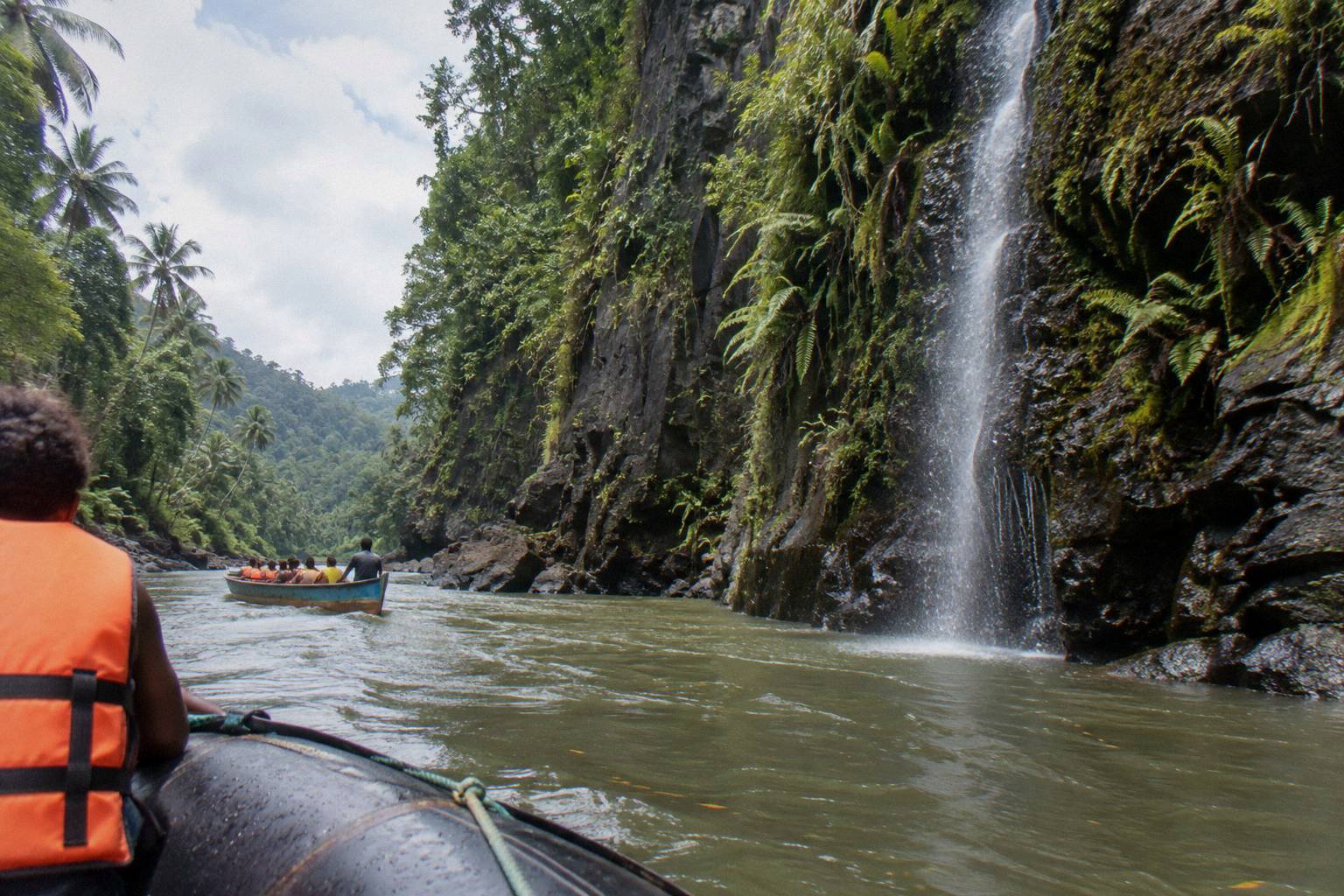
Timing is the other lever. Fiji's wet, warm season runs November to April and the cooler, drier months May to October, as general climate rather than any operator promise. The wet season brings higher river levels, which on the tubing side affects the village visit: the operator's own notice says the village stop is temporarily excluded when low water makes the extra journey unsafe, and the route is reassessed on the day. Low water is the dry-season risk; big water is the wet-season one. Neither cancels a trip automatically, and if the operator cancels for river conditions their terms promise a full refund or a reschedule.
Aqua-Trek Beqa is the provider named on the booking page for this day dive, and a card on the page shows 4 to 5 hours; check the live listing for the current price and rating. Combining a water day with a dive day is a popular Pacific Harbour pattern, and there is a full piece on pairing the Beqa shark dive with river tubing.
How To Decide Before You Book Anything
Decide on three questions: is the gorge or the culture the point, what is the weakest swimmer or paddler in your group willing to do, and where are you sleeping. Gorge-first and fit groups should raft from USD 212; culture-first, family and mixed groups should tube from USD 101 or USD 120; and everyone staying west of the Coral Coast should budget the transfer hours before the water hours.
Match the trip to the group you actually have, not the group you wish you had:
| Your group or goal | Best fit on the Navua |
|---|---|
| Fit adults chasing scenery and adrenaline | Upper Navua Whitewater Rafting, from USD 212 |
| Families with children aged 5 to 15 | River Tubing Fiji, half price for 5 to 15s, from USD 120 |
| Budget-focused travellers who still want the full loop | Navua River Tubing Day Tour, from USD 101, 7 hours |
| Non-swimmers happy in a life vest | A tubing day; vests are compulsory for everyone |
| Travellers who want culture, not paddling | A tubing day; the village visit is the centrepiece |
| Staying in Nadi or Denarau with one free day | A tubing day with listed pickup, budgeting up to about 3 hours each way by van |
Book whichever day you choose with the cancellation clock in mind. The tubing listings show free cancellation up to 24 hours ahead, which makes an early booking nearly riskless; lock the date when your accommodation is fixed and adjust later if the plan moves. The rafting day should be booked around weather expectations rather than price expectations, because its from-price does not flex the way a room rate does, and a gorge trip rescheduled into a storm is a wasted margin.
The rafting day is a landscape you pass through; the tubing day is a community you pass among. The gorge gives you 75 m walls, grade 3 water and a story very few visitors have. The tubing loop gives you a village, a sung float, a waterfall pool and lunch on the bank, with the river as the road rather than the event. Choose the day you actually want to remember, then check the live listing for today's from-price and pickup options before you commit.
Common Questions About Upper Navua River Rafting
How Rough Are The Rapids On The Upper Navua Rafting Trip?
Tourism Fiji grades the upper Navua and Wainikoro-i-luva rafting runs at grade 2 and 3+ rapids. That is real paddling with a real chance of getting wet, but not expedition whitewater. The tubing trip on the lower river has no grade attached anywhere official; the operator's own words are "gentle rapids".
Does The Tubing Trip Go Into The Upper Navua Gorge?
No. The tubing route starts at Navua town on the lower river and turns around at a waterfall roughly 12 km upriver, with the village about another 5 km beyond. No official page says the tubing trip enters the Upper Navua Conservation Area; the gorge is the rafting trip's territory.
Is Rafting Or Tubing Cheaper On The Navua?
Tubing is cheaper on every listing. Upper Navua Whitewater Rafting is from USD 212 per person, River Tubing Fiji is from USD 120, and the Navua River Tubing Day Tour is from USD 101. All are booking-page from-prices that vary by date and pickup.
What Is The Minimum Age For Upper Navua Rafting?
The rafting listing sets no minimum age, weight, fitness or swimming requirement, so check with Rivers Fiji directly before booking. On the tubing side, children 5 to 15 pay half price with an accompanying adult and under-5s go free, while the second tubing listing says the trip is not suitable for children under 6.
Can You Do Both The Rafting And The Tubing In One Trip To Fiji?
Yes, and many travellers do, spacing them across separate days. Both run from the southern coast, so basing yourself in Pacific Harbour or Suva keeps transfers under an hour each way, while Nadi and Denarau guests should count up to about three hours of van time each way.
Is The Village Visit On The Tubing Day Guaranteed?
No. The operator's notice says the village stop is temporarily excluded when low water levels make the additional journey unsafe, and the route is reassessed on the day. If the operator cancels or amends the trip for river conditions, their terms promise a full refund or a reschedule.